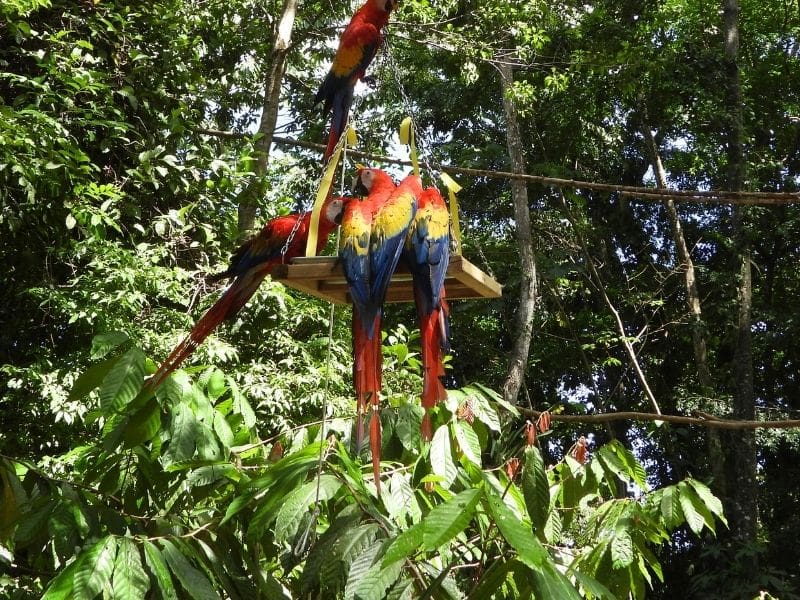

For Honduras, the Scarlet Macaw (Ara macao) is more than just a parrot, it’s the country’s national bird, and symbol of Honduras’ natural heritage.
In May, the first group of Scarlet Macaws was released in the Cangrejal River basin near La Ceiba, marking an important step in efforts to restore the species to parts of its historic range.
The release builds on a Scarlet Macaw reintroduction programme launched in 2011 by Macaw Mountain Bird Park & Nature Reserve and PRO-ALAS in Copán Ruinas, in partnership with government agencies and conservation organisations.
Since then, released birds have established a free-flying population and are now breeding successfully in the wild. The lessons learned over more than a decade of conservation work are now helping guide efforts to restore Scarlet Macaws to La Ceiba.
The La Ceiba project aims to restore Scarlet Macaws to the Cangrejal River basin, in landscapes connected to Pico Bonito National Park and Nombre de Dios National Park, where wild populations have not been recorded since the 1960s.
The birds being reintroduced were raised at the Incubation and Assisted Breeding Centre (CICA) at Macaw Mountain Bird Park as part of the PRO-ALAS conservation programme. There, they underwent flight training, behavioural development, nutritional management, and gradual adaptation to natural environments in preparation for life in the wild.
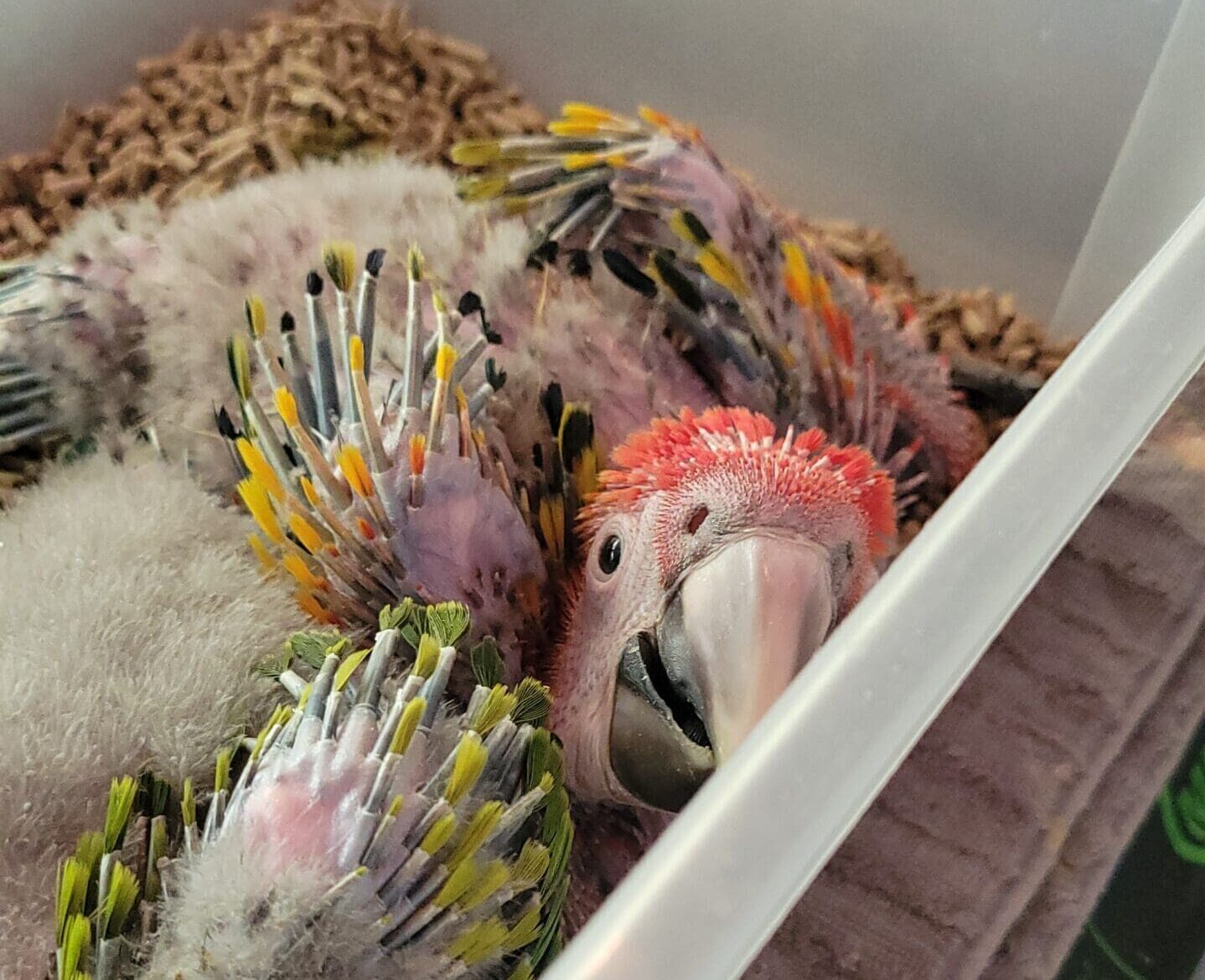
Earlier this year, sixteen Scarlet Macaws were moved from Copán to El Cangrejal to begin the next stage of their journey. During a pre-release adaptation period, they became familiar with their new surroundings, identified natural food sources, and developed the behaviours needed to thrive independently.
The first release took place in May, when nine macaws were released into the forests of El Cangrejal Basin. A second release followed in June, allowing the remaining seven birds to join them. Together, these sixteen young macaws represent the return of Scarlet Macaws to a landscape where they have been absent for generations.
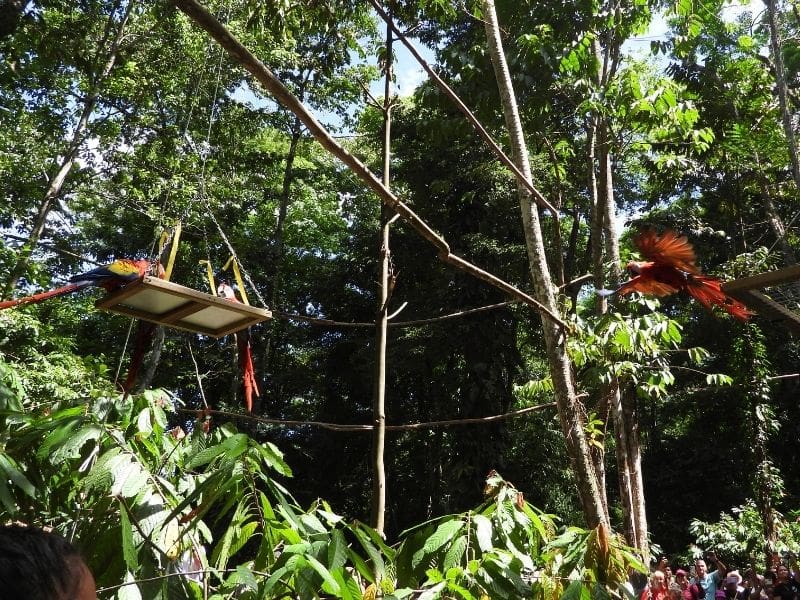
Seeing Scarlet Macaws return to El Cangrejal is an important milestone for parrot conservation in Honduras. Equally encouraging is the way local institutions, businesses, community members, and conservation organisations have come together to support the project and help protect the released birds.
- Dr. Noelia Volpe, World Parrot Trust’s Reintroduction and Wild parrot conservation specialist & PRO-ALAS Project Leader
The birds continue to be monitored by the technical team and local community members. As they settle into their new environment, sightings are providing valuable information about their movements, habitat use, and adaptation to life in the wild.
The project is led by PRO-ALAS in collaboration with local partners, institutions, businesses, and community members. Together, they have helped create the conditions needed for Scarlet Macaws to once again become part of El Cangrejal’s natural landscape.
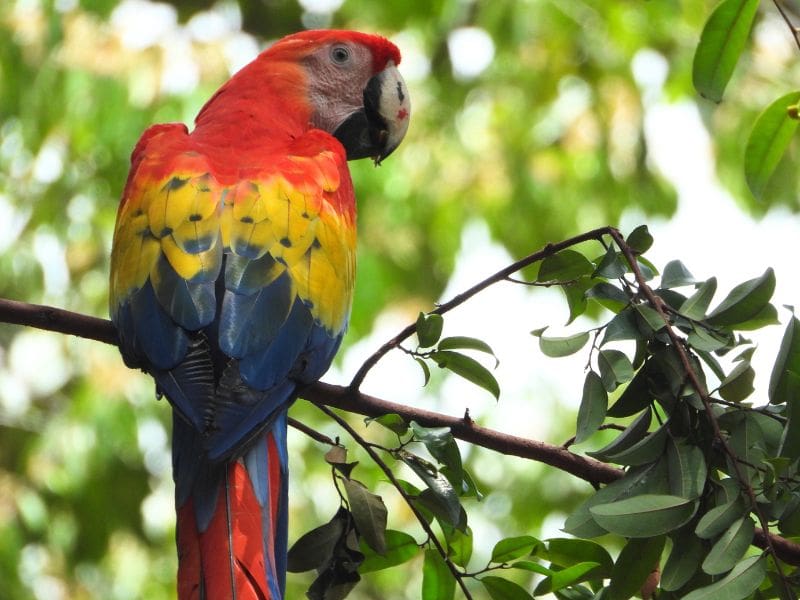
We have been impressed by the enthusiasm and support this initiative has received in La Ceiba, and we have high expectations for a successful release in a unique environment where two vast national parks meet a highly populated urban area. This new phase presents important challenges. Unlike Copán, where we began in a more controlled setting, La Ceiba represents a larger and more complex landscape. However, our experience allows us to anticipate these challenges as we take the project to the next level. We are advancing conservation efforts in the Cangrejal River basin and look forward to the continuity of this pilot program and its expansion to include additional species. This is not just about restoring macaw populations—it is about building a conservation model that delivers long-term benefits for biodiversity and local communities
– Lloyd Davidson, President of Pro Alas
For the World Parrot Trust (WPT), the project reflects a long-standing relationship with Macaw Mountain Bird Park, PRO-ALAS, and the conservationists working to protect Honduras’ parrots. WPT is proud to support local partners as this work expands into new areas.
The return of Scarlet Macaws to La Ceiba represents the expansion of a proven conservation model into a region where the species has been absent for generations. Most importantly, it demonstrates what can be achieved when communities, organisations, businesses, and government agencies work toward a shared goal.
As Scarlet Macaws once again take to the skies above La Ceiba, the World Parrot Trust is proud to support the Honduran partners helping secure a future for the country’s national bird.
The La Ceiba Macaw Reserve is a collaborative initiative led by PRO-ALAS and Macaw Mountain Bird Park, with the support of numerous government agencies, organisations, businesses, and individuals, including (listed alphabetically) :
CANATURH, Corinto Pearl Resort, Guaruma, Honduras Chocolate Factory, Honduras Institute of Tourism, Honduras Naval Force, Hotel Rio, Incebio, Institute of Forest Conservation (ICF), Iris Aquino, Jim Baum, John Dupuis, Jose Herrero, Julio Chi Ham, King Fish, La Ceiba Chamber of Tourism, La Moskitia EcoAventuras, La Villa de Soledad B&B, Maber Gutierrez, Marcela Mayen, Municipality of La Ceiba, Nuevo Destino, Omega Tours, Panamerican Fruits, Standard Fruit Company of Honduras, TeleCeiba, Un Mundo, Villas Pico Bonito, World Parrot Trust, and Yani’s Tours.