LEARN

Mitred Conure

( Psittacara mitratus )

Also known as:
Mitred Parakeet

Also known as:
Mitred Parakeet

Type :
Geography:

DID YOU KNOW?

Since 1981, when the Mitred Conure was listed on CITES Appendix II, 158,149 individuals have been traded on the international market.

<p><em>Psittacara</em></p>
Genus:

Psittacara

<p><em>mitratus</em></p>
Species:

mitratus

Size:

38 cm (14.8 in)

Weight:

200-240 g (7-8.4 oz)

Subspecies including nominate:

three: P.m. mitratus, P.m.tucumanus, P.m. chologenys

Colour Adult:

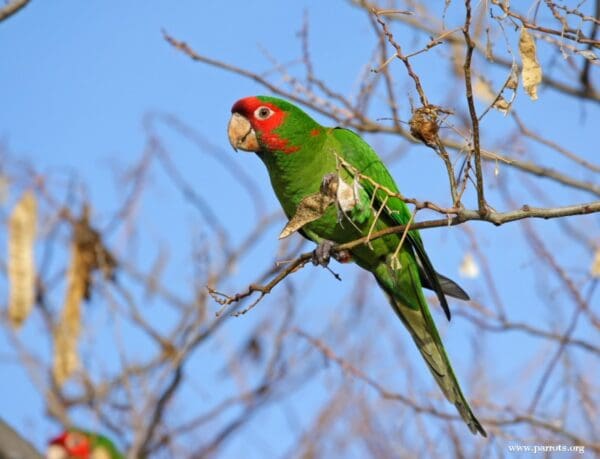
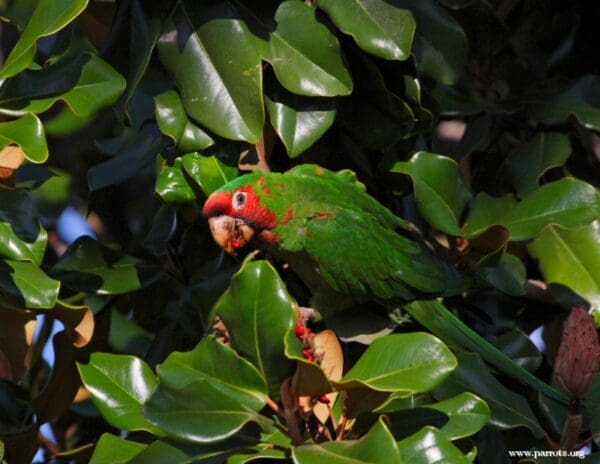
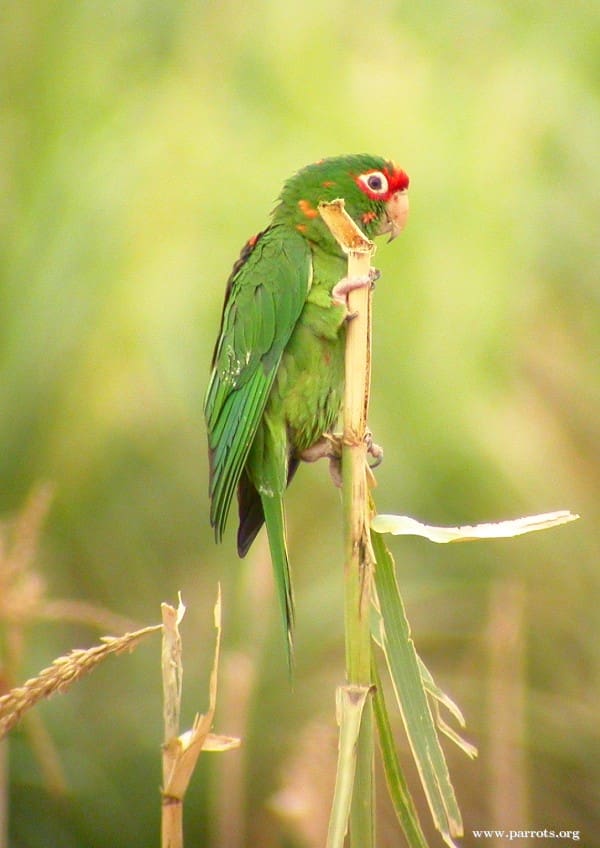
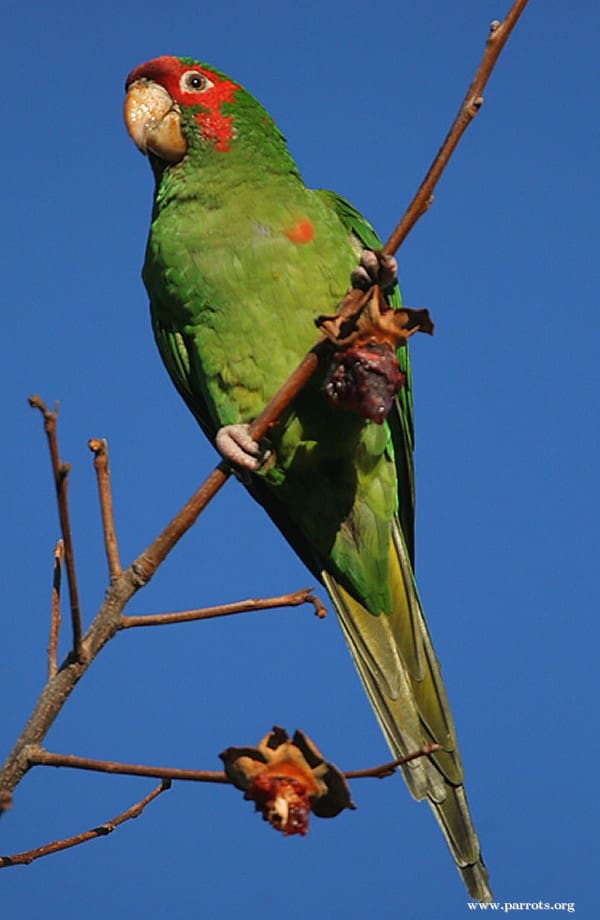
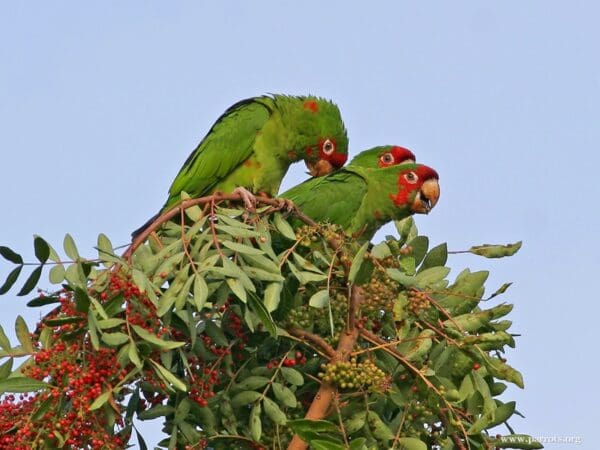
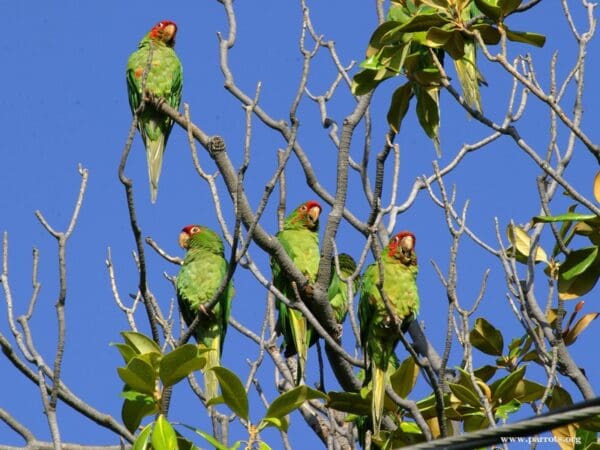
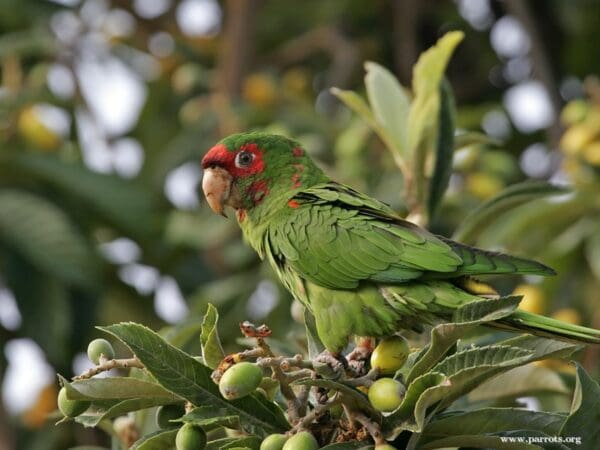
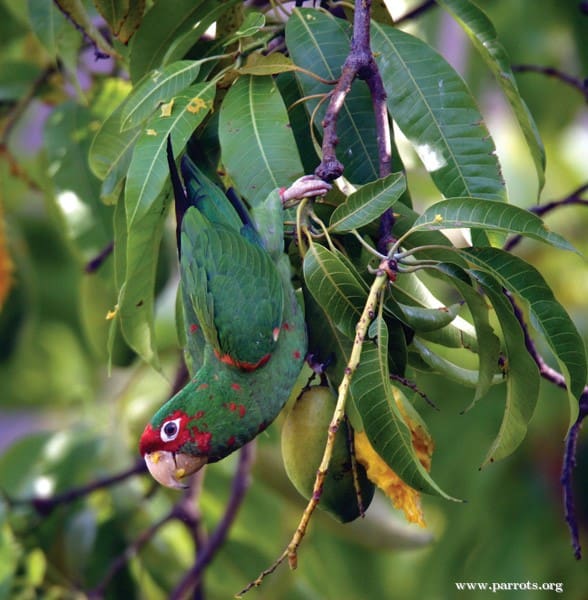
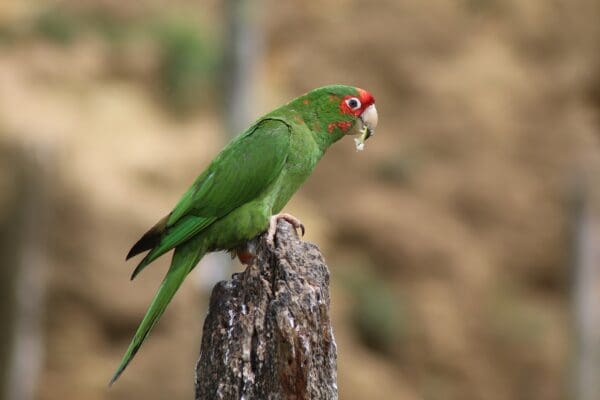
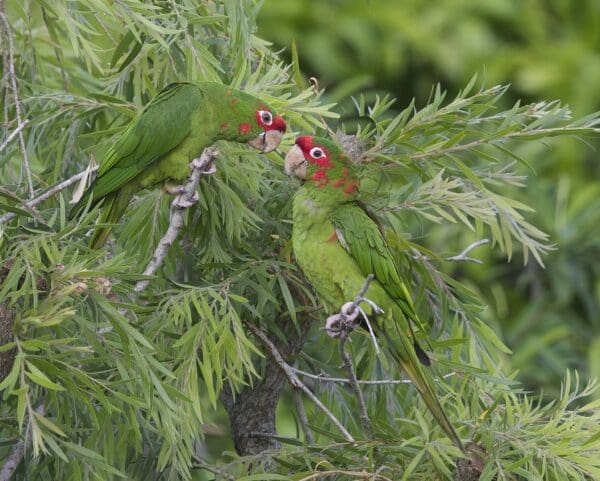
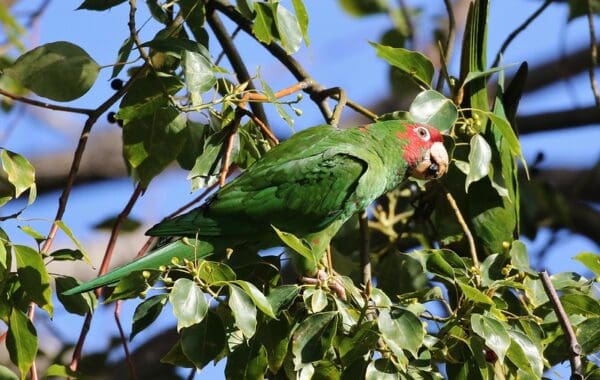
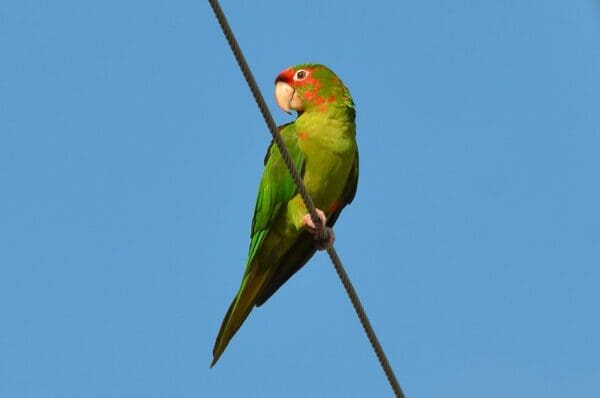
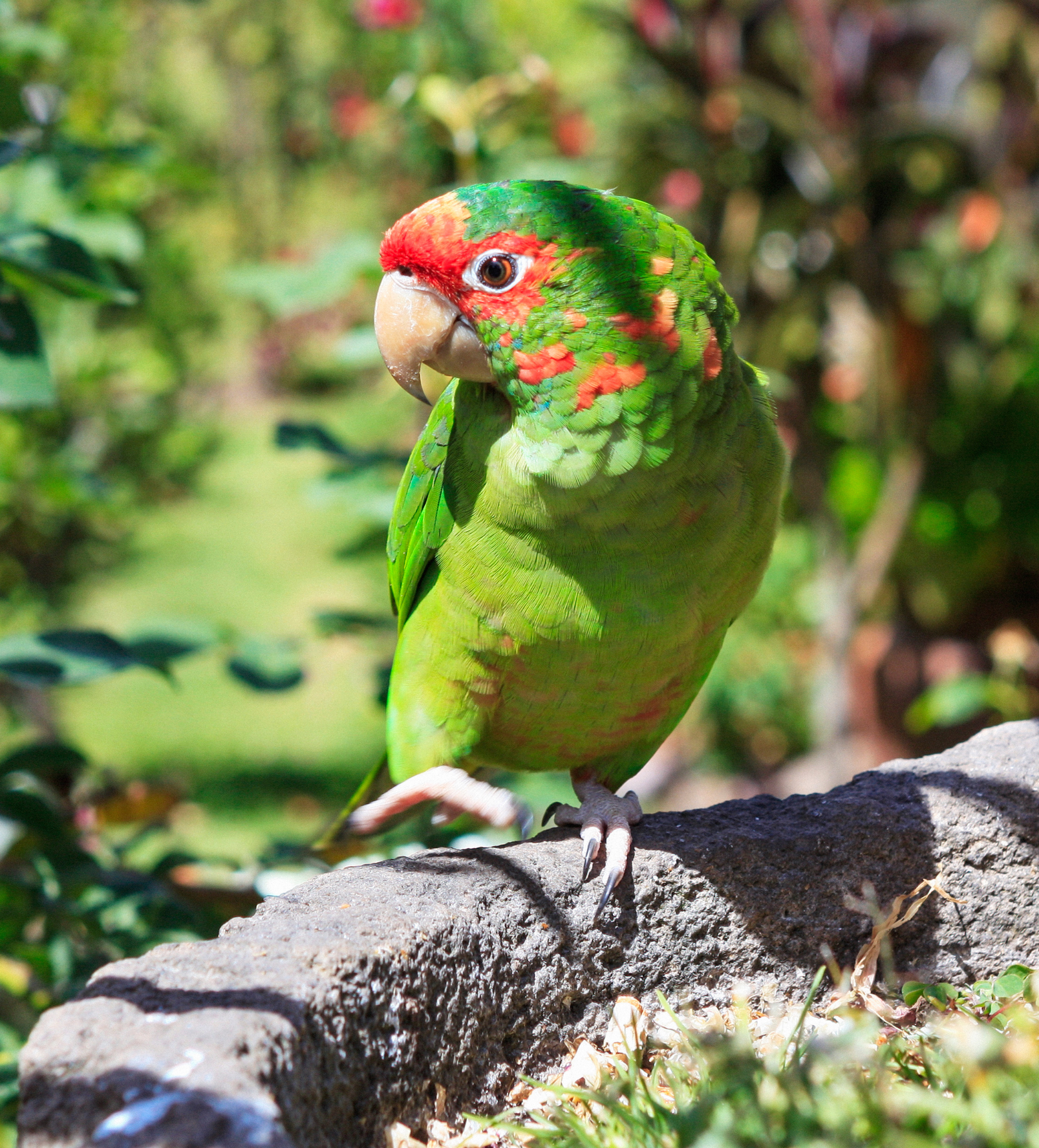
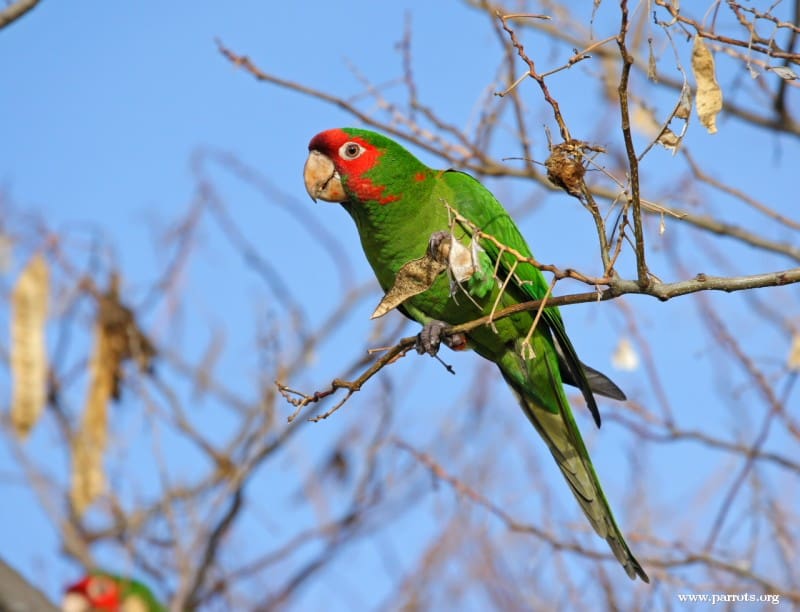
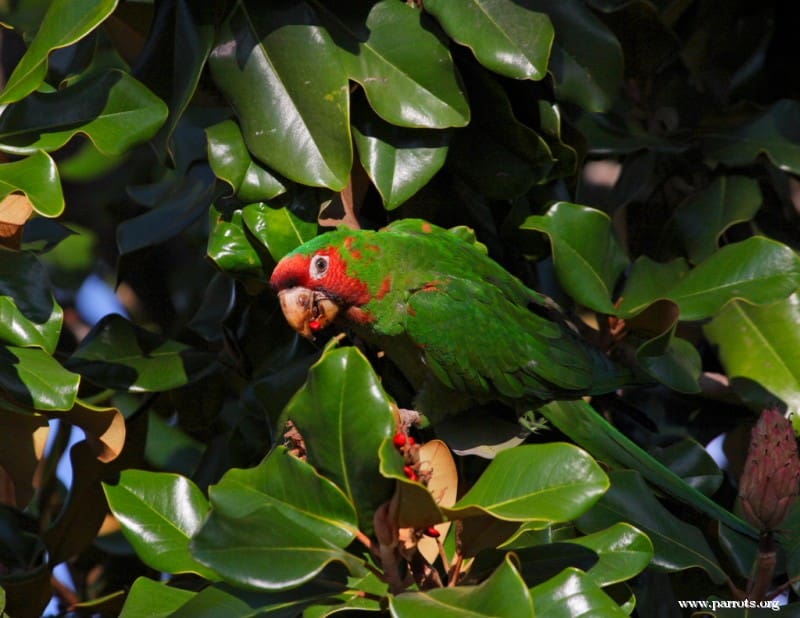
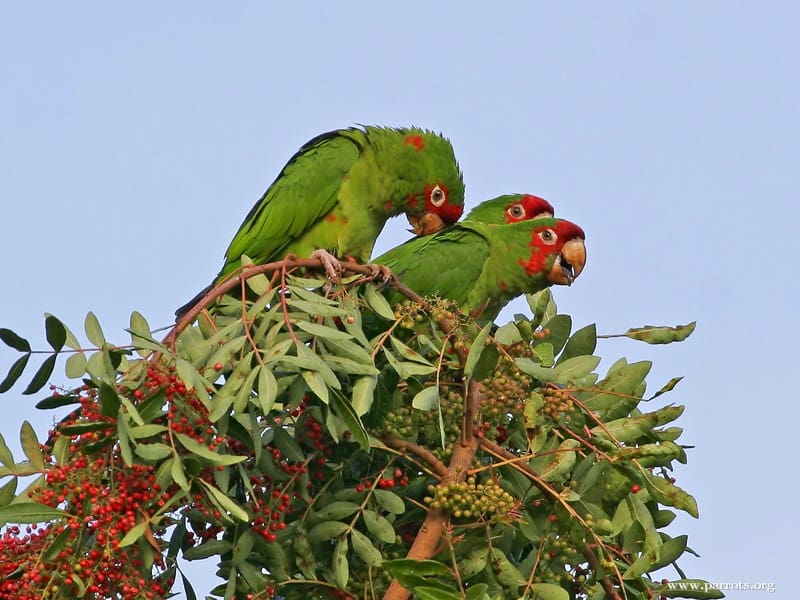
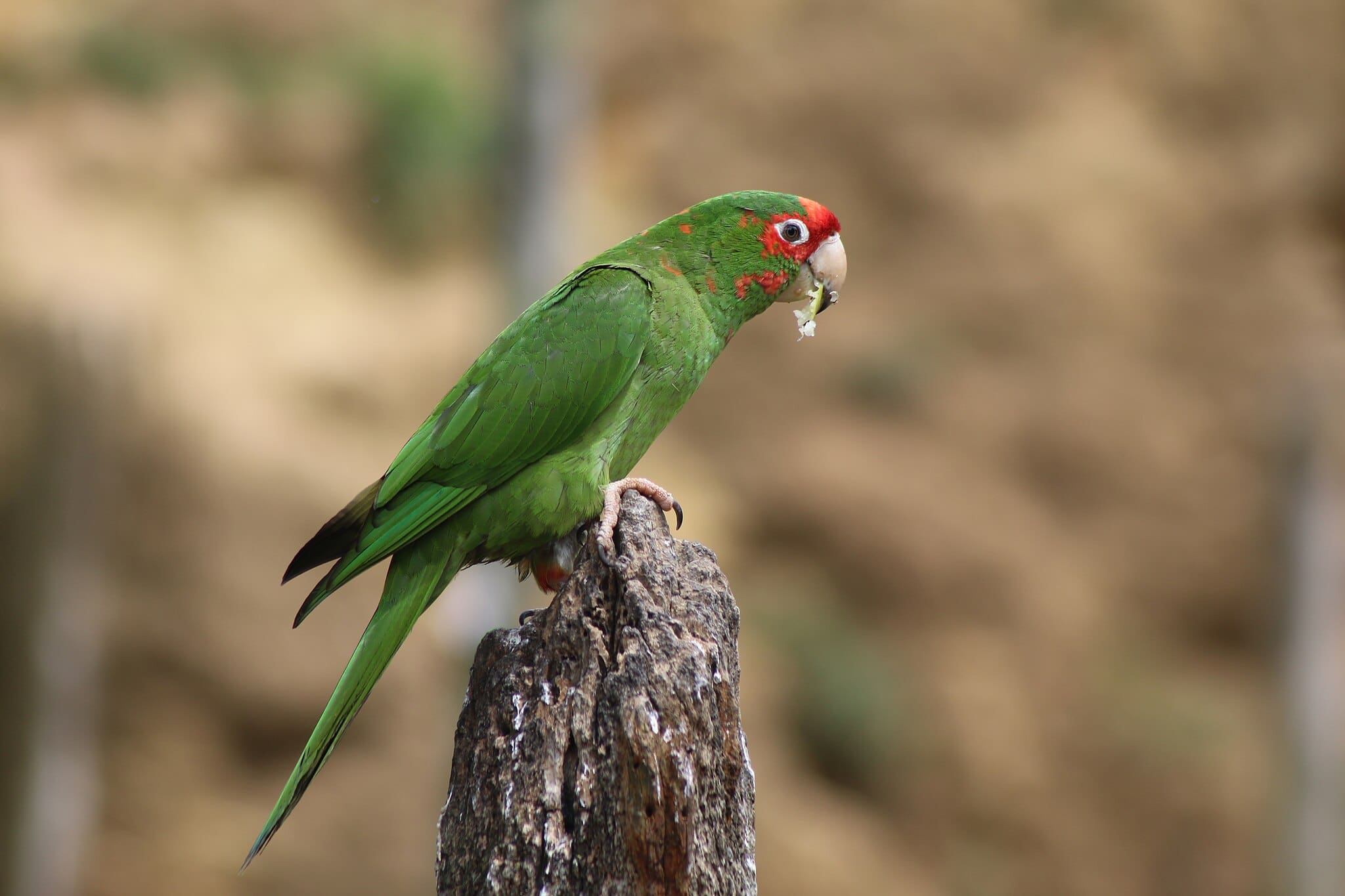
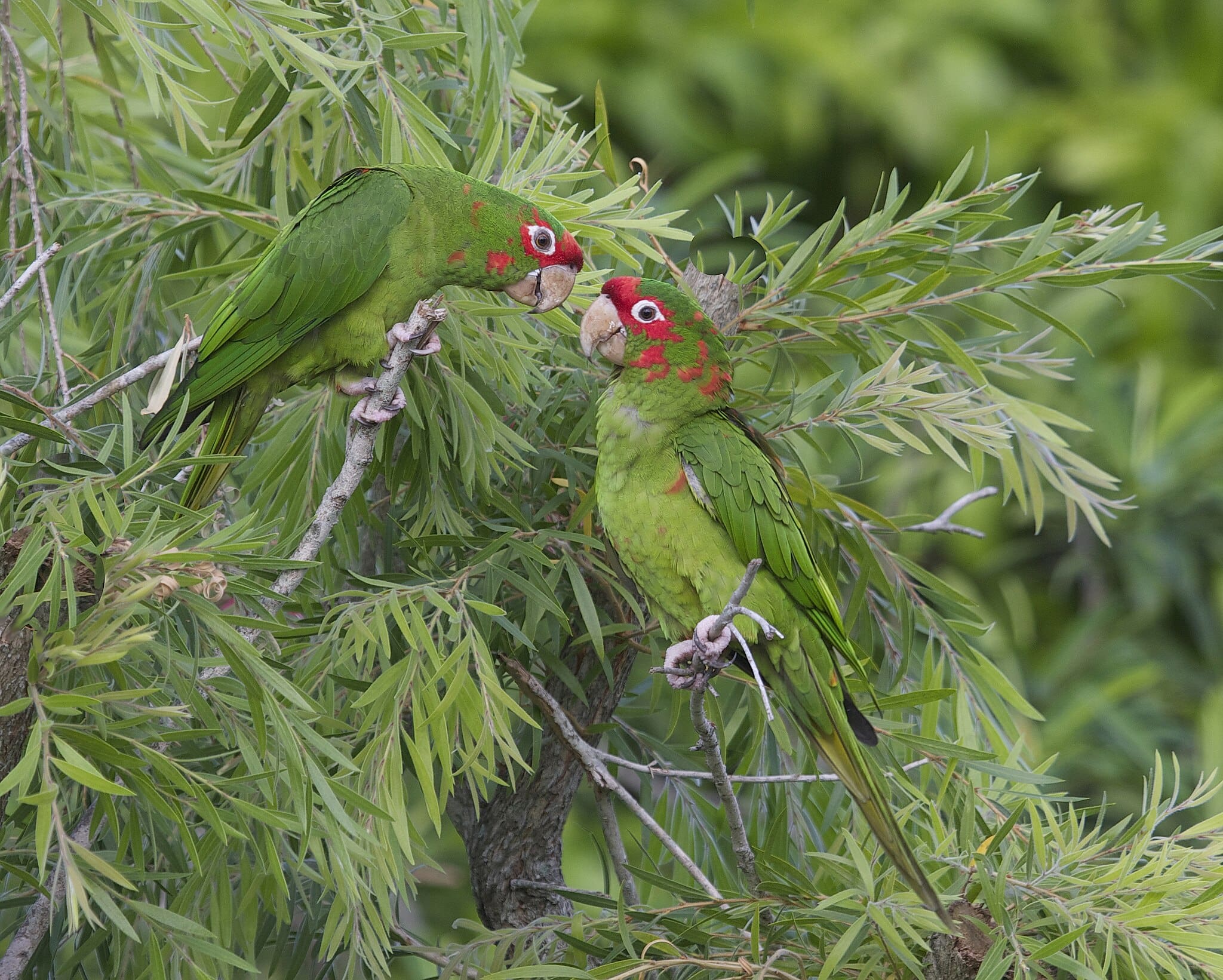
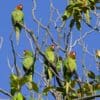
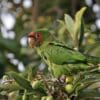
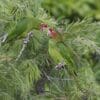
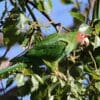
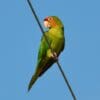
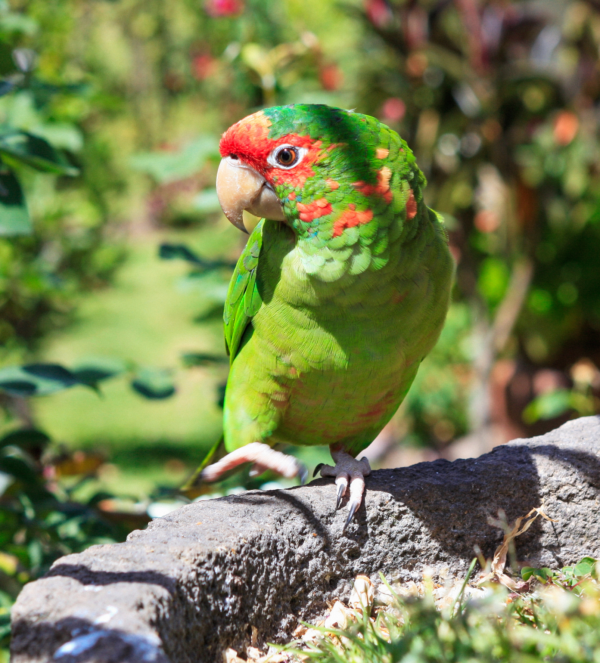
P.m. mitratus: Both adults green in colour, with yellow on the underparts; brown/red forehead turning to brighter red on forecrown, lores, cheeks and sides of neck; ear coverts occasionally red; red feathers scattered variably on hindneck, mantle, throat, thighs and bend of wing; olive/green underwing coverts. Beak horn-coloured. Eye ring bare and buff/white. Eye dull yellow with grey inner ring.
P.m. tucumanus: As in mitratus but with plumage variations.
P.m. chlorogenys: As in mitratus but with plumage variations.

Colour Juvenile:

P.m. mitratus: Red on cheeks and sides of neck minimal or absent. Eye brown.
P.m. tucumanus: As in mitratus but with plumage variations.
P.m. chlorogenys: As in mitratus but with plumage variations.

Call:

Calls deep and harsh, as well as loud and abrupt notes. Some sounds are said to resemble a toy trumpet.

Xeno-canto Wildlife Sounds-Mitred Conure

Content Sources:

CITES
BirdLife International
Cornell Lab of Ornithology/Birds of the World
Parrots: A Guide to Parrots of the World, Juniper and Parr, 1998
Parrots of the World, Forshaw and Cooper, 1977. 2010 edition
Parrots of the World, Forshaw, 2006.
Parrots in Aviculture, Low, 1992.
Psittacine Aviculture, Schubot, Clubb and Clubb, 1992.

Captive Status:

Common in US, less so elsewhere.

Longevity:

30 yrs

Housing:

Aviary or suspended enclosure, minimum length 2 m (6.5 ft).

Diet:

Fruit such as: apple, pear, orange, cactus fruits, banana, pomegranate, forming about 30 percent of the diet; vegetables such as: carrot, celery, green beans and peas in the pod; green leaves such as: Swiss chard, lettuce, sowthistle, chickweed, dandelion; spray millet; small seed mix such as: millet, canary, and smaller amounts of oats, buckwheat, safflower and limited sunflower; sunflower soaked or sprouted; cooked beans and pulses, boiled maize and complete pellet.
Enrichment:

Avid bathers so provide overhead misters or shallow water bowls; also provide bird-safe chew toys such as: fir, willow, elder and pine branches; wood block toys, vegetable-tanned leather toys; puzzle and foraging toys, ladders, swings.
Nest Box Size:

Vertical box 12″ x 12″ x 18″ (30.5 cm x 30.5 cm x 46 cm).

Clutch Size:

3

Fledging Age:

9 weeks

Hatch Weight:

Peak Weight:

Weaning Weight:

World Population:

Unknown, stable.

IUCN Red List Status:
Least Concern

CITES Listing:
Appendix II

Threat Summary:

Not globally threatened. Generally common and locally abundant, despite strong pressure on cloud forest habitat in the transitional zone between densely populated rainshadow valleys and humid Andean slopes in Peru. Has been traded internationally in large numbers.

Range:

P.m. mitratus: Subtropical zone of the eastern Andes in central Peru, south from Huanuco, through east-central Bolivia to northwestern Argentina, south to La Rioja and W Cordoba. Introduced to California, Florida and Hawaii, US.
P.m. tucumanus: Tucumán and Córdoba, Argentina.
P.m. chlorogenys: Northern and central Peru on the eastern slope of the Andes from western Amazonas to Junín.

Habitat:

Occurs in montane evergreen and deciduous woodland edge, cloud forest patches, secondary forest, semi-humid and humid montane scrub in arid montane country from 1000–3400 m (3280-11,154 ft), with a possible sighting in Peru at 4000 m (13,123 ft); subspecies chlorogenys found at 1200–2900 m (3937-9514 ft).

Wild Diet:

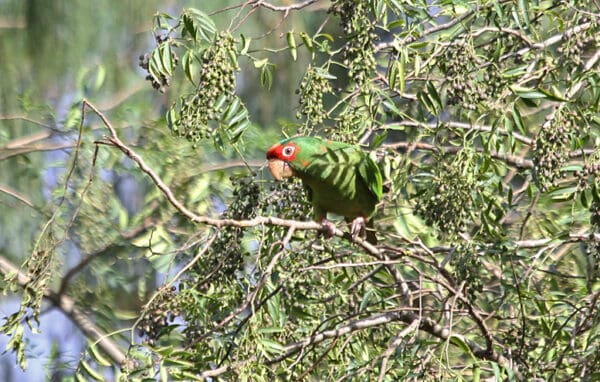
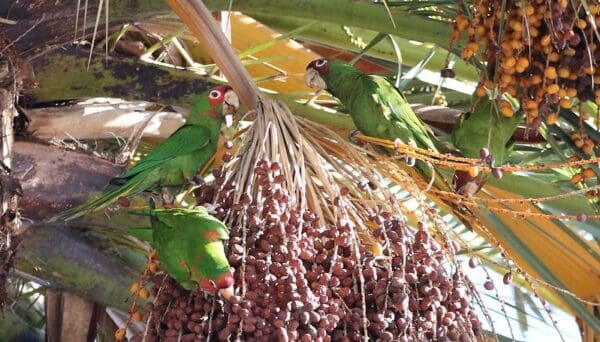
Little known. Diet includes ripening berries and maize Zea mays. The naturalised population in California takes the fruits of Platanus species and Myoporus laetum, and the flowers of Eucalyptus.

Ecology and Behaviour:

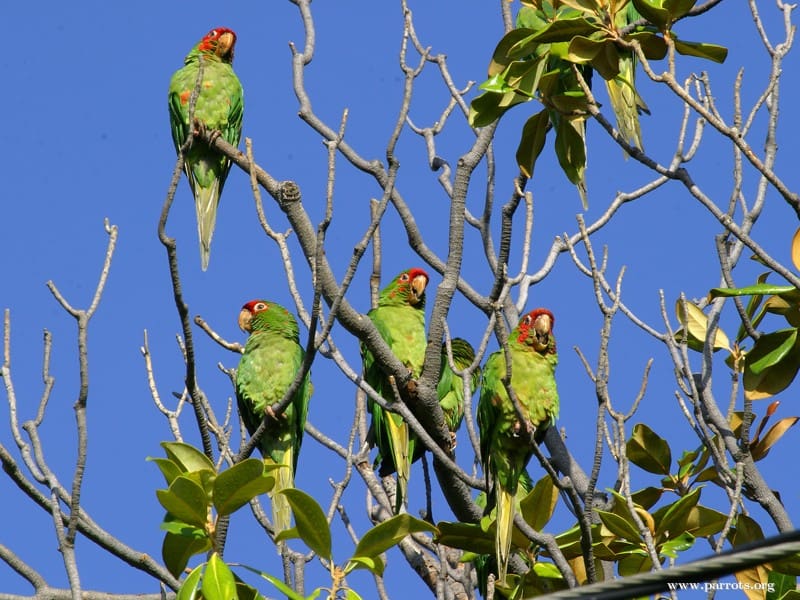
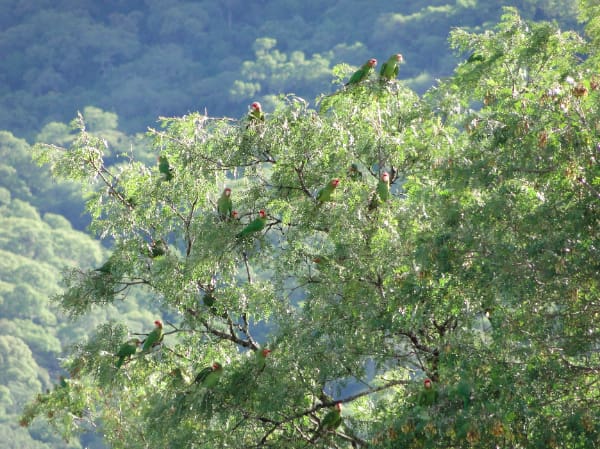
Seen in pairs or threes but may congregate up to 100 individuals outside of breeding season. May take cultivated crops, but generally feeds in natural forest areas. This species, as well as others, migrates to Lerma Valley in NW Argentina.

Clutch and Egg Size:

3 broad-oval eggs, 32.0 x 26.5 mm (1.2 x 1 in).

Breeding Season:

December in Argentina. Nest is in tree or cliff cavity.

Join Our Flock

FlockTalk our monthly newsletter for parrot people everywhere:

+ News from the world of parrots

+ Updates on wild parrot projects

+ Inspiring updates from partners

+ Real stories from the parrot flock

+ Plus, expert tips for caring for your feathered friends at home.


Stay In The Loop, Sign Up Now.

FlockTalk: our monthly newsletter for parrot people everywhere:

Parrot news. Conservation wins. Pet care tips. All in one monthly email.

We do not sell or share your information with anyone