LEARN

Blue-and-yellow Macaw

( Ara ararauna )

Also known as:
Blue-and-gold Macaw, Yellow-breasted Macaw, Blue Macaw

Also known as:
Blue-and-gold Macaw, Yellow-breasted Macaw, Blue Macaw

Type :
Geography:

DID YOU KNOW?

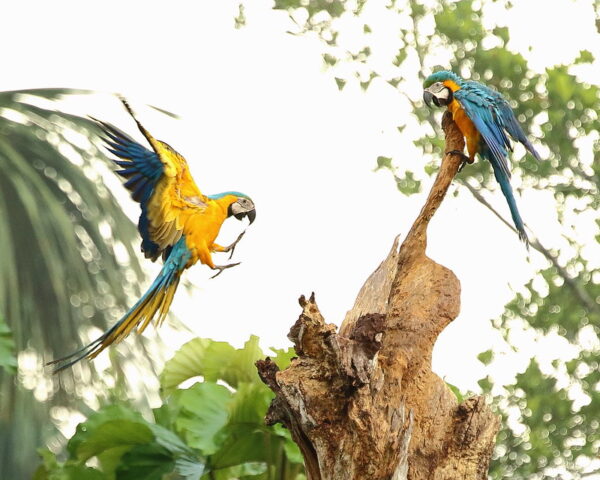
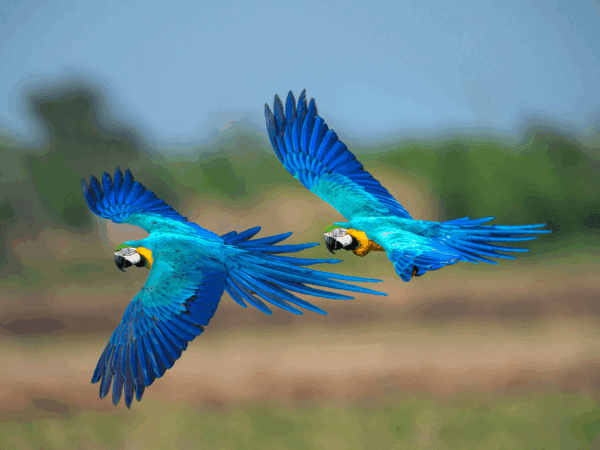
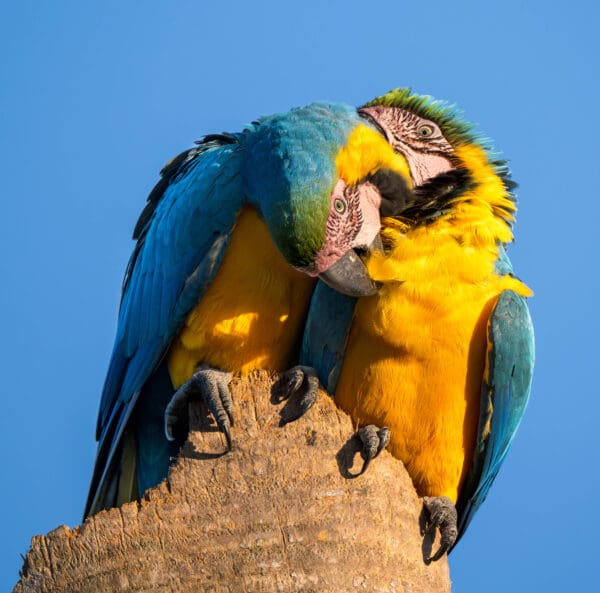
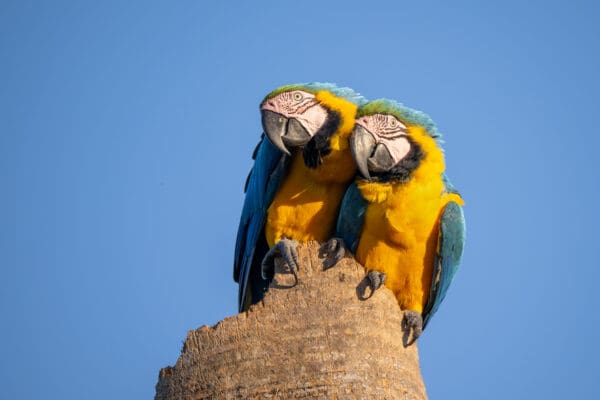
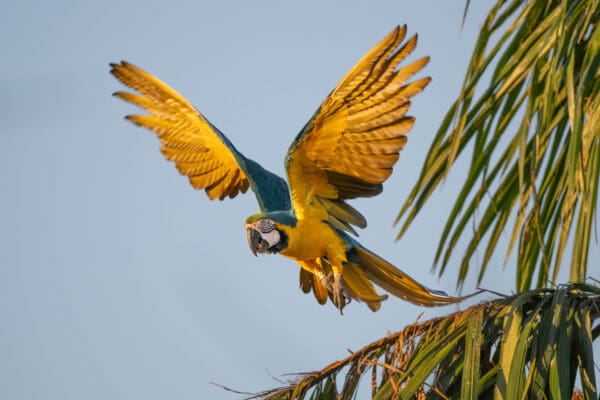
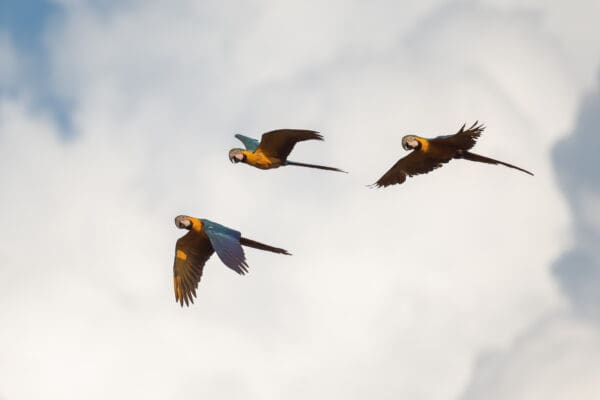
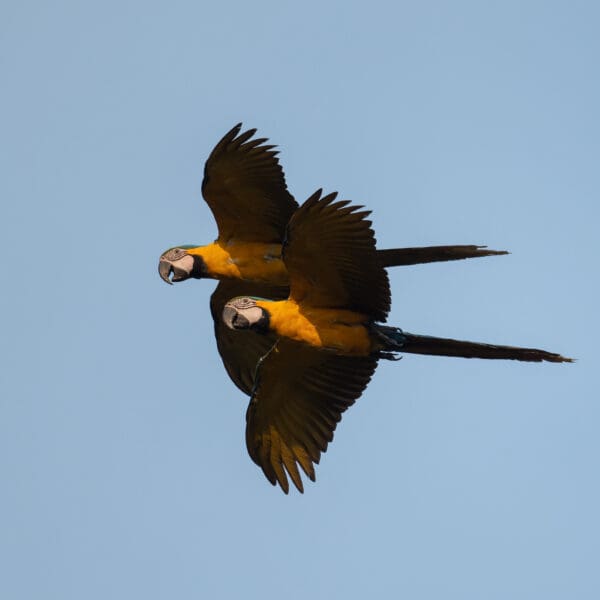
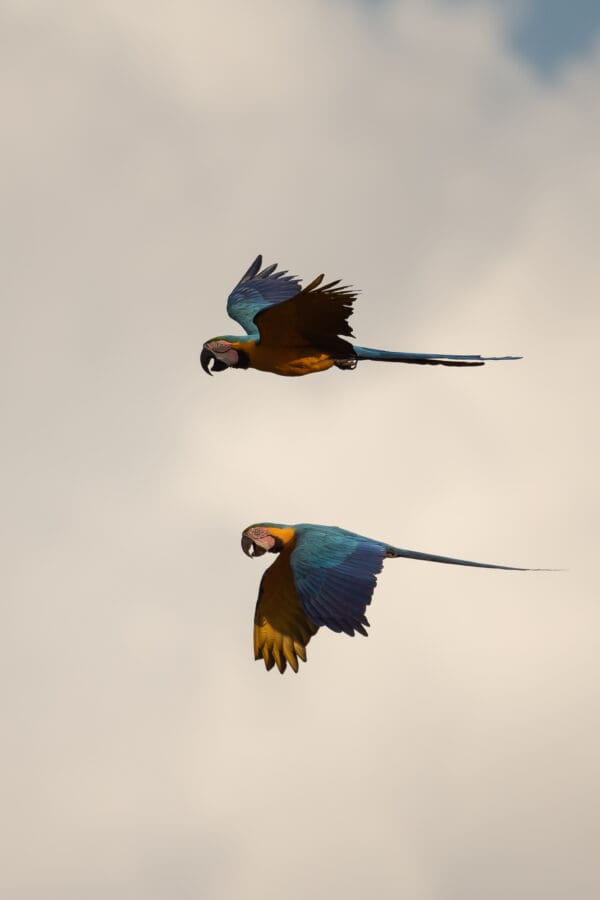
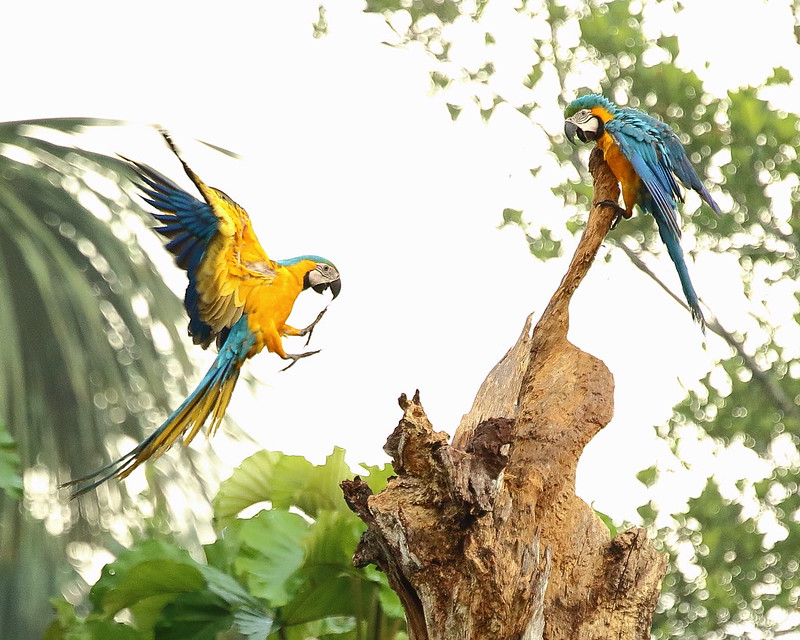
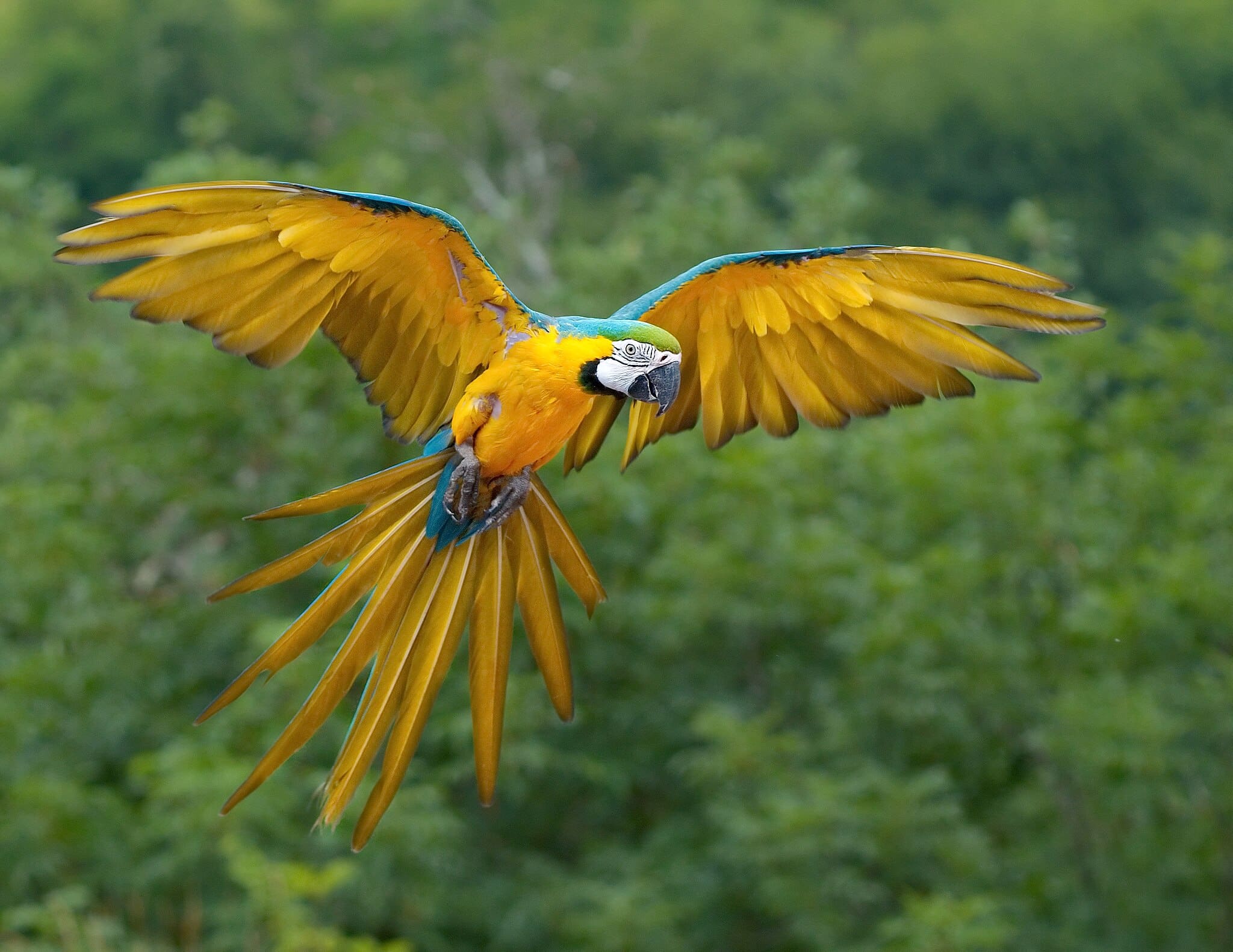
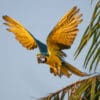
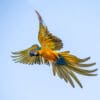
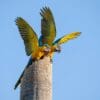
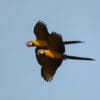
Paired birds often fly so close to one another that their wings touch.

<p><em>Ara</em></p>
Genus:

Ara

<p><em>ararauna</em></p>
Species:

ararauna

Size:

86 cm (33.5 in)

Weight:

1040-1286 g (36.4-45 oz)

Subspecies including nominate:

one

Colour Adult:

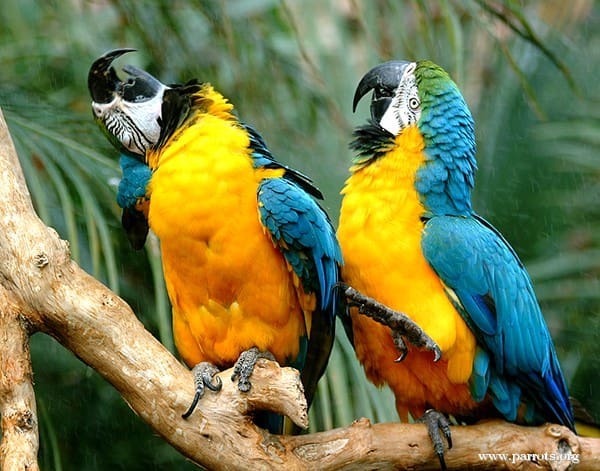
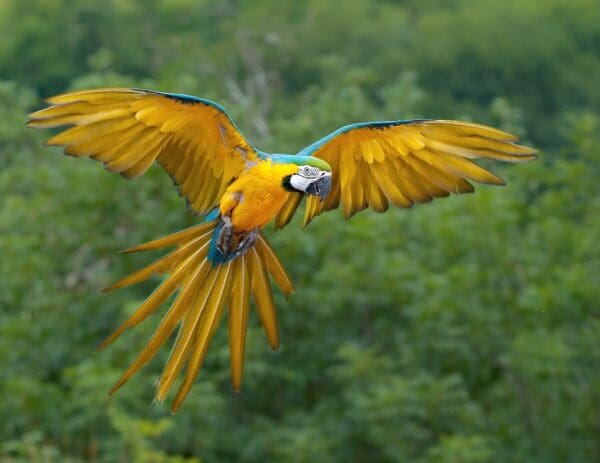
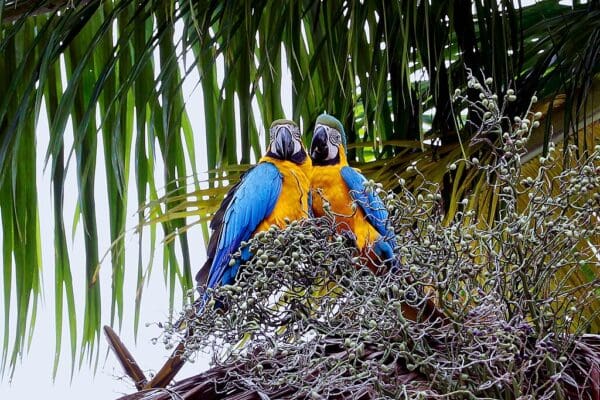
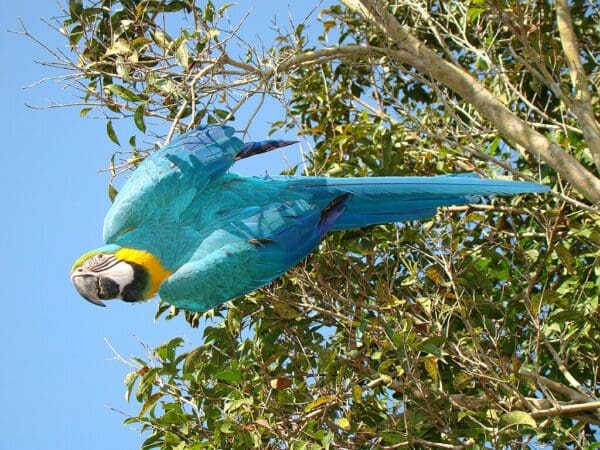
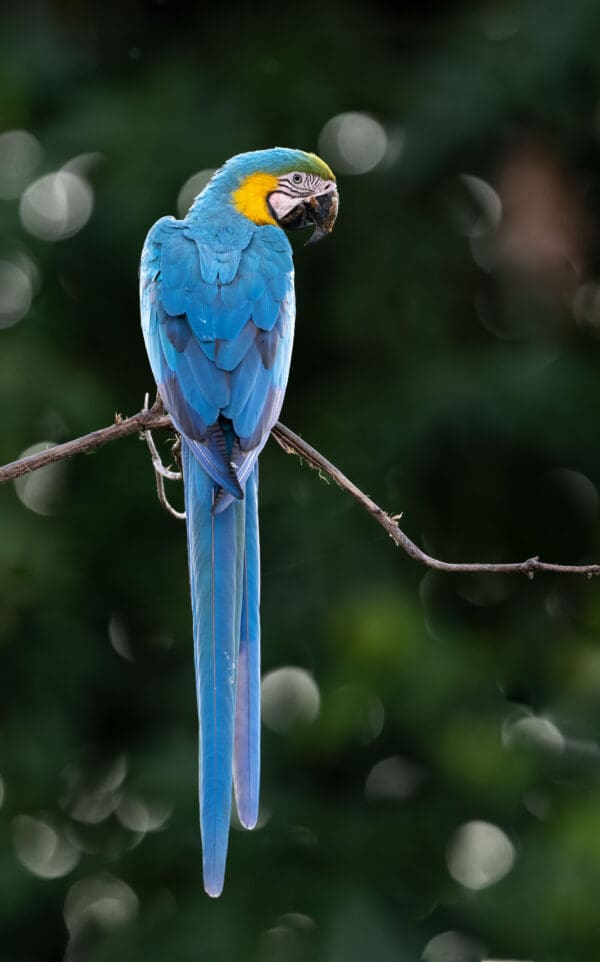
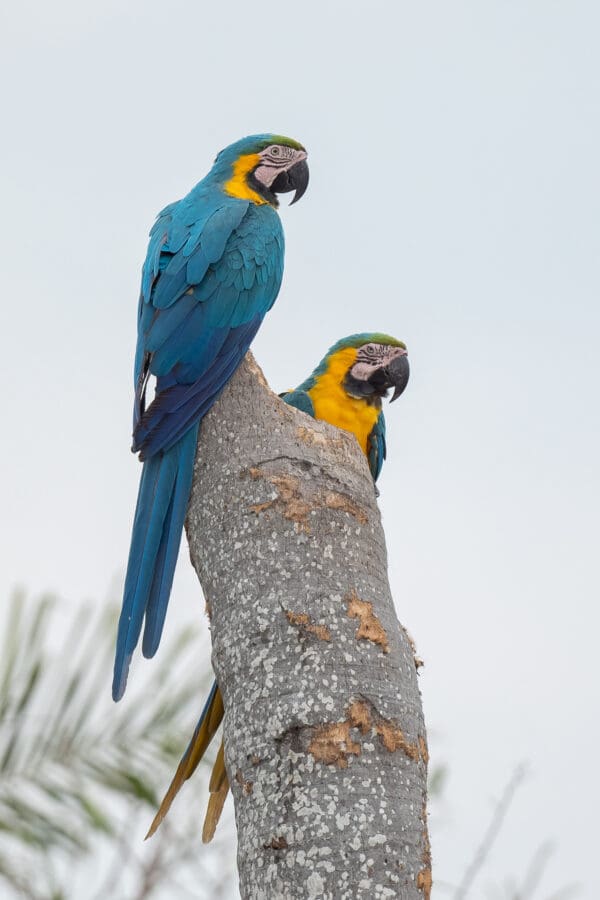
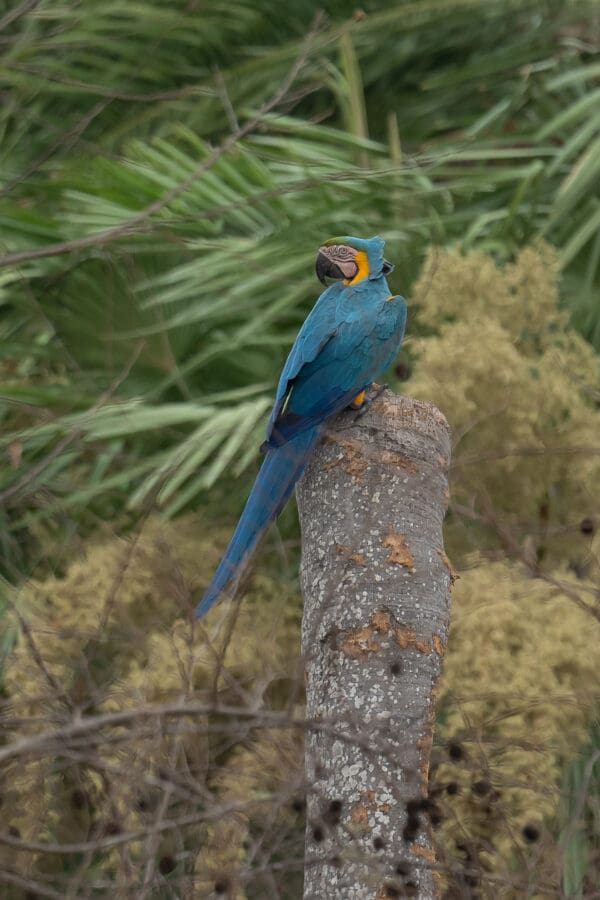
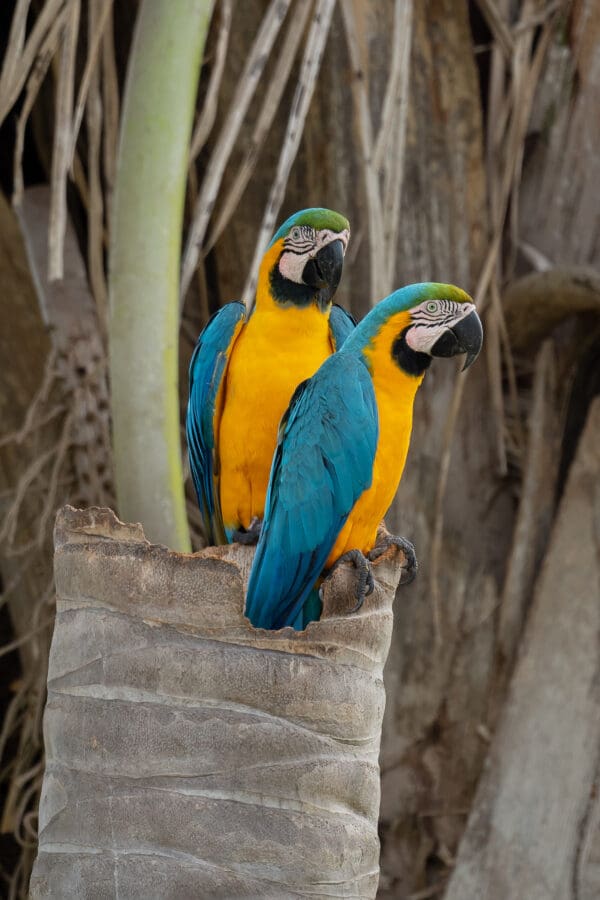
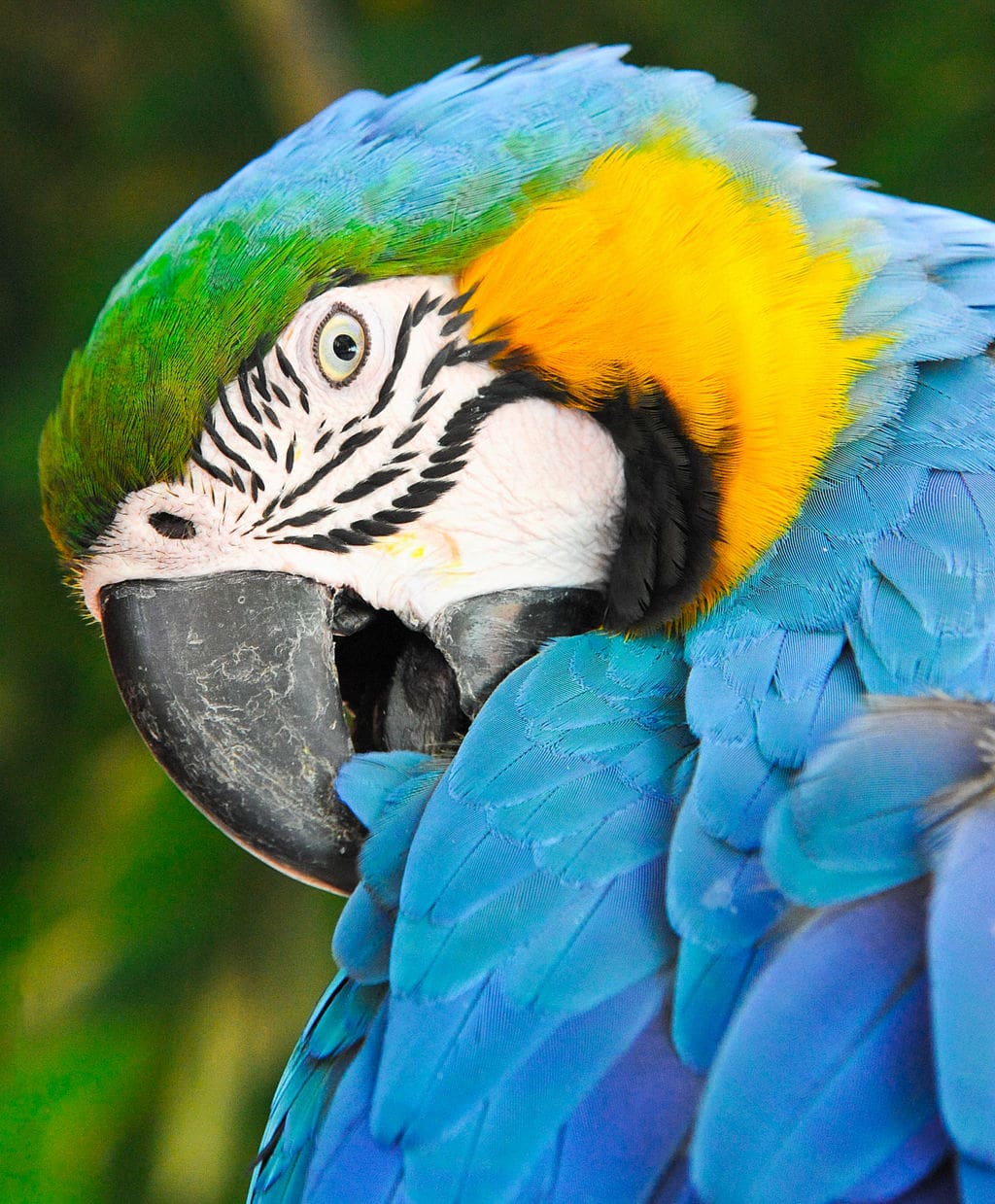
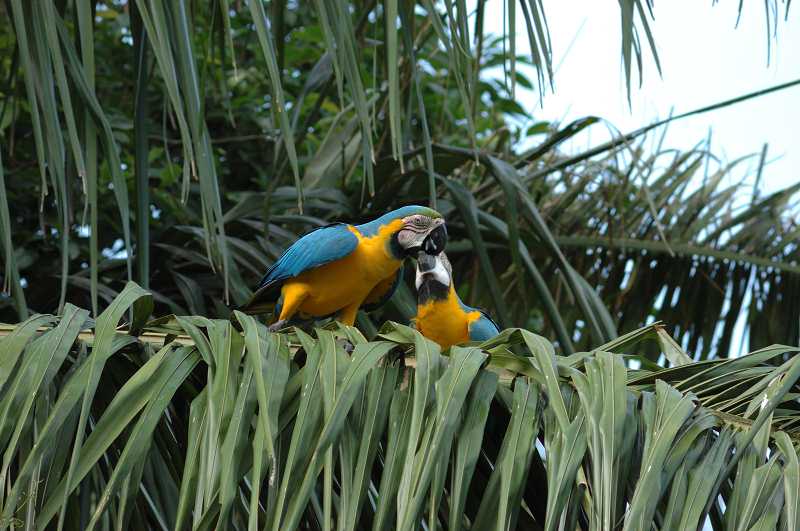
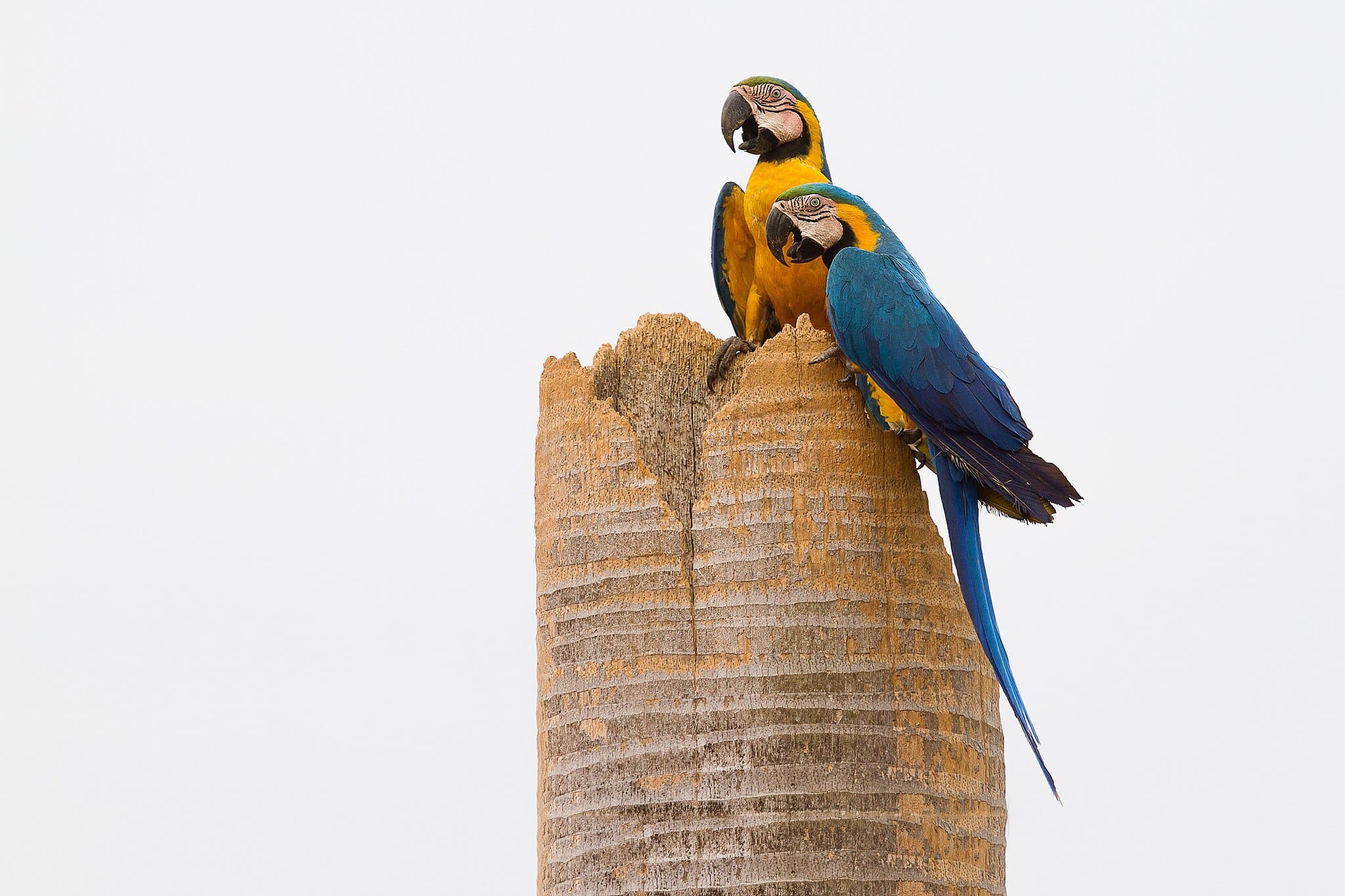
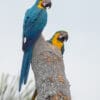
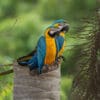
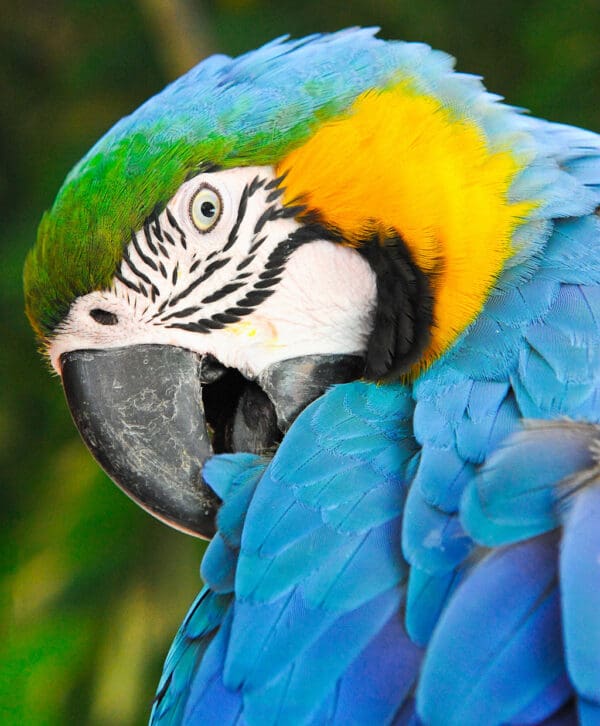
Both adults bright blue above, mostly golden-yellow below; with long blue and yellow tail; bare white facial disc with fine lines of green feathers; throat black; crown and forehead green. Large black/grey beak.  Eye yellow.

Colour Juvenile:

As in adult but with grey/brown eye.

Call:

Loud raucous calls, some harsh.  Most calls are guttural with varying sounds.

Xeno-canto Wildlife Sounds – Blue-and-yellow Macaw

More Information:

Avibase

Content Sources:

CITES
BirdLife International
Cornell Lab of Ornithology/Birds of the World
A Guide to Parrots of the World, Juniper and Parr, 1998
Parrots of the World, Forshaw and Cooper, 1977,1989. 2010 edition
Parrots of the World, Forshaw, 2006.
Parrots in Aviculture, Low, 1992.
Psittacine Aviculture, Schubot, Clubb and Clubb, 1992.

Captive Status:

Common in captivity.

Longevity:

60 yrs

Housing:

Should have access to a large enclosure (15 m (50 ft) long) in which to fly for part of the year.

Diet:

Soaked or sprouted sunflower seed; walnuts, peanuts, pecans, Brazil nuts, pine nuts; corn on the cob, banana, orange and other fruit. Complete kibble for macaws.

Enrichment:

Large macaw toys, chewables (fir branches, pine cones, bird-safe wood), large perches, swings, ladders; regular bathing.

Nest Box Size:

Horizontal box, 16″ x 16″ x 48″ (40.6 cm x 40.6 cm x 122 cm) or 35 gallon (9.2 L) pickle barrel.

Clutch Size:

2 to 4

Fledging Age:

90-100 days.

Hatch Weight:

Peak Weight:

Weaning Weight:

World Population:

Unknown but described as uncommon. Decreasing.

IUCN Red List Status:
Least Concern

CITES Listing:
Appendix II

Threat Summary:

Still fairly common in much of its range, however, is declining with habitat loss in many peripheral areas. Has been subject to very heavy trapping for trade (over 60,000 birds as of 2015). This species is suspected to lose 20.9-35.3% of suitable habitat within its distribution over three generations (38 years) based on a model of Amazonian deforestation. However, given the species’ tolerance of fragmentation/degradation/edge effects and/or the extent of overall losses, it is suspected to decline by <25% over three generations.

Range:

Found in east Panama through Colombia, E and S Venezuela, the Guianas, E Ecuador, E Peru and N Bolivia to Brazil (S to W Paraná); recently reintroduced to Trinidad and seen in Paraguay and N Argentina. Thought to be extinct in W Ecuador.

Habitat:

Occurs in wooded areas, usually near water, including lowland humid forest edge, gallery forest in savanna, savanna with scattered trees and Mauritia palms, seasonally flooded várzea forest and gallery forest. Sometimes forages in open country. Up to 500 m (1640 ft).

Wild Diet:

Feeds on Spondias, Terminalia, Hura, Enterolobium, Inga, Parkia and Platypodium seeds, Quararibea nectar, Combretum flowers, fruit and/or petioles of Ficus, pulp of Sloanea, Schwartzia, Brosimum, Sorocea, aril of Otoba, Iriartea leaves, mesocarp of Scheelea and Pouteria, and undetermined parts of Mauritia; Maximiliana palm nuts in Surinam.
Ecology and Behaviour:

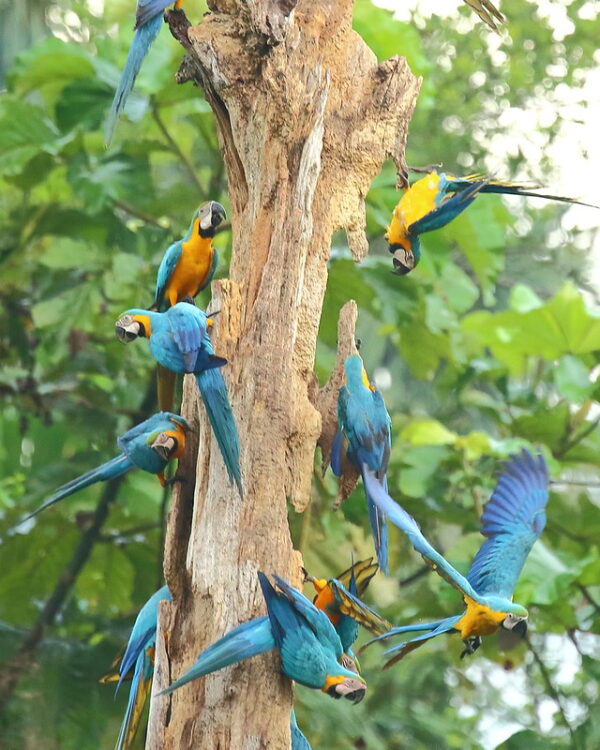
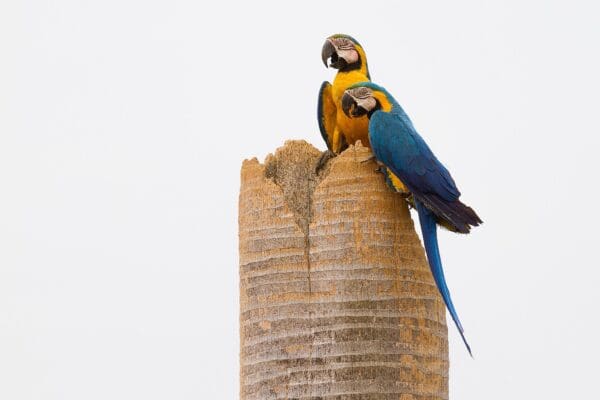
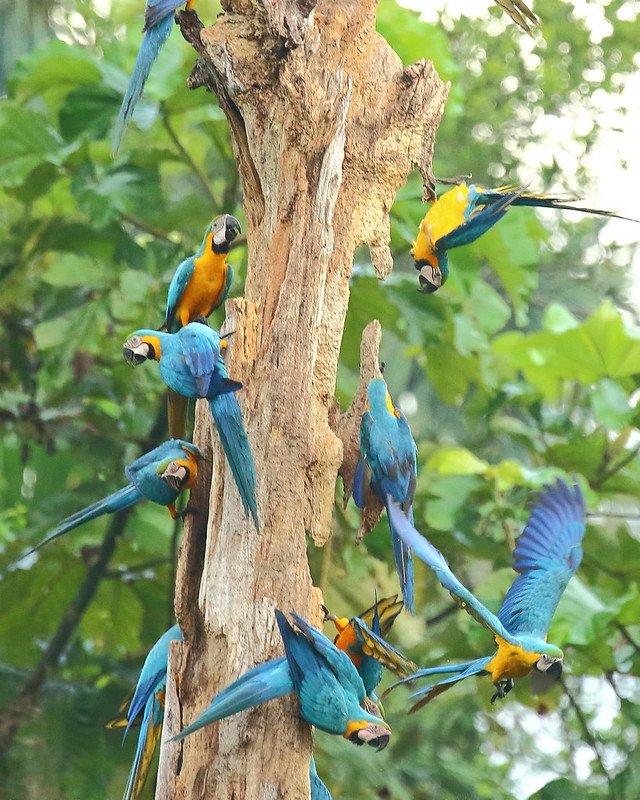
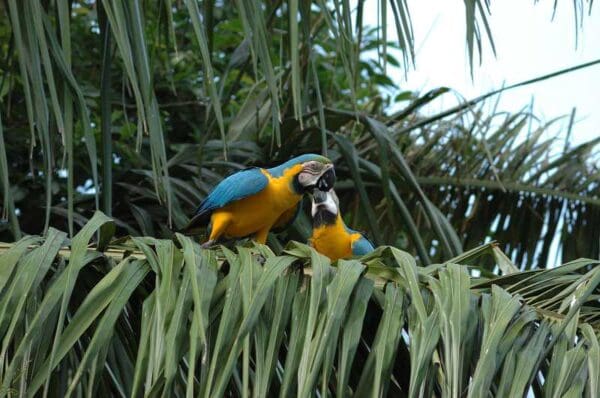
Feeds quietly in top of forest canopy; large numbers congregate at riverbank locations, with other parrot species, to take clay soils. Usually found in pairs, but often in noisy flocks of up to 25 birds.

Clutch and Egg Size:

2 to 4, elliptical 46 x 36 mm (1.8 x 1.4 in)

Breeding Season:

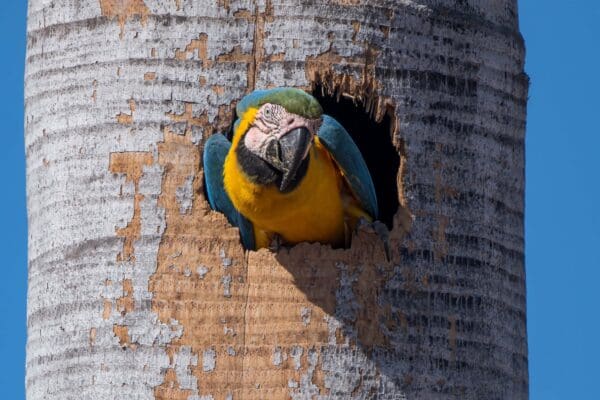
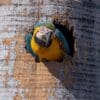
January-March in Surinam, April-May in Trinidad, December-February in Colombia. Nest is in dead tree cavity.

Join Our Flock

FlockTalk our monthly newsletter for parrot people everywhere:

+ News from the world of parrots

+ Updates on wild parrot projects

+ Inspiring updates from partners

+ Real stories from the parrot flock

+ Plus, expert tips for caring for your feathered friends at home.


Stay In The Loop, Sign Up Now.

FlockTalk: our monthly newsletter for parrot people everywhere:

Parrot news. Conservation wins. Pet care tips. All in one monthly email.

We do not sell or share your information with anyone