LEARN

Hyacinth Macaw

( Anodorhynchus hyacinthinus )

Also known as:
Hyacinthine Macaw, Blue Macaw, Black Macaw

Also known as:
Hyacinthine Macaw, Blue Macaw, Black Macaw

Type :
Geography:

DID YOU KNOW?

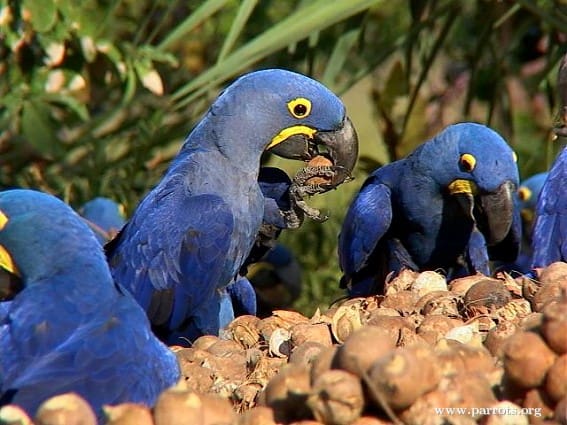
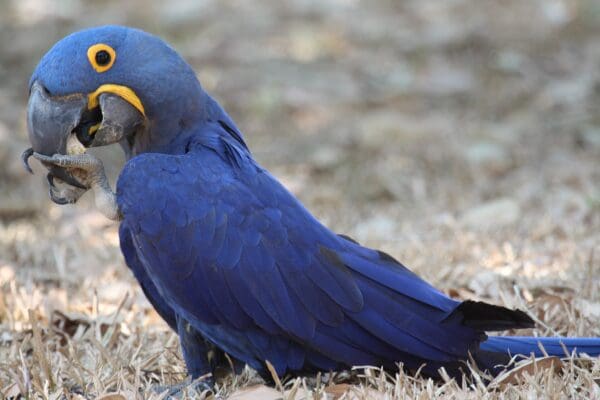
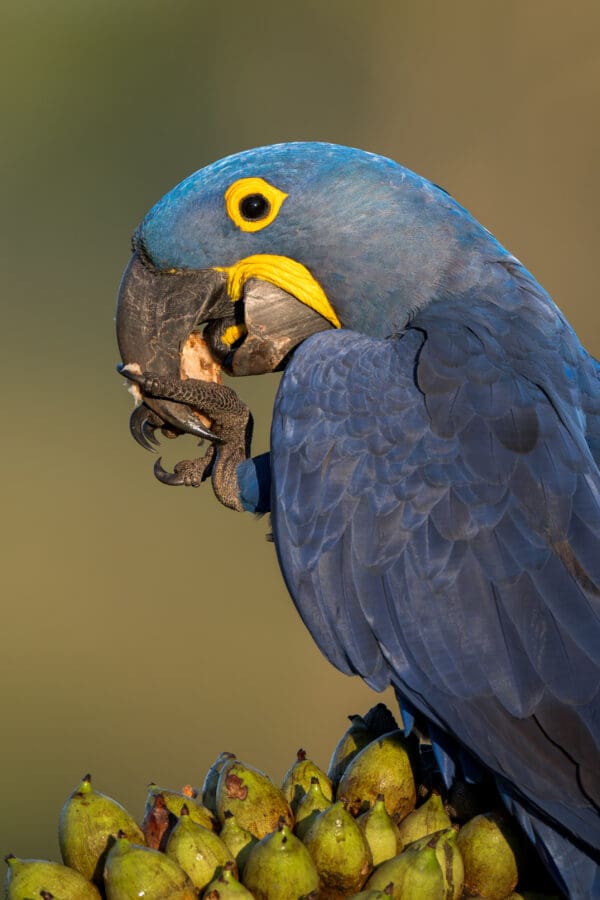
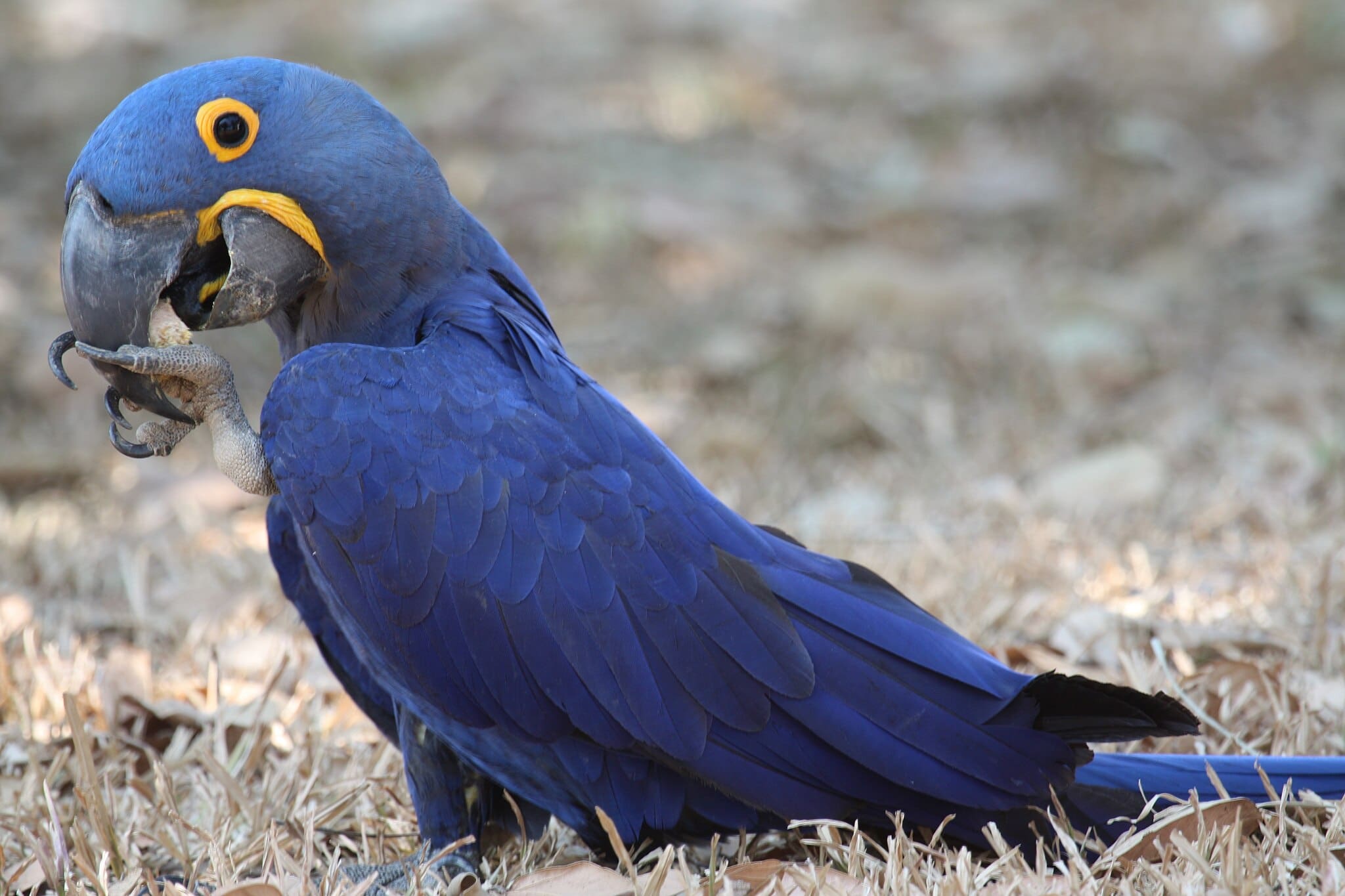
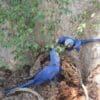
The Hyacinth Macaw forages for palm nuts found in cattle dung. The nuts are consumed by the cattle and pass through undigested.

<p><em>Anodorhynchus</em></p>
Genus:

Anodorhynchus

<p><em>hyacinthinus</em></p>
Species:

hyacinthinus

Size:

90-100 cm (35-39 in)

Weight:

1200-1450 g (42-50.75 oz)

Subspecies including nominate:

one

Colour Adult:

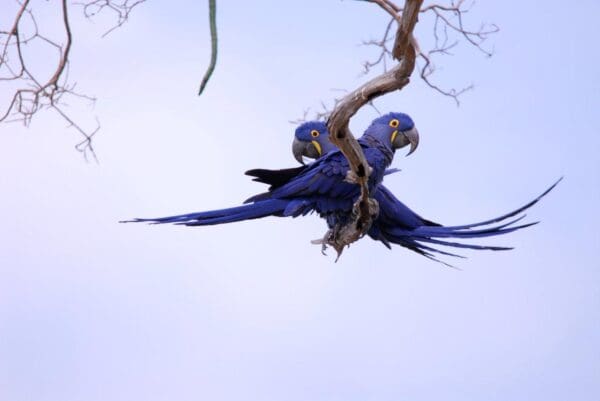
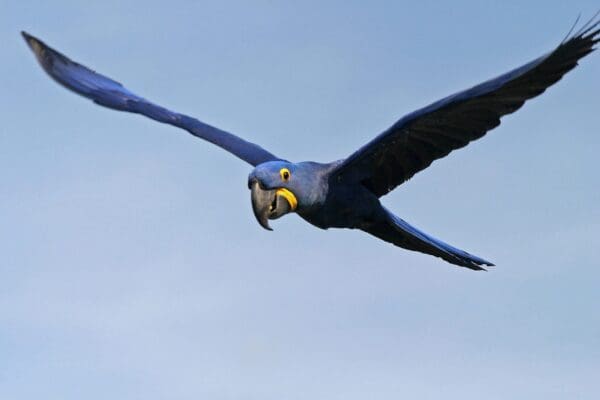
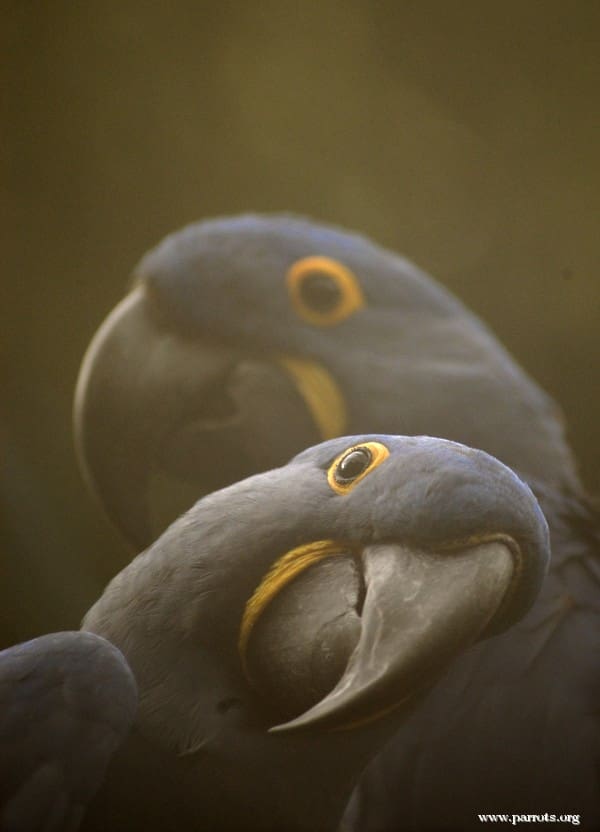
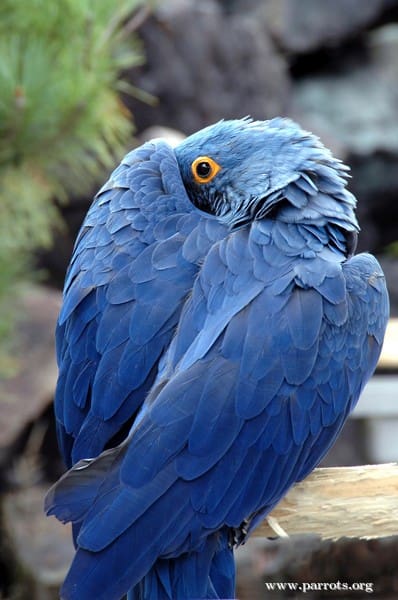
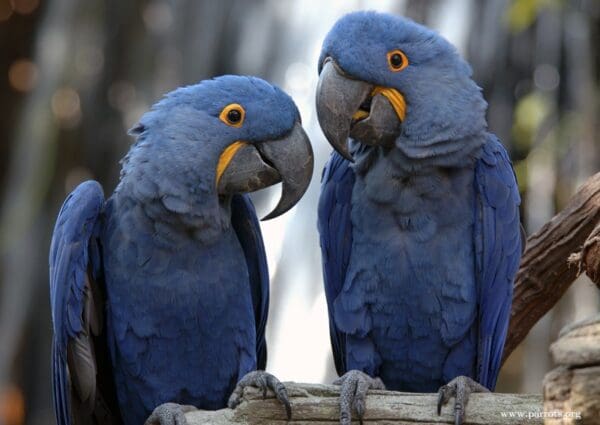
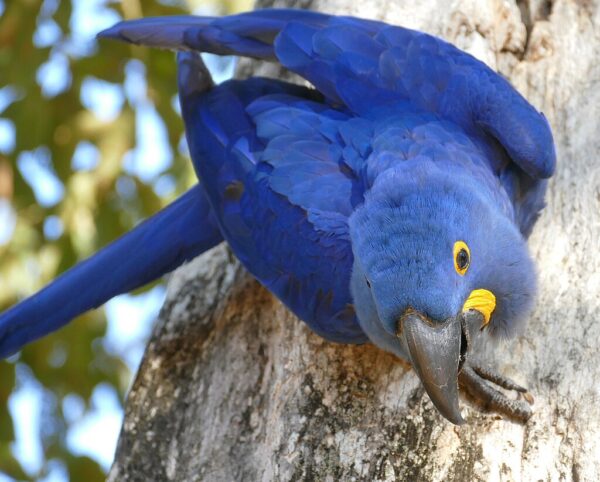
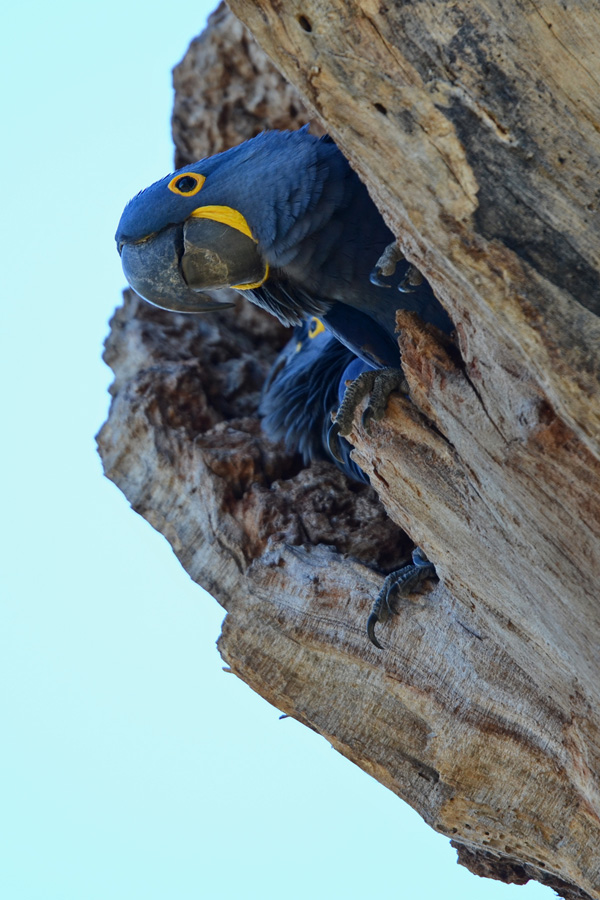
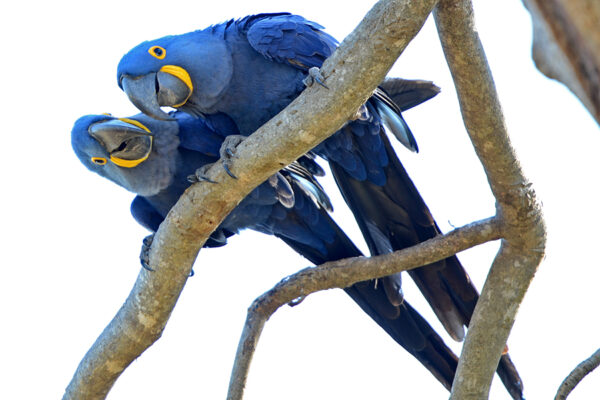
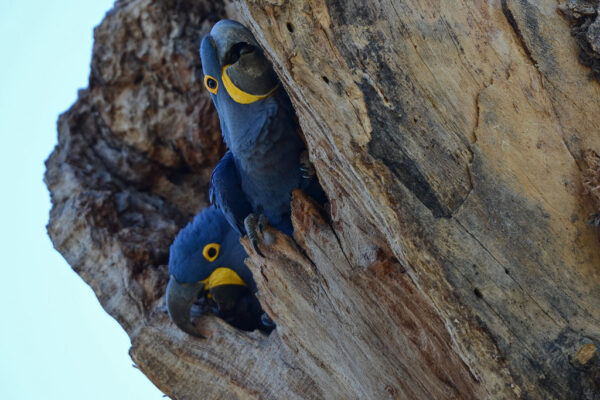
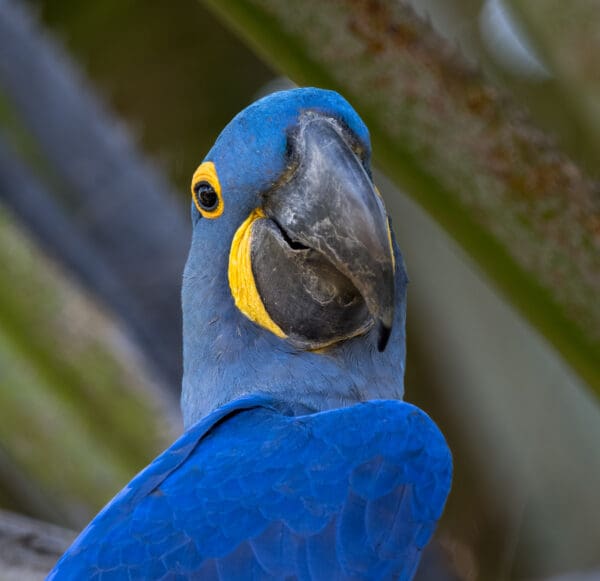
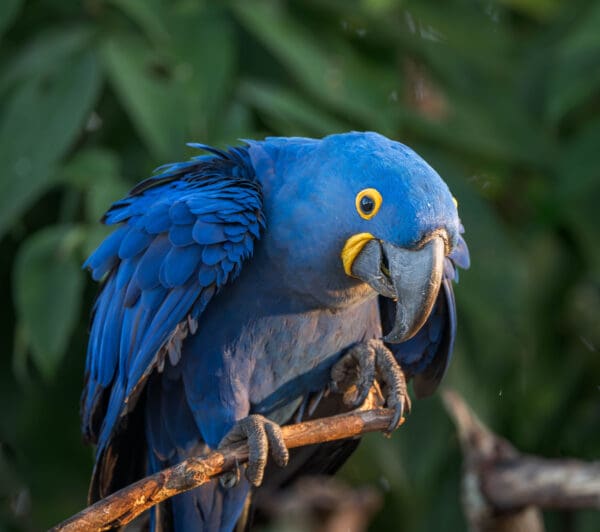
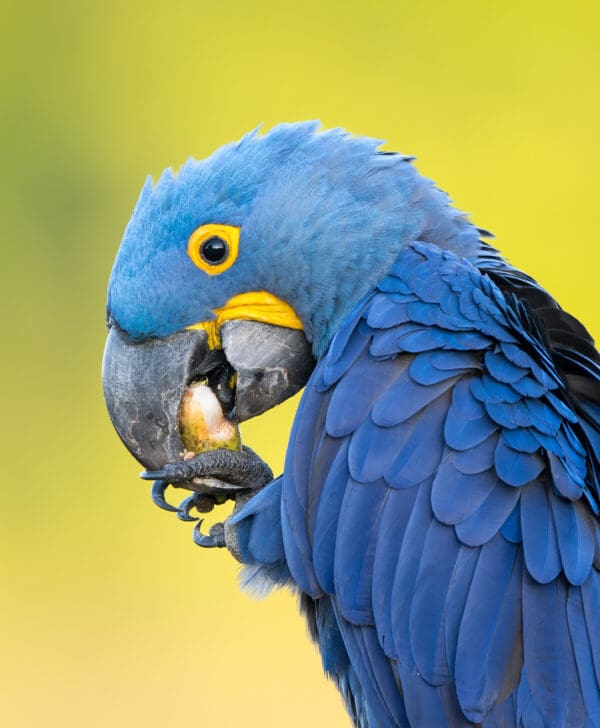
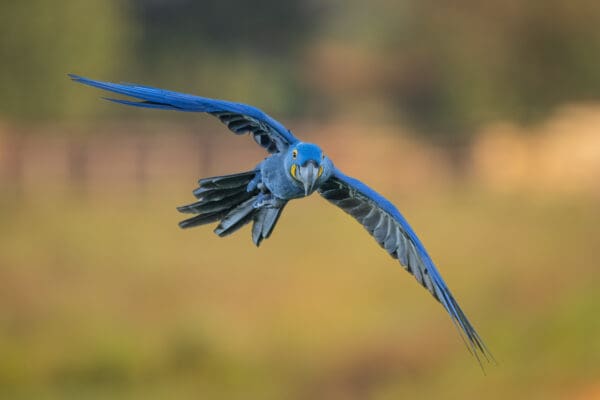
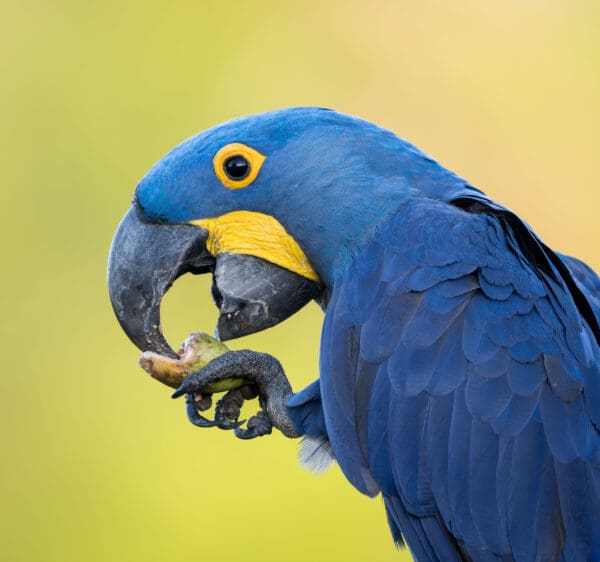
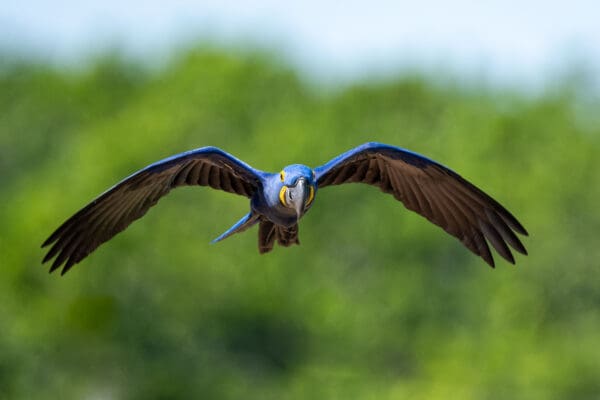
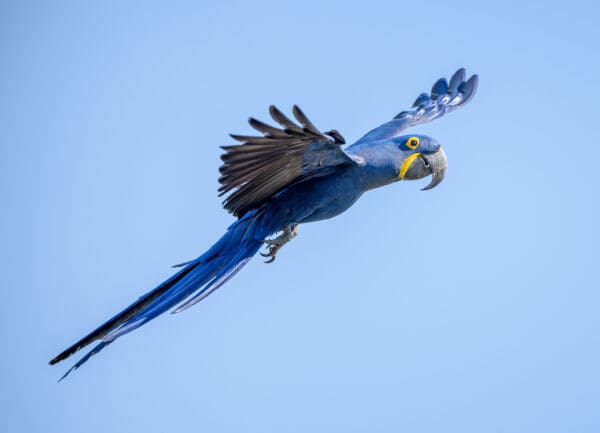
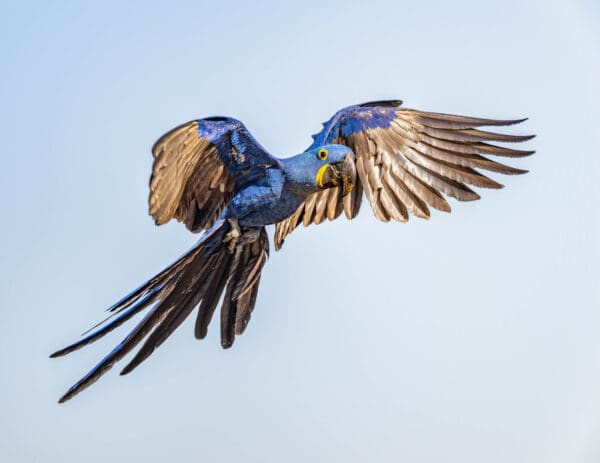
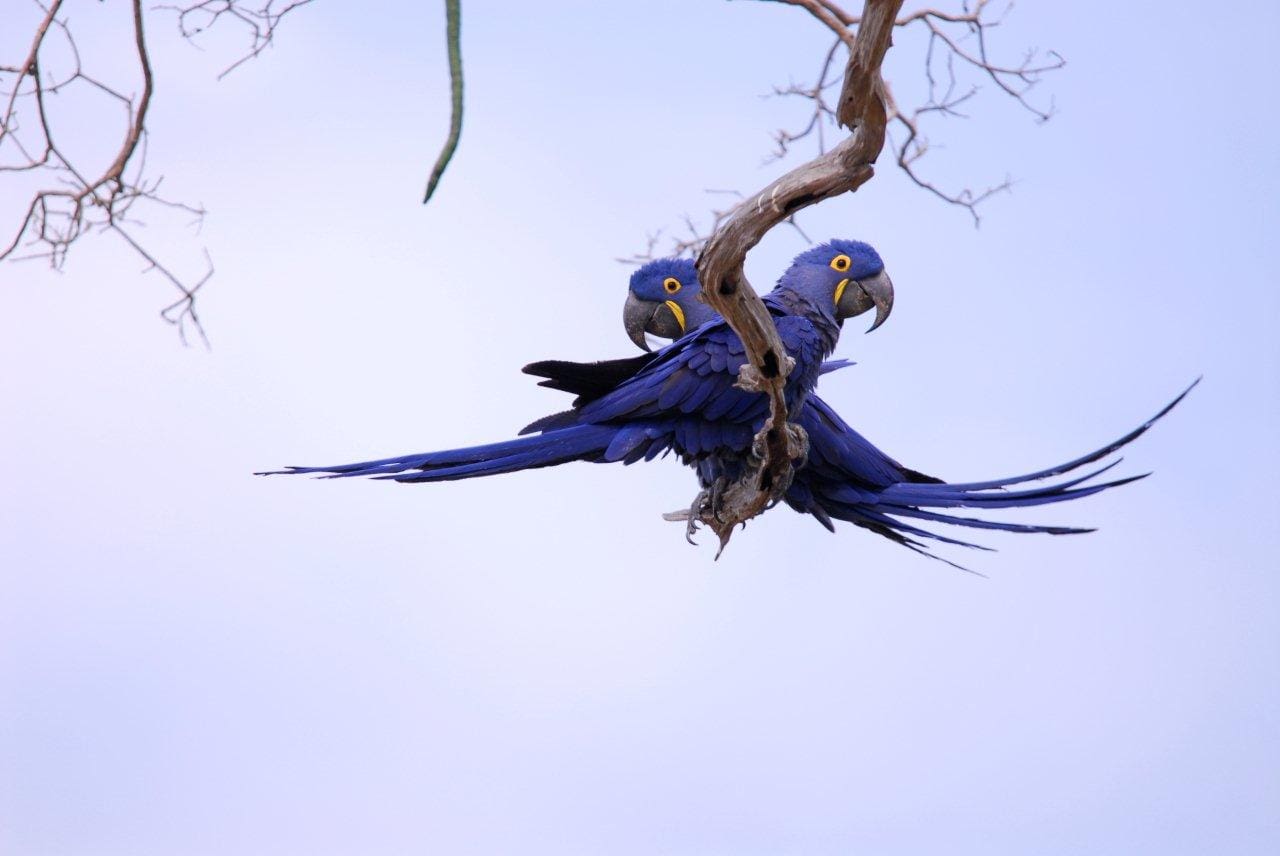
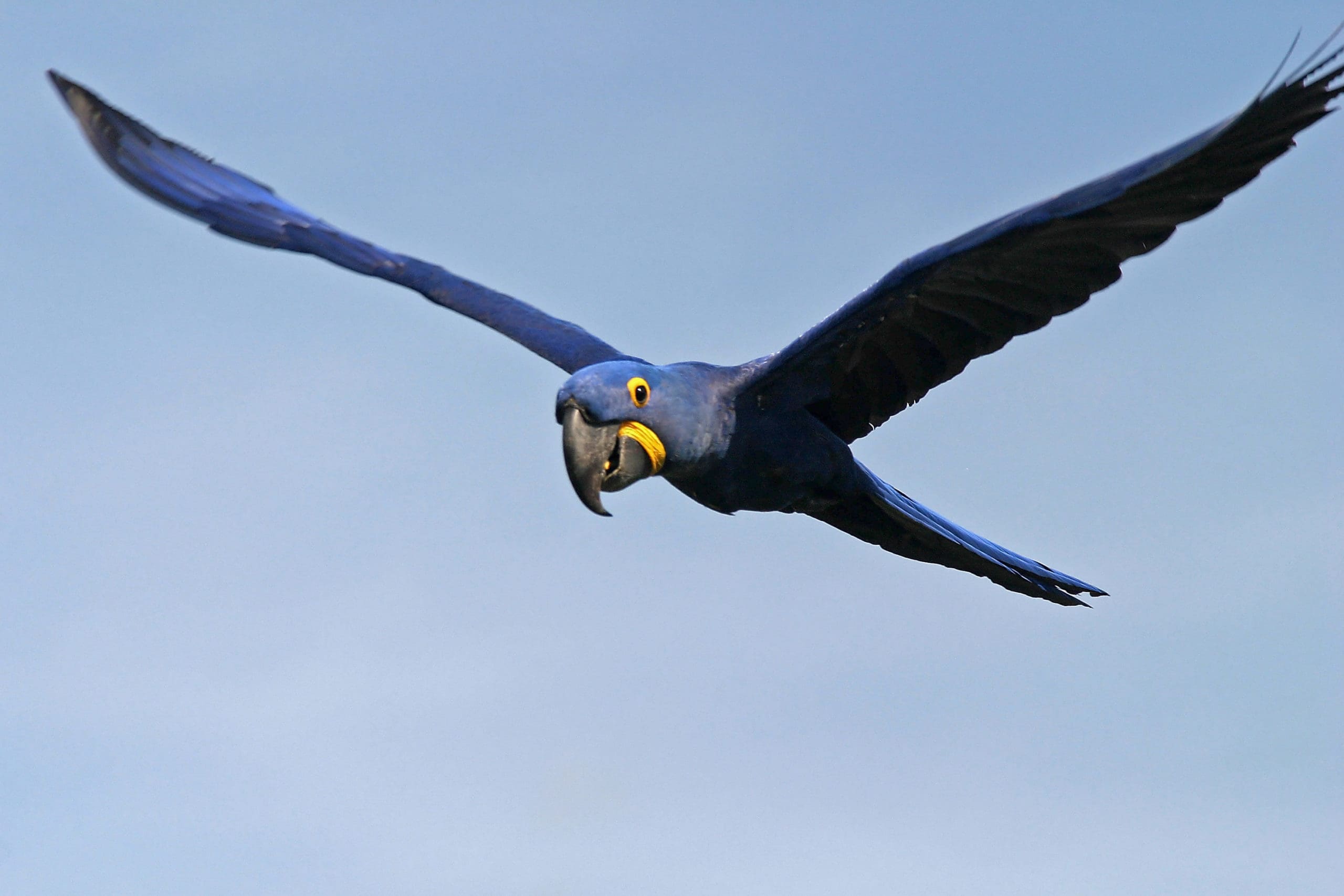
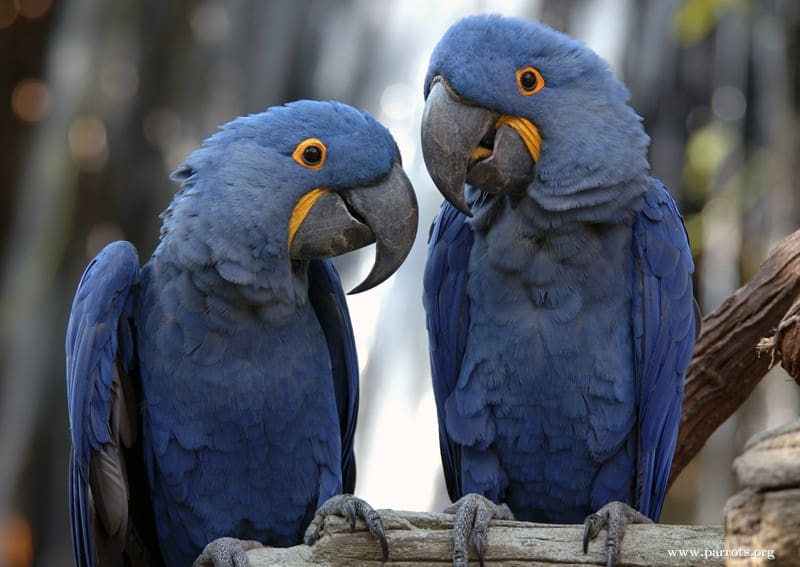
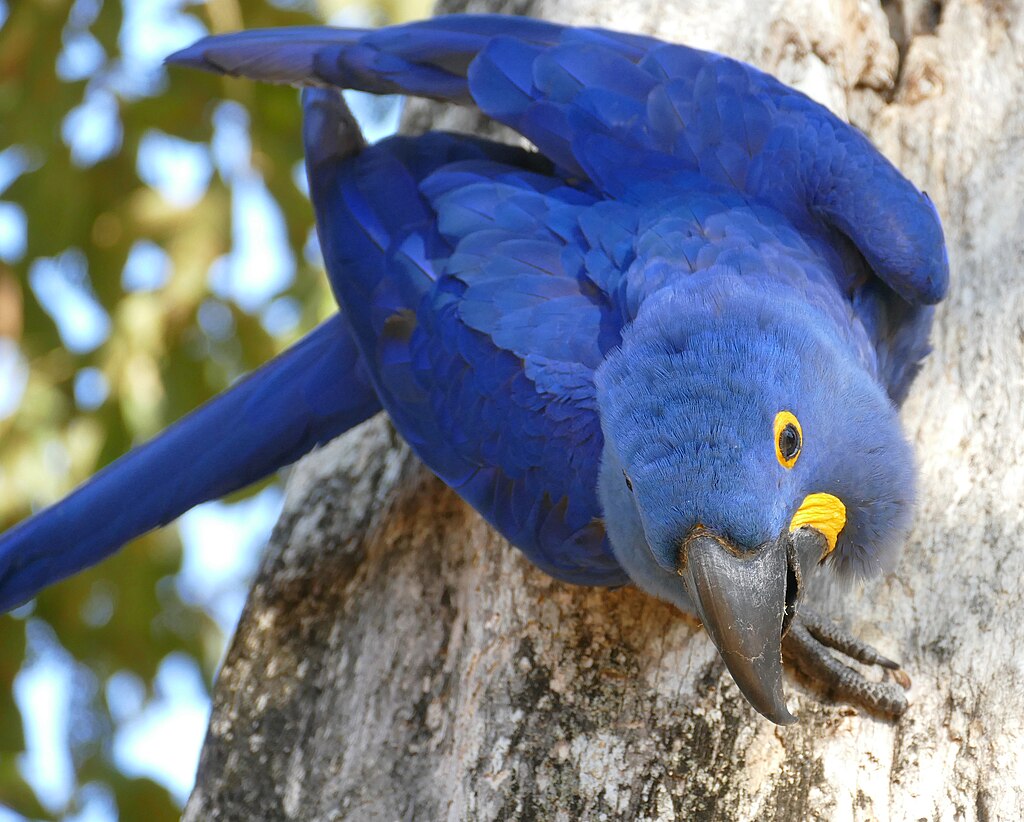
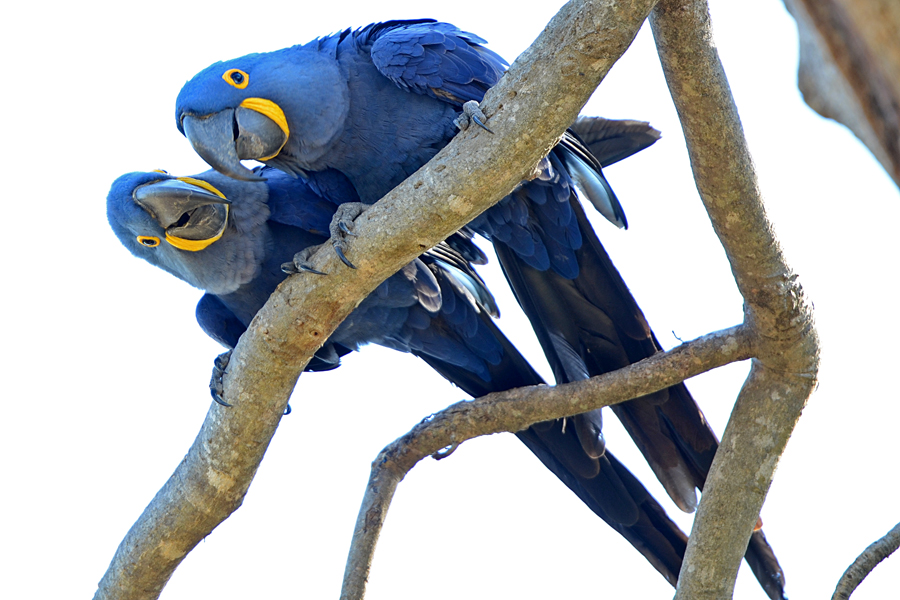
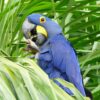
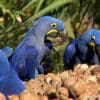
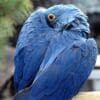
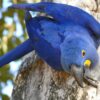
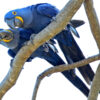
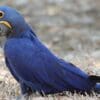
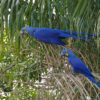
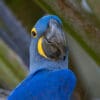
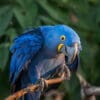
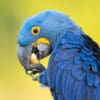
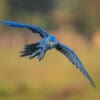
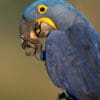
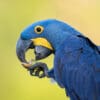
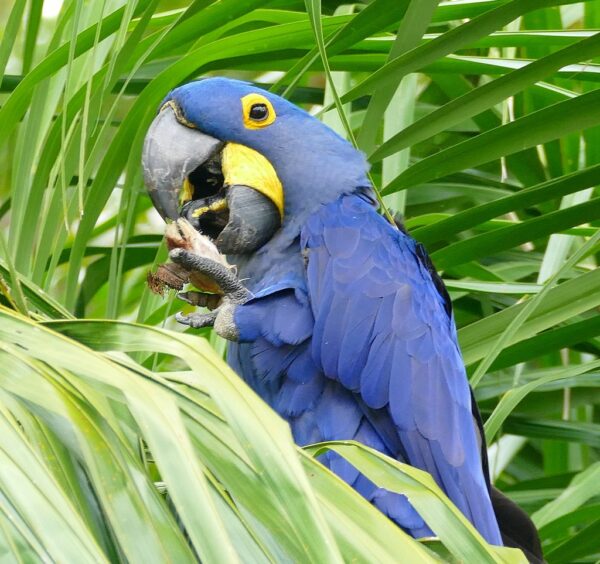
Both adults purple/blue body colour; slightly darker on wings, paler on head. Beak grey/black. Eye ring bare, yellow. Moon-shaped lappet surrounding base of mandible yellow. Eye dark brown.

Colour Juvenile:

As in adult but with shorter tail, and eye ring and lappets paler.

Call:

Loud croaking and screeching notes, warning cry harsh and loud.  Call sometimes two staccato notes with brief pause before repeating.  While roosting will also scold, yap and growl, also deep purring.  Flocks produce prodigious noise.

Xeno-canto Wildlife Sounds-Hyacinth Macaw

Content Sources:

CITES
Avibase
BirdLife International
Cornell Lab of Ornithology/Birds of the World
A Guide to Parrots of the World, Juniper and Parr, 1998
Parrots: Status Survey and Conservation Plan 2000-2004, Snyder, McGowan, Gilardi and Grajal, 2000.
Parrots of the World, Forshaw and Cooper, 1989. 2010 edition
Parrots of the World, Forshaw, 2006.
Parrots in Aviculture, Low, 1992.
Psittacine Aviculture, Schubot, Clubb and Clubb, 1992.

Captive Status:

Rare until 1970s, then increased greatly in 1980’s due to increased breeding.

Longevity:

30-50 yrs or more.

Housing:

Should have access to a large enclosure at least 15 m (50 ft) for at least part of the year; keeping permanently indoors not recommended.

Diet:

Soaked or sprouted sunflower seed; nuts including: walnuts, pecans, Brazil nuts, pine nuts; vegetables and fruit such as: corn on the cob, banana, orange, apple and others, and if possible, palm fruits. Complete kibble for macaws.

Enrichment:

Are vigorous chewers, so provide plenty of bird-safe, unsprayed woods such as fir, pine, willow, and elder; heat-sterilised pine cones, large wooden or vegetable-tanned leather toys.

Nest Box Size:

Barrel, 21 in x 36 in.

Clutch Size:

2

Fledging Age:

14 weeks

Hatch Weight:

Peak Weight:

Weaning Weight:

World Population:

4700-11,000 mature individuals, stable.

IUCN Red List Status:
Vulnerable

CITES Listing:
Appendix I

Threat Summary:

Very heavy trapping for trade (population was reduced to an estimated 3000 birds during the period 1970–1990), some local hunting for food and feathers, and the loss of nest sites to poaching and agriculture. In the Pantanal, only 5% of S. apetala trees have suitable cavities. Young trees are foraged by cattle and burned by frequent fires.

Range:

Three isolated groups in central South America: from north-central to south-central Brazil, ranging into eastern Bolivia and northwestern Paraguay; formerly present in Amapá (northern Brazil), and possibly still so.

Habitat:

Occurs in tropical moist lowland forest edge, palm savannas, open dry woodland with gallery forest and Mauritia palm stands, the critical factors evidently being the presence and abundance of palm food trees.

Wild Diet:

Dependent on the nuts of many palms, including Maximiliana, Orbignya, Astrocaryum in the Amazon; in the Pantanal, Scheelea and Acrocomia sp.; in the dry northeastern portion of the range, Attalea funifera and Syagrus coronata. Other fruits and Pomacea molluscs are also taken.

Ecology and Behaviour:

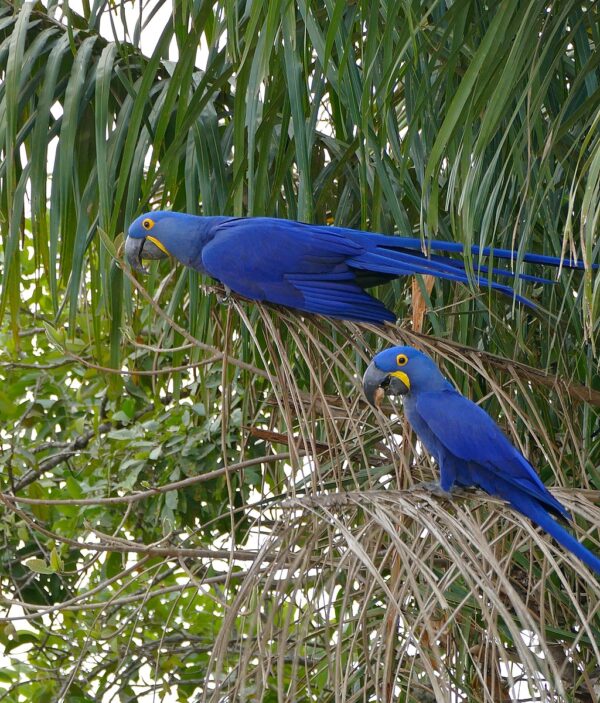
Found generally in pairs, family groups or small flocks of up to 10, noisy and conspicuous. Peak foraging activity in morning or late afternoon.

Clutch and Egg Size:

2 eggs, 53 x 40 mm (2 x 1.5 in)

Breeding Season:

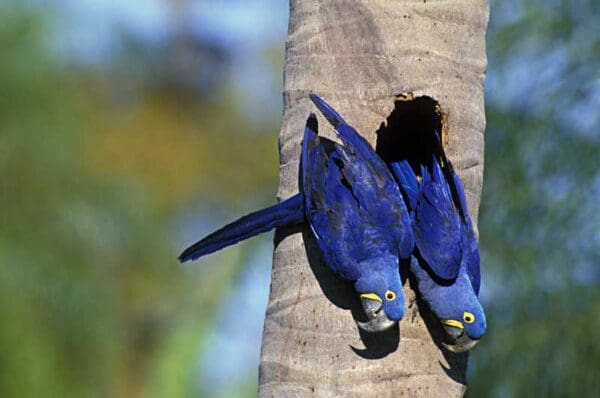
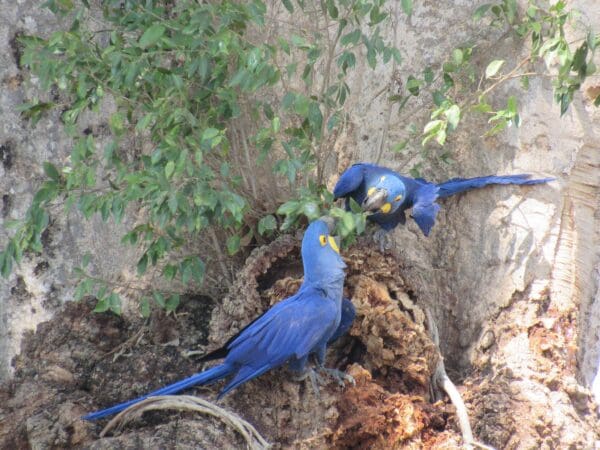
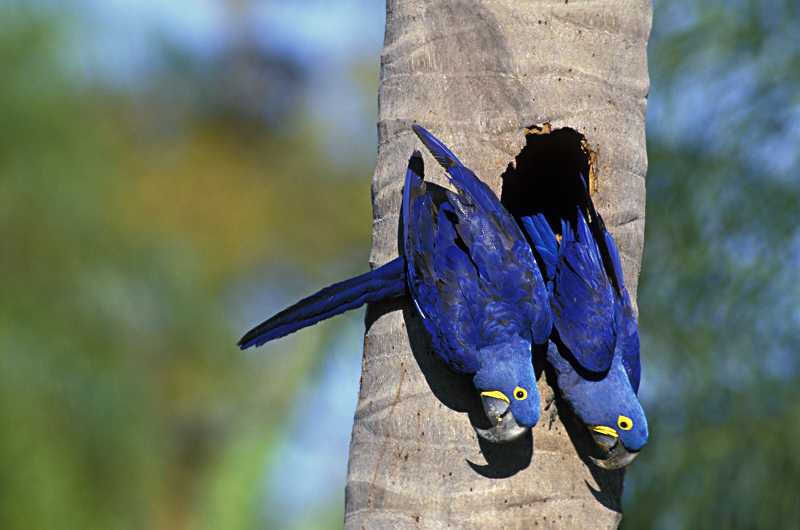
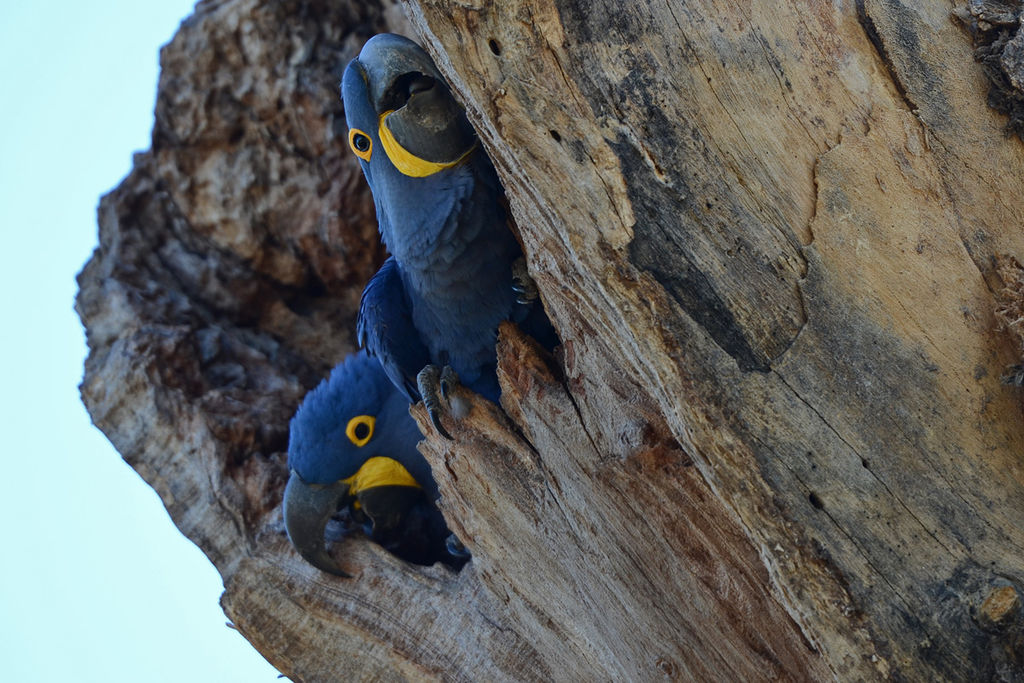
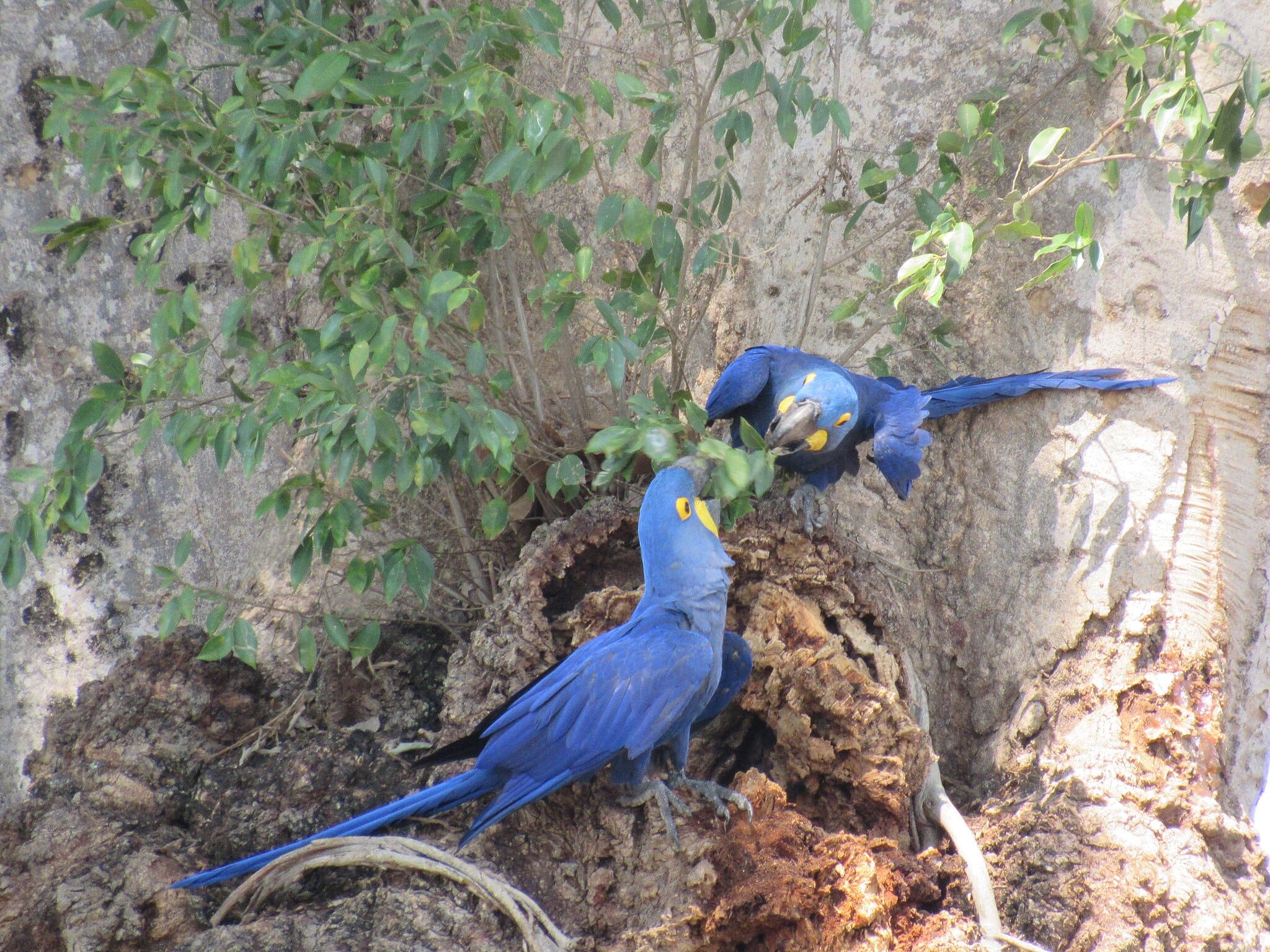
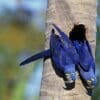
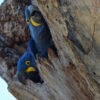
July-December. Nests in tree cavity in lower Amazon and Pantanal; in NE Brazil nests in cliffs.

Join Our Flock

FlockTalk our monthly newsletter for parrot people everywhere:

+ News from the world of parrots

+ Updates on wild parrot projects

+ Inspiring updates from partners

+ Real stories from the parrot flock

+ Plus, expert tips for caring for your feathered friends at home.


Stay In The Loop, Sign Up Now.
FlockTalk: our monthly newsletter for parrot people everywhere:

Parrot news. Conservation wins. Pet care tips. All in one monthly email.

We do not sell or share your information with anyone