LEARN

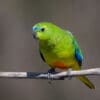
Orange-bellied Parrot

( Neophema chrysogaster )

Also known as:
Orange-bellied Grass-Parakeet, Orange-breasted Parrot or Grass-Parakeet

Also known as:
Orange-bellied Grass-Parakeet, Orange-breasted Parrot or Grass-Parakeet

Geography:

DID YOU KNOW?

In the 19th century this species occurred in flocks of thousands of individuals.

<p><em>Neophema</em></p>
Genus:

Neophema

<p><em>chrysogaster</em></p>
Species:

chrysogaster

Size:

22 cm (8.6 in)

Weight:

40-50 g (1.4-1.75 oz)

Subspecies including nominate:

one

Colour Adult:

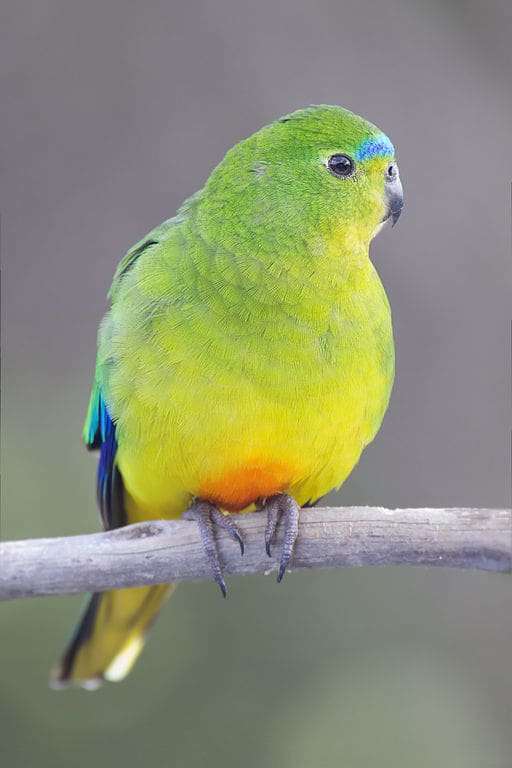
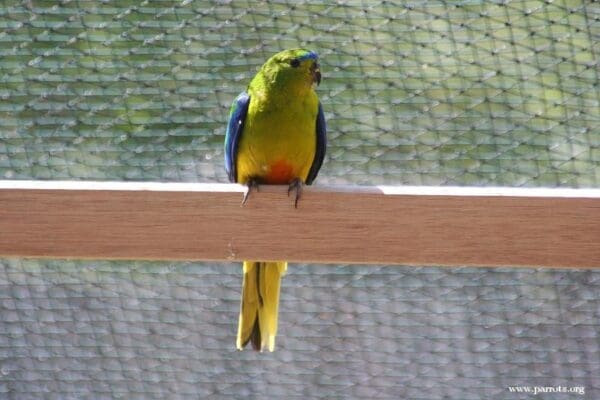
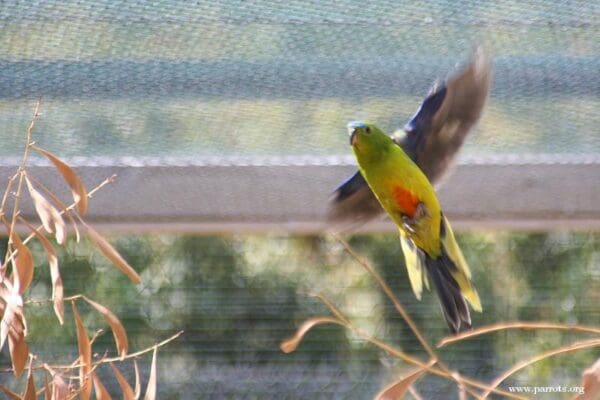
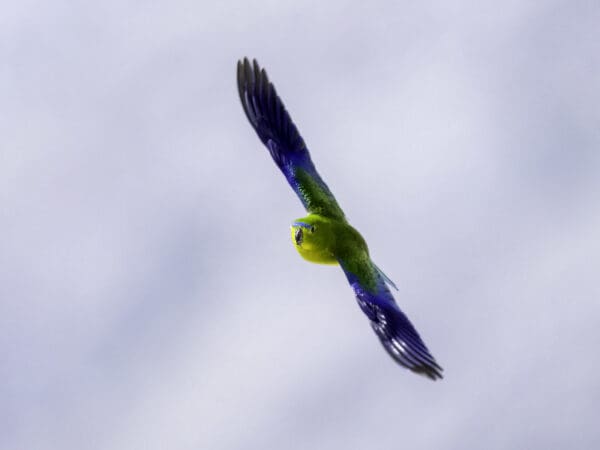
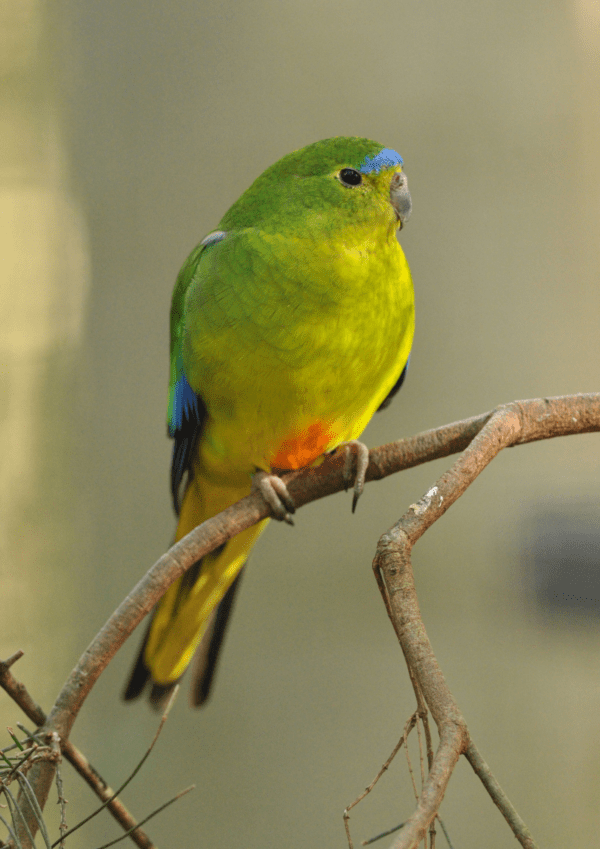
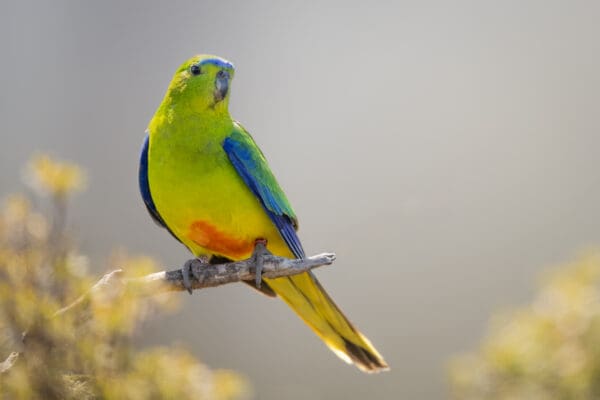
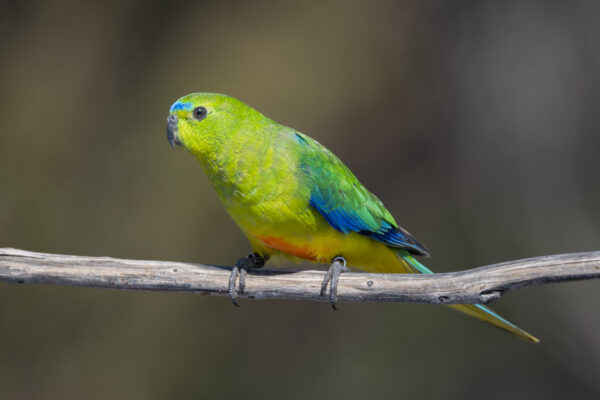
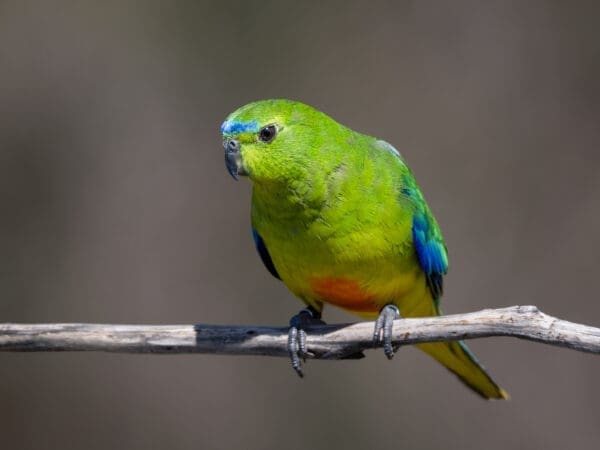
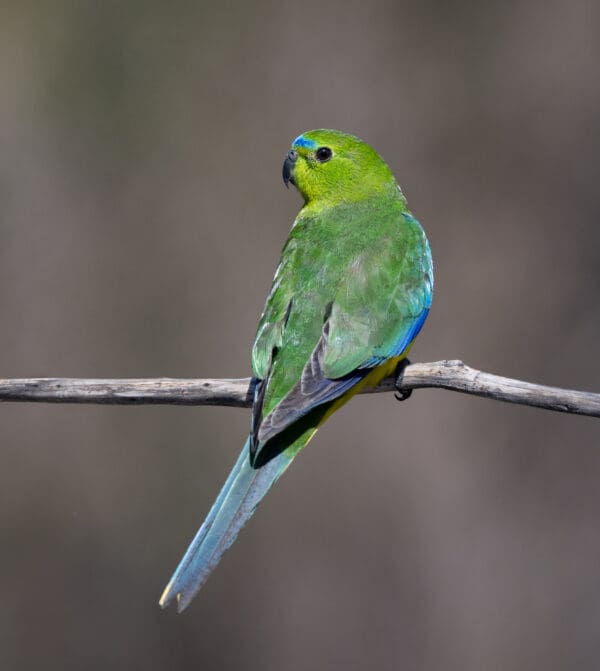
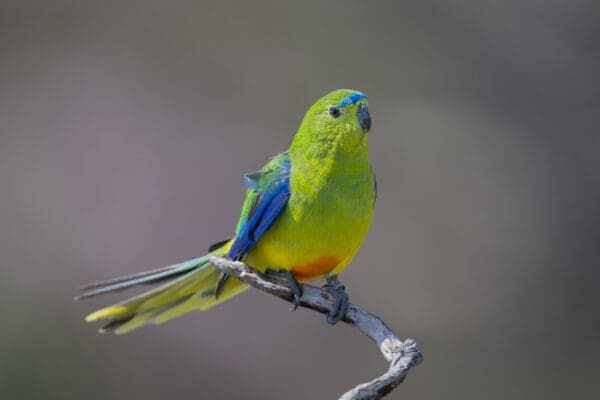
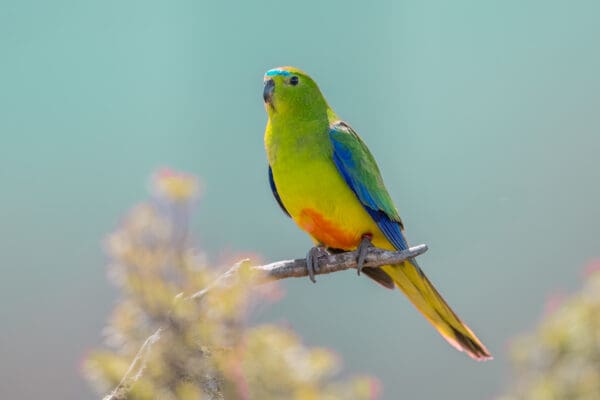
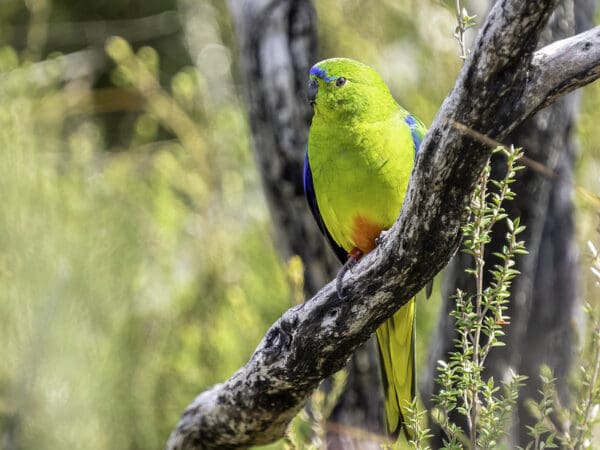
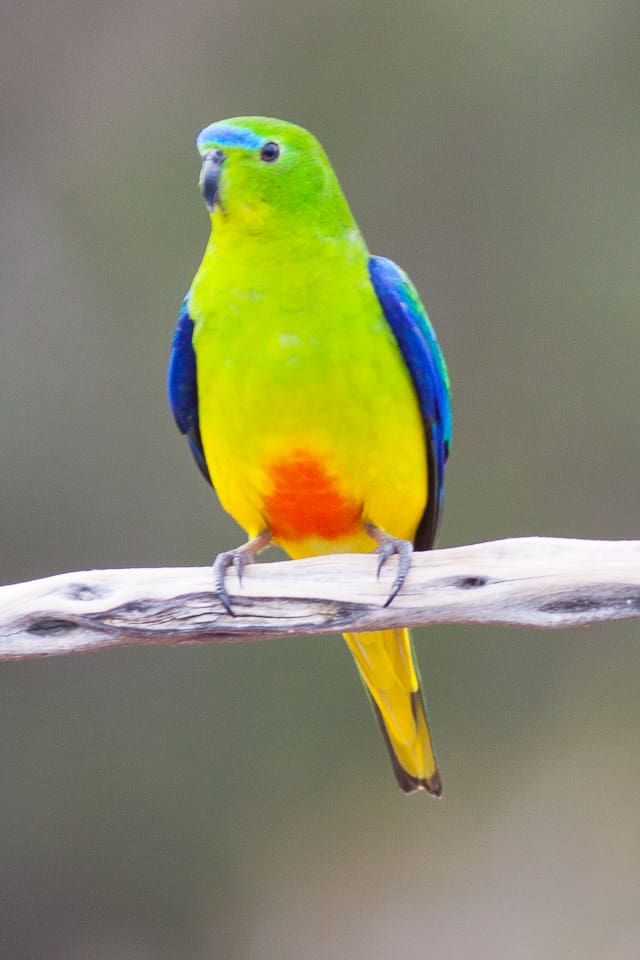
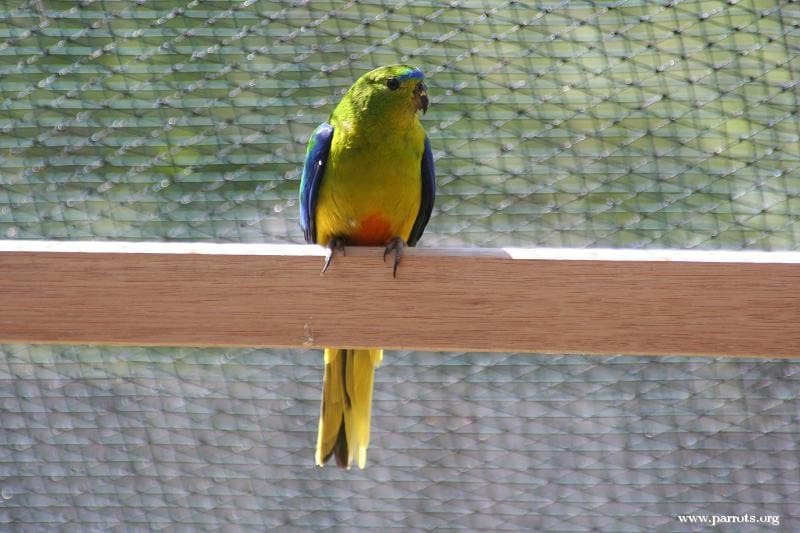
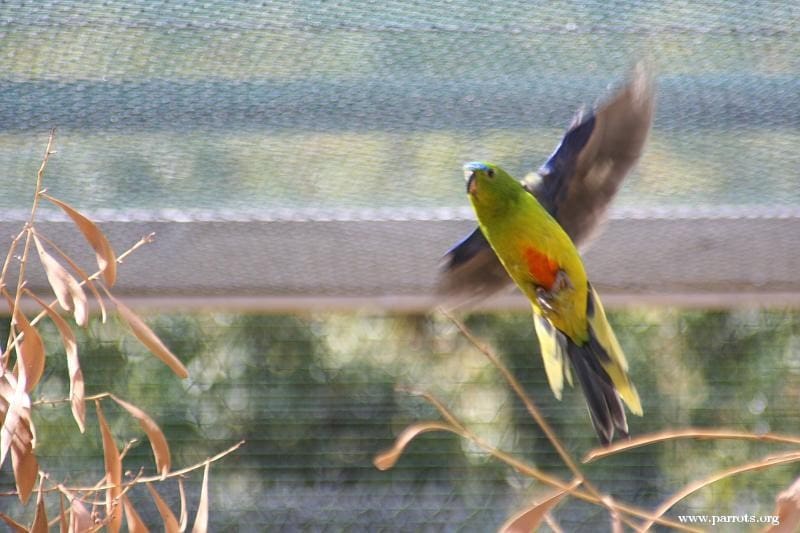
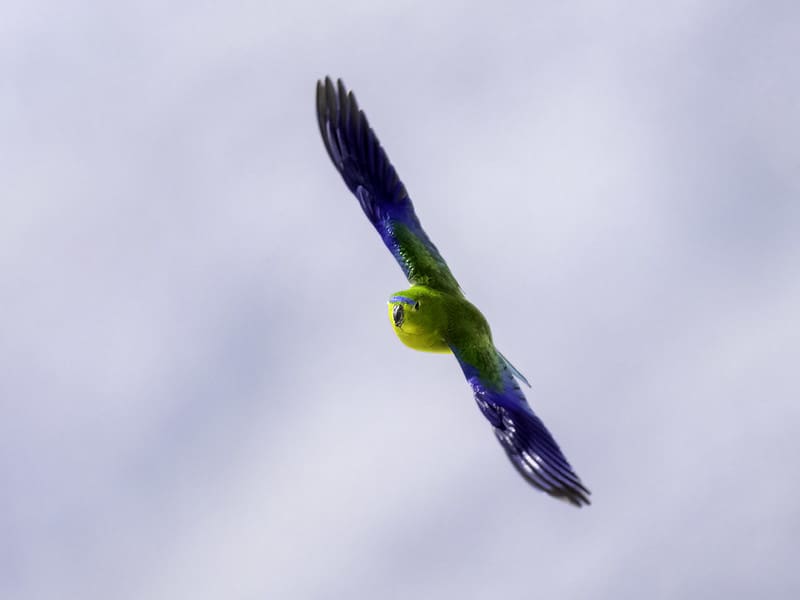
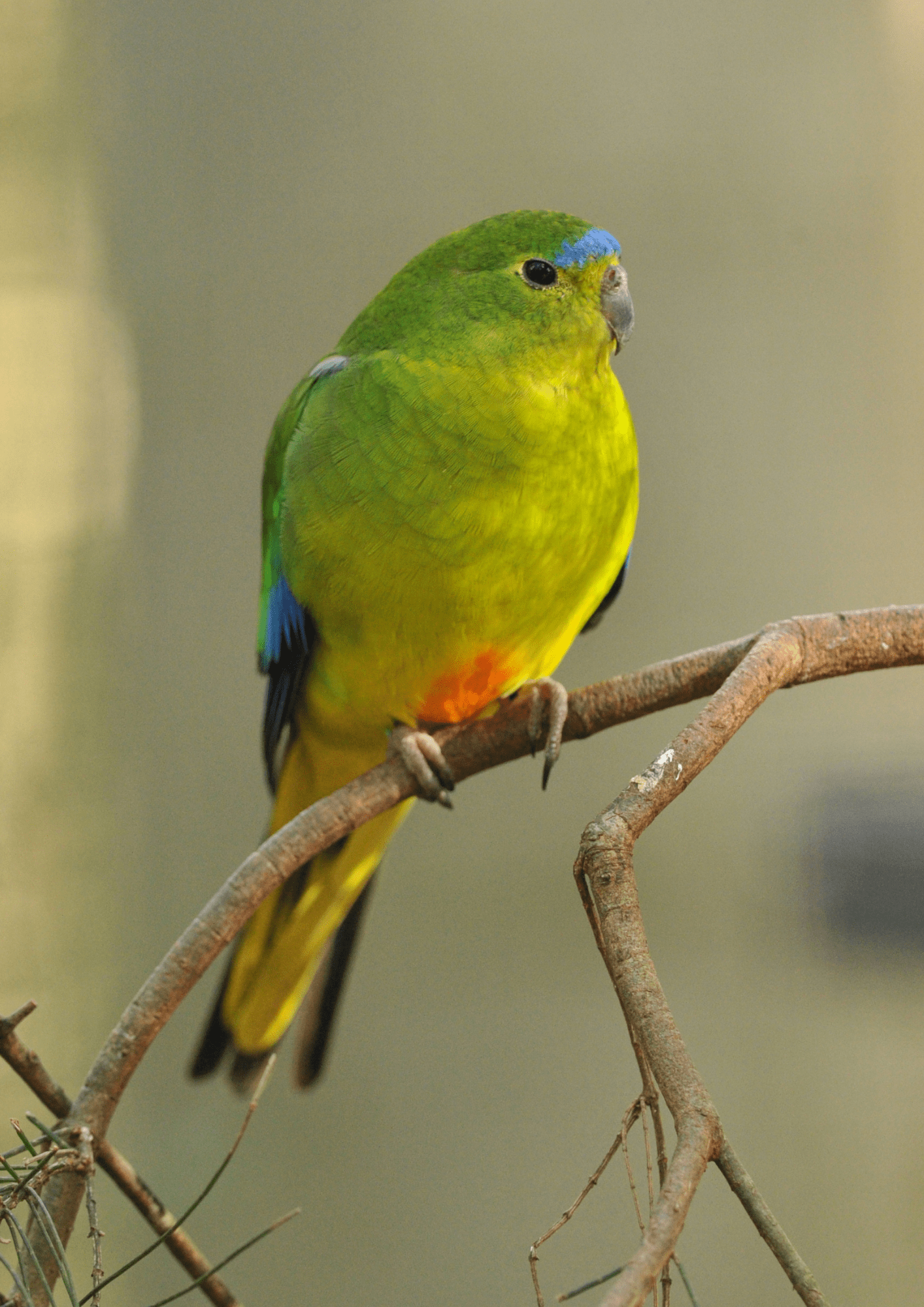
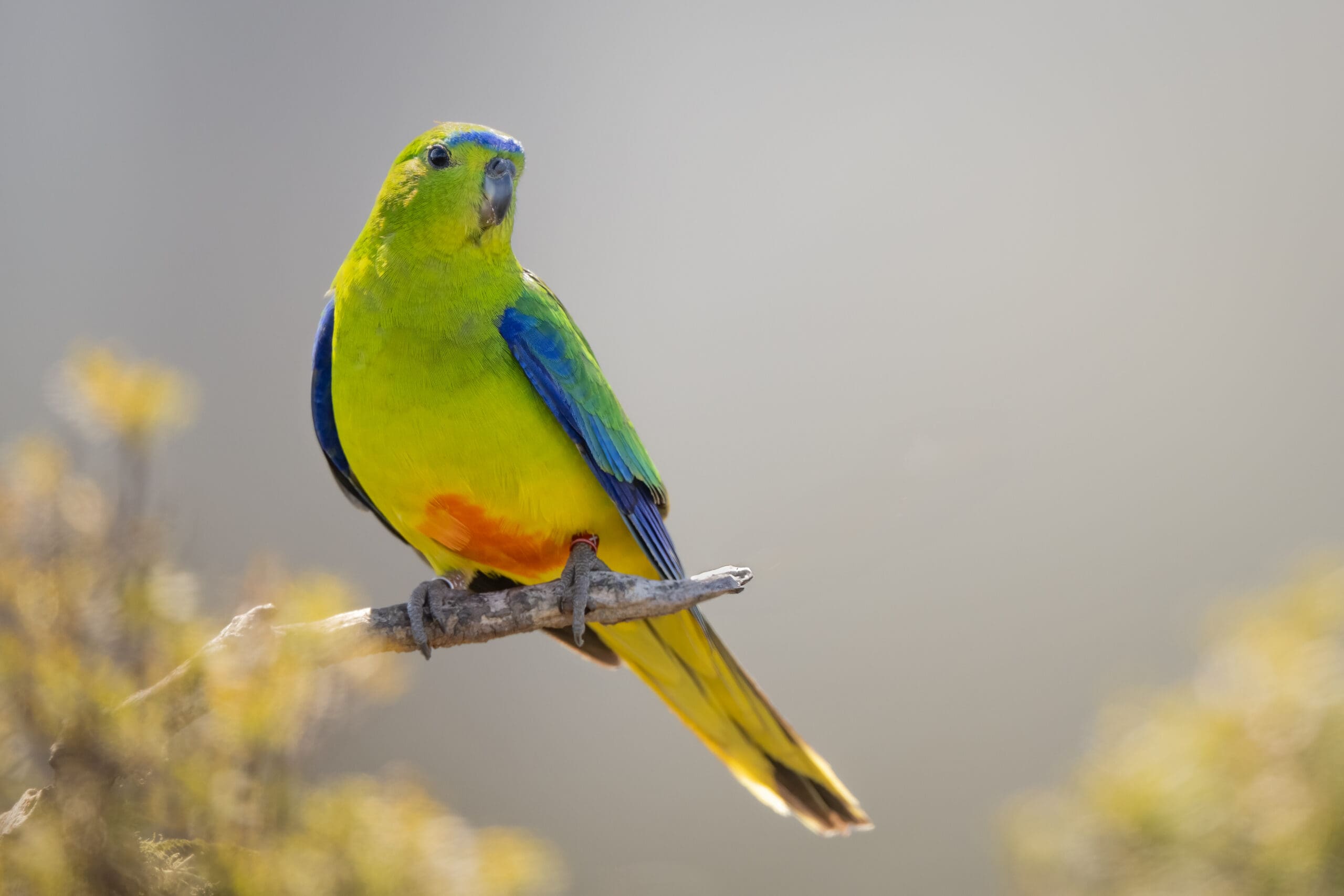
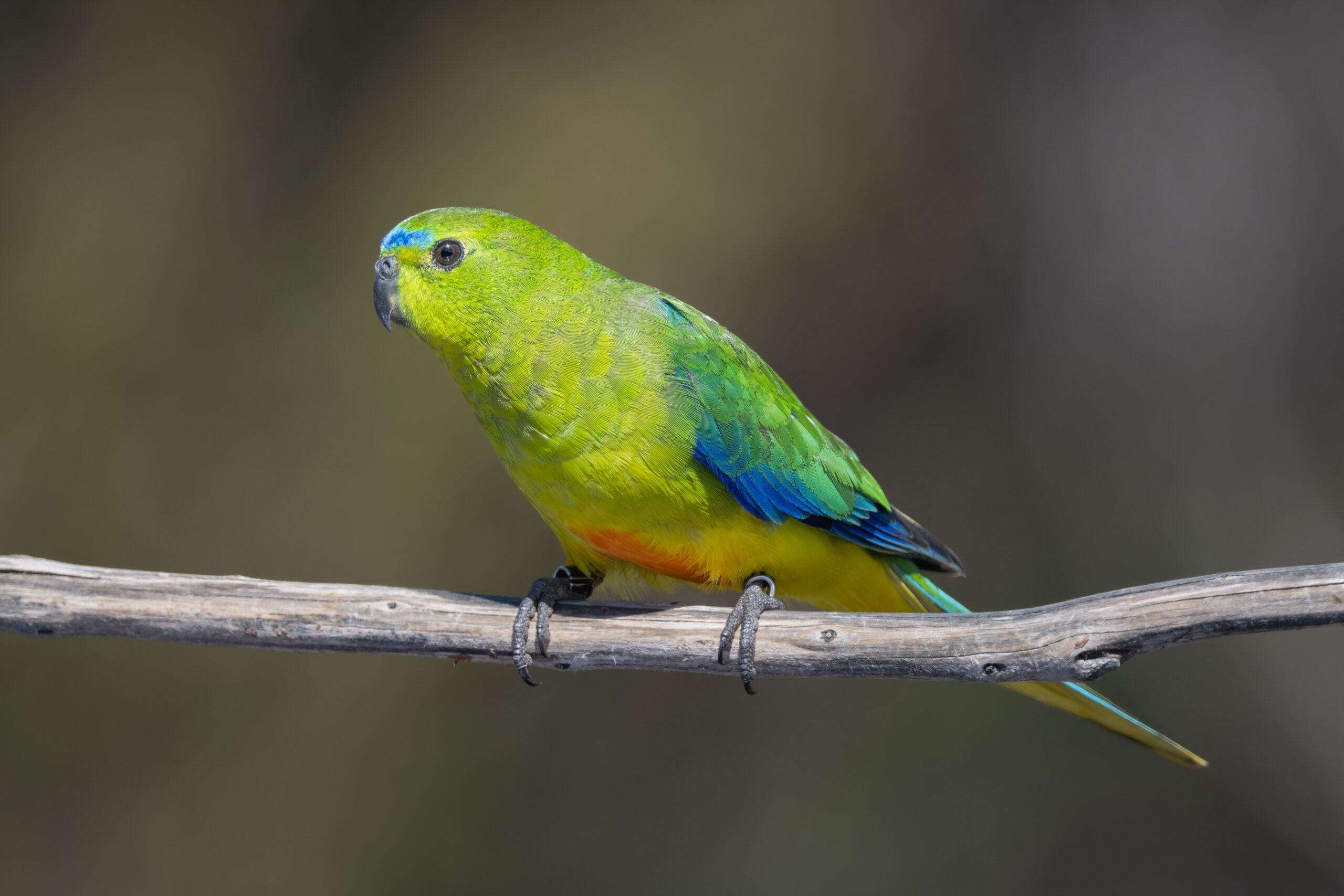
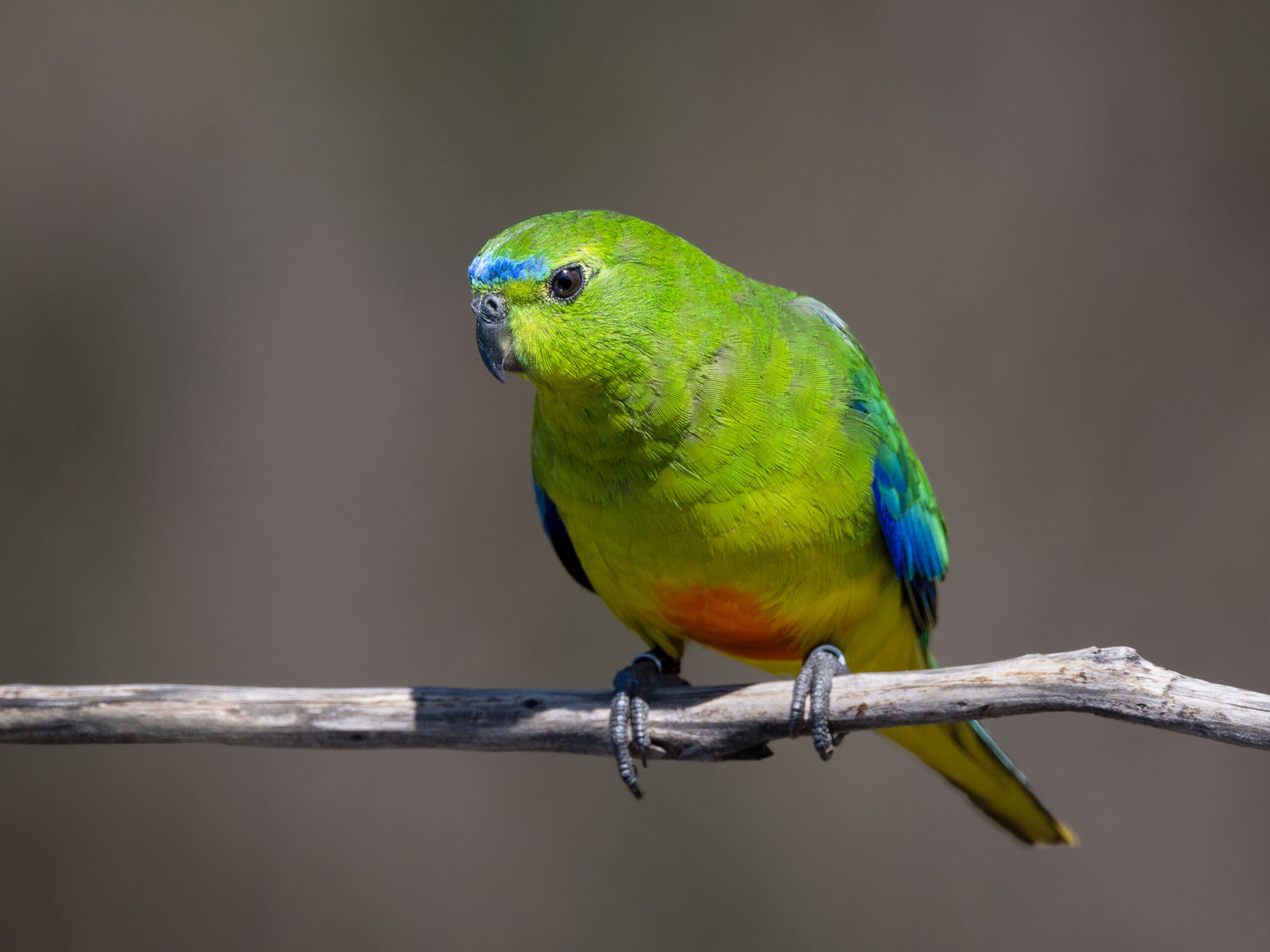
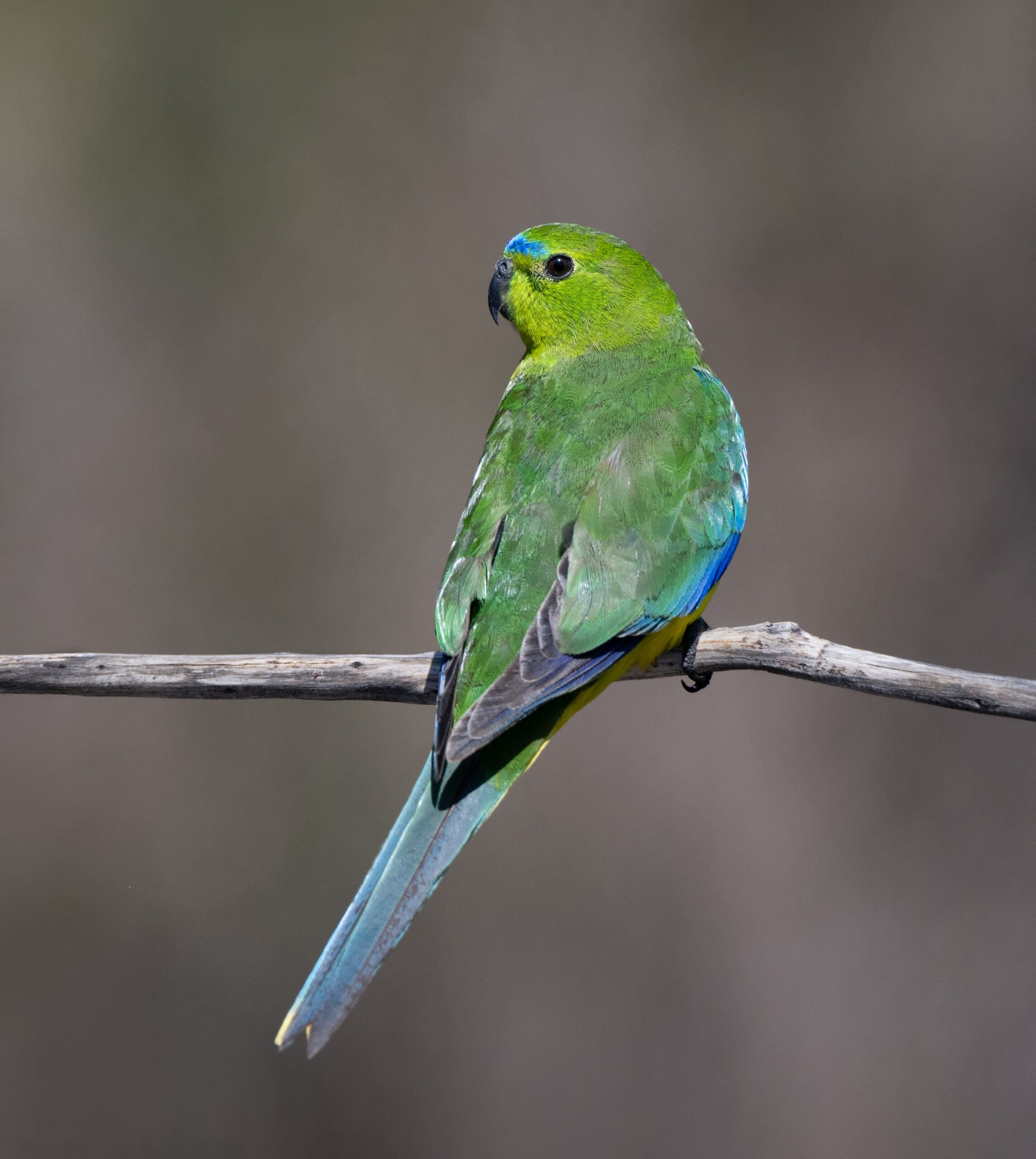
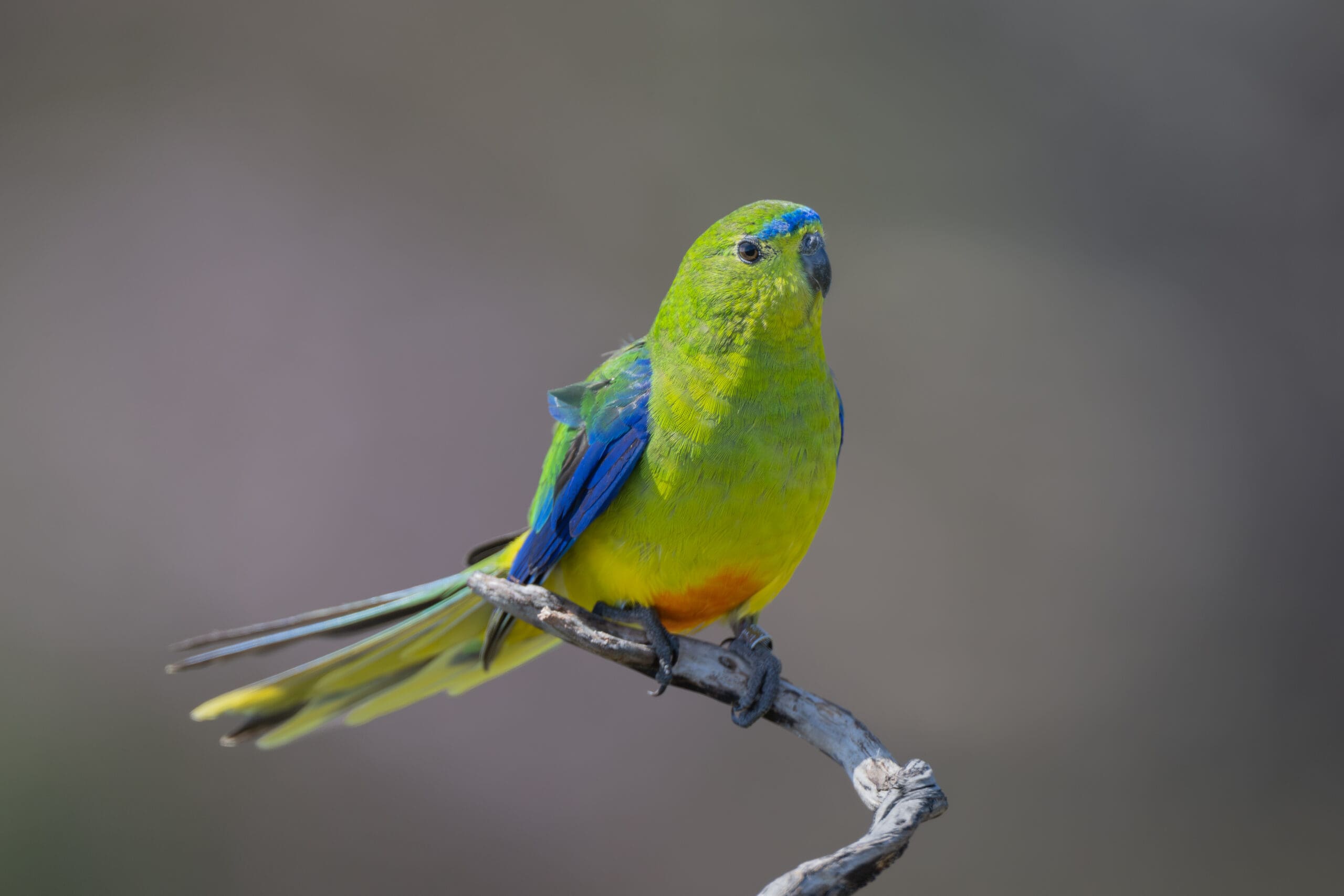
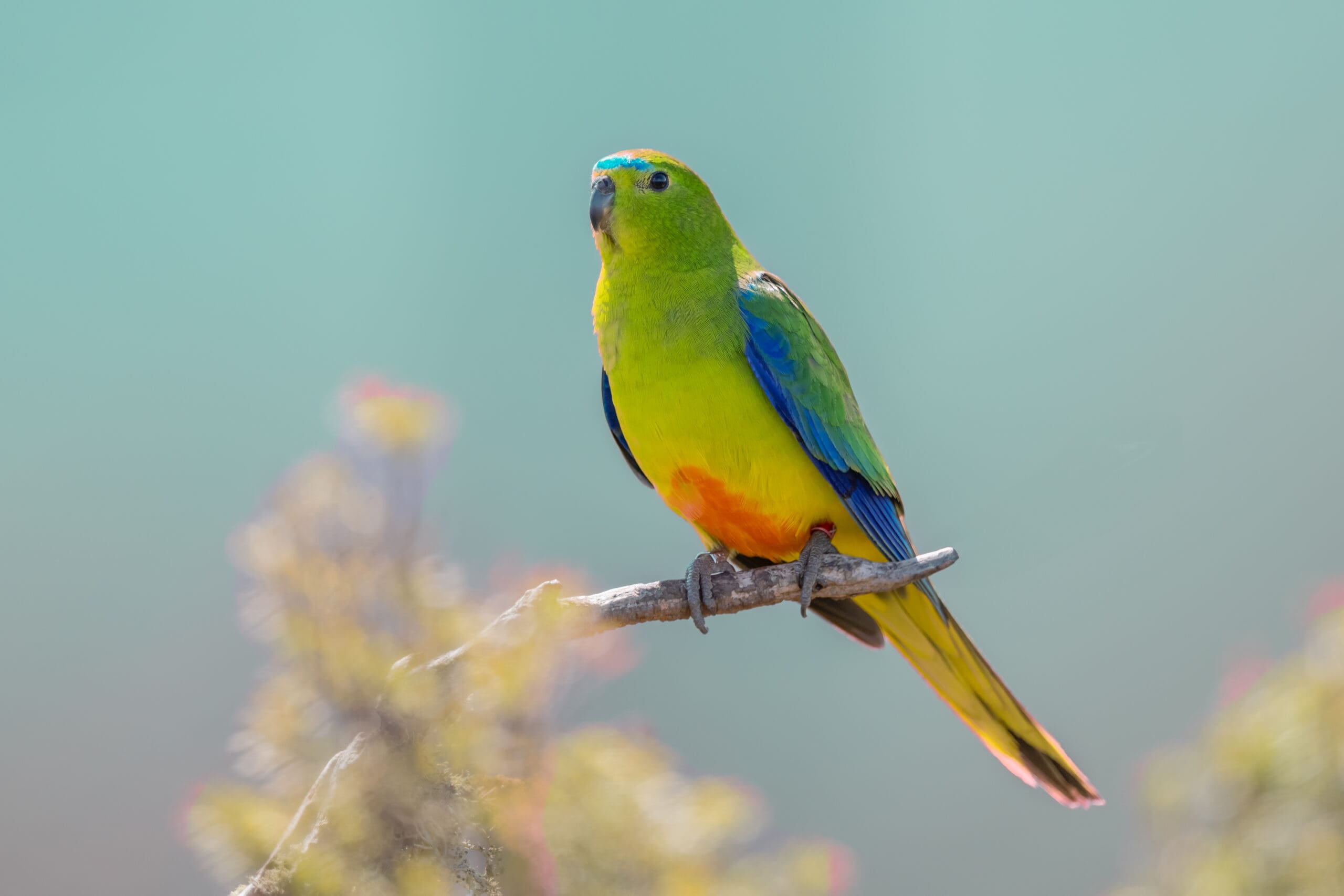
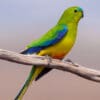
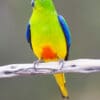
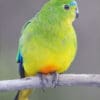
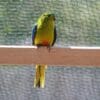
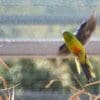
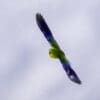
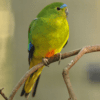
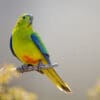
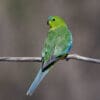
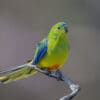
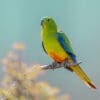
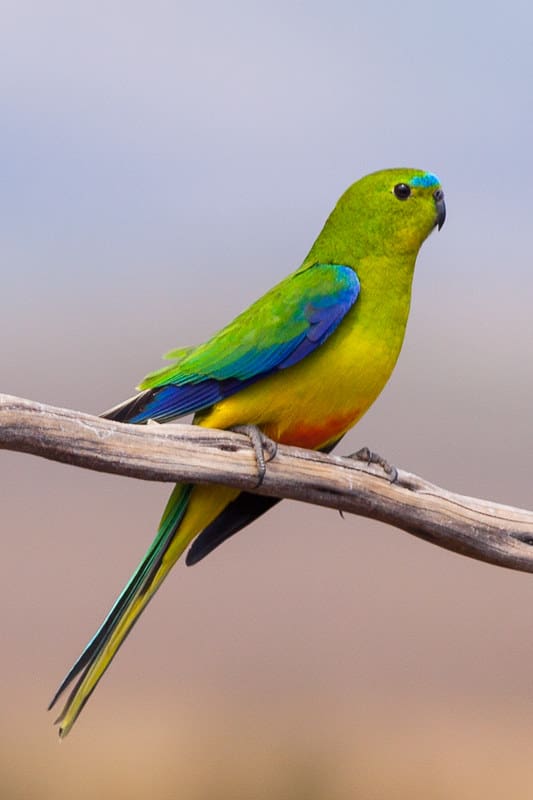
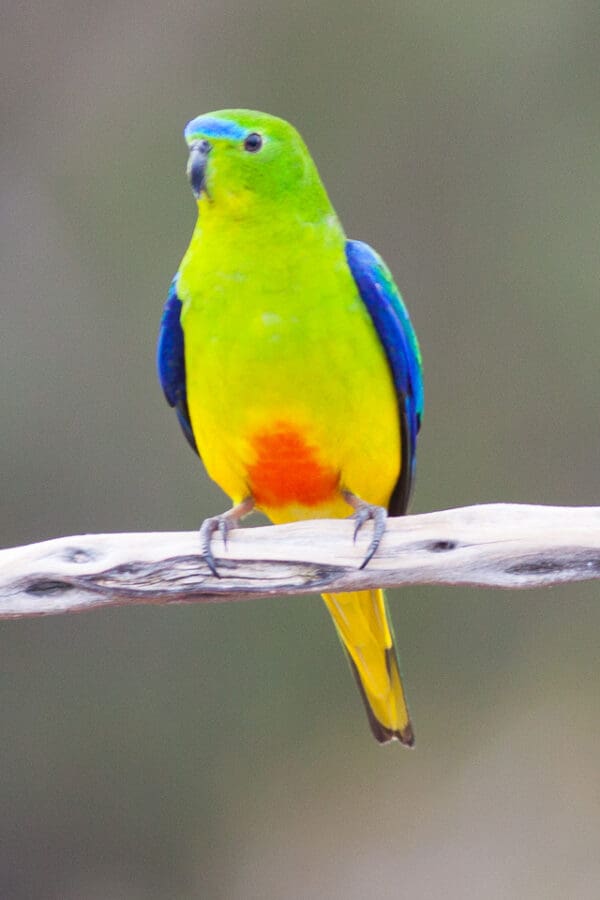
Male-bright grass green crown and upperparts; deep blue wide frontal band, bordered above by light blue line; green sides of head, turning to yellow on face and breast; green/yellow abdomen, orange patch in centre; bright yellow undertail coverts and underside of tail; purple/blue outer secondary coverts; deep green central upper tail feathers. Beak grey/black. Eye dark brown. Female-in general duller than male; scattering of dull green feathers on upperparts; frontal band slightly paler; centre of abdomen has less orange; pale underwing stripe sometimes present.

Colour Juvenile:

In general duller than female, but upperparts quite green; faint blue edging to feathers in frontal area, replacing frontal band; minimal orange on abdomen; pale underwing stripe present. Bill yellow/brown.

Call:

Calls are described as sharp and monosyllabic; sharp chittering in alarm, producing a buzzing sound.

Content Sources:

CITES
Avibase
BirdLife International
Cornell Lab of Ornithology/Birds of the World
Parrots: A Guide to Parrots of the World, Juniper and Parr, 1998
Parrots: Status Survey and Conservation Plan 2000-2004, Snyder, McGowan, Gilardi, Grajal, 2000.
Parrots of the World, Forshaw and Cooper, 1977. 2010 edition
Vanished and Vanishing Parrots, Forshaw, 2017.
Parrots of the World, Forshaw, 2006.

Captive Status:

Almost unknown in aviculture except in breeding-for-release programs.

Longevity:

Housing:

Aviary 5 x 2 x 2 m (16.4 x 6.5 x 6.5 ft), planted if possible. Environment temperature no lower than 20 C (68 F).

Diet:

Seed mix such as: canary, millet, niger and smaller amounts of oats, buckwheat, safflower and a little hemp; half-ripened grass and millet sprays; green leaves such as: Swiss chard, lettuce, sowthistle, dandelion, chickweed; vegetables such as: carrot, celery, green beans, peas in the pod, corn; fruits if taken; complete kibble.

Enrichment:

Nest Box Size:

Vertical box 5″ x 5″ x 10″ (12.7 cm x 12.7 cm x 25.4 cm).

Clutch Size:

4-6

Fledging Age:

5 weeks

Hatch Weight:

Peak Weight:

Weaning Weight:

World Population:

188 (2024), with over 300 birds in a captive breeding program. Decreasing.

IUCN Red List Status:
Critically Endangered

CITES Listing:
Appendix I

Threat Summary:

Restricted-range species, found in Tasmania Endemic Bird Area. Is affected by fragmentation and degradation of its overwintering habitat. Male-female sex ratios are heavily skewed towards males. Likely causes of recent decline are an 2014 outbreak of Psittacine Beak and Feather Disease and the effects of a ten-year drought on productivity of saltmarsh plants in the winter habitat that reduced the breeding condition of females.

Range:

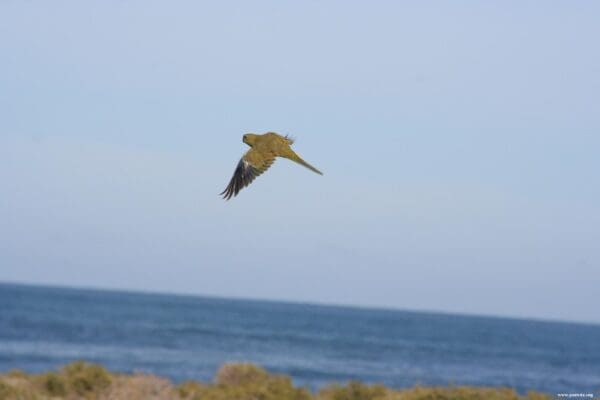
Tasmania and some offshore islands, and coastal southeast mainland Australia.

Habitat:

Breeding areas are a mosaic of temperate rainforest and wet forest, sedgeland plains and buttongrass moorland; wintering areas are mostly salt marsh and pasturelands with freshwater sources and roosting sites. Non-breeding areas are within ~10 km of the coast and are often within 200 m of coastal wetlands, where the birds forage in structurally open and low vegetation, with tall shrubs next to primarily Melaleuca ericifolia for roosting and protective cover.

Wild Diet:

Through the breeding season, their diet includes fruits of Eurychorda complanatus and Sporandantus tasmanicus. Also seeds of Boronia parviflora, Boronia citriodora, Actinotus bellidioides, and Helichrysum pumilum. Other foods taken include Boronia pilosa, Bauera rubioides, Gymoschoenus sphaerocephalus, Sprengelia incarnata, Leucopogon parviflorus, Epacris spp., and Calorophus spp. During the nonbreeding season, birds feed on Tecticornia arbuscula, Sarcocornia quinqueflora, Suaeda australis, Sarcocornia blackiana, and Atriplex paludosa. They have also been observed feeding in modified areas, including pastures, paddocks, and golf courses, where they feed on weedy species such as Brassica fruticulosa, Plantago coronopus, and Polygonum aviculare.
Ecology and Behaviour:

Are migratory between their breeding grounds in SW Tasmania and wintering area in SE Australia. In breeding areas birds roost communally in dense Melaleuca stands. Will associate with other Neophema spp. and also finches and sparrows.

Clutch and Egg Size:

4-6 rounded eggs, 21.0 x 17.5 mm (0.8 x 0.7 in).

Breeding Season:

November-December. Nest is in tree hollow.

Join Our Flock

FlockTalk our monthly newsletter for parrot people everywhere:

+ News from the world of parrots

+ Updates on wild parrot projects

+ Inspiring updates from partners

+ Real stories from the parrot flock

+ Plus, expert tips for caring for your feathered friends at home.
 

Stay In The Loop, Sign Up Now.
FlockTalk: our monthly newsletter for parrot people everywhere:

Parrot news. Conservation wins. Pet care tips. All in one monthly email.

We do not sell or share your information with anyone