Also known as:
Orange-winged Parrot
Also known as:
Orange-winged Parrot
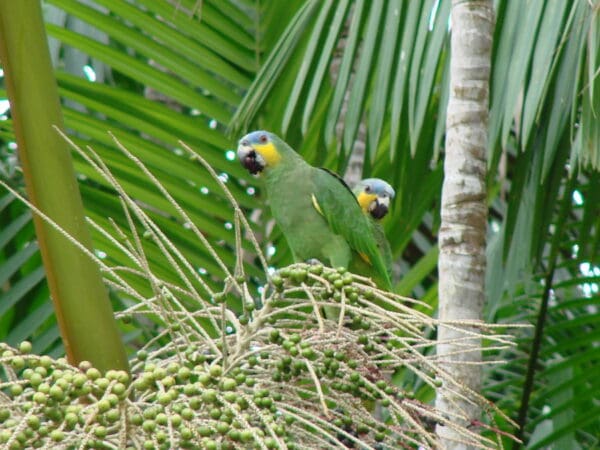
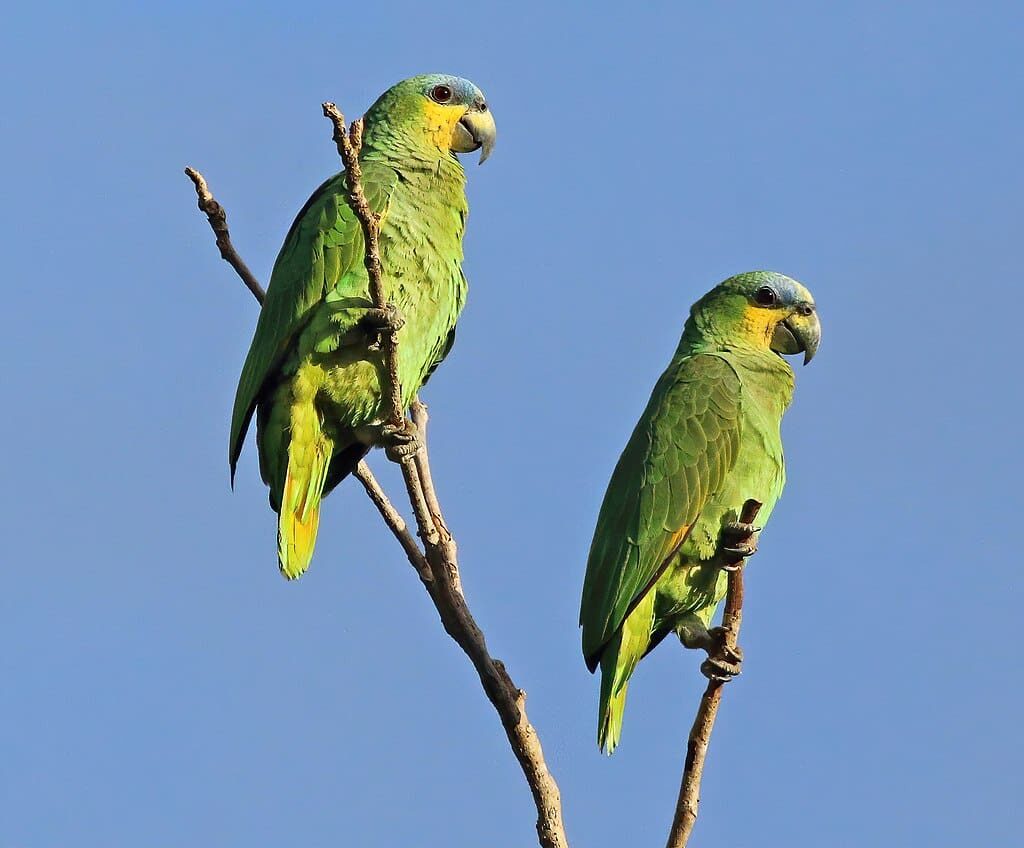
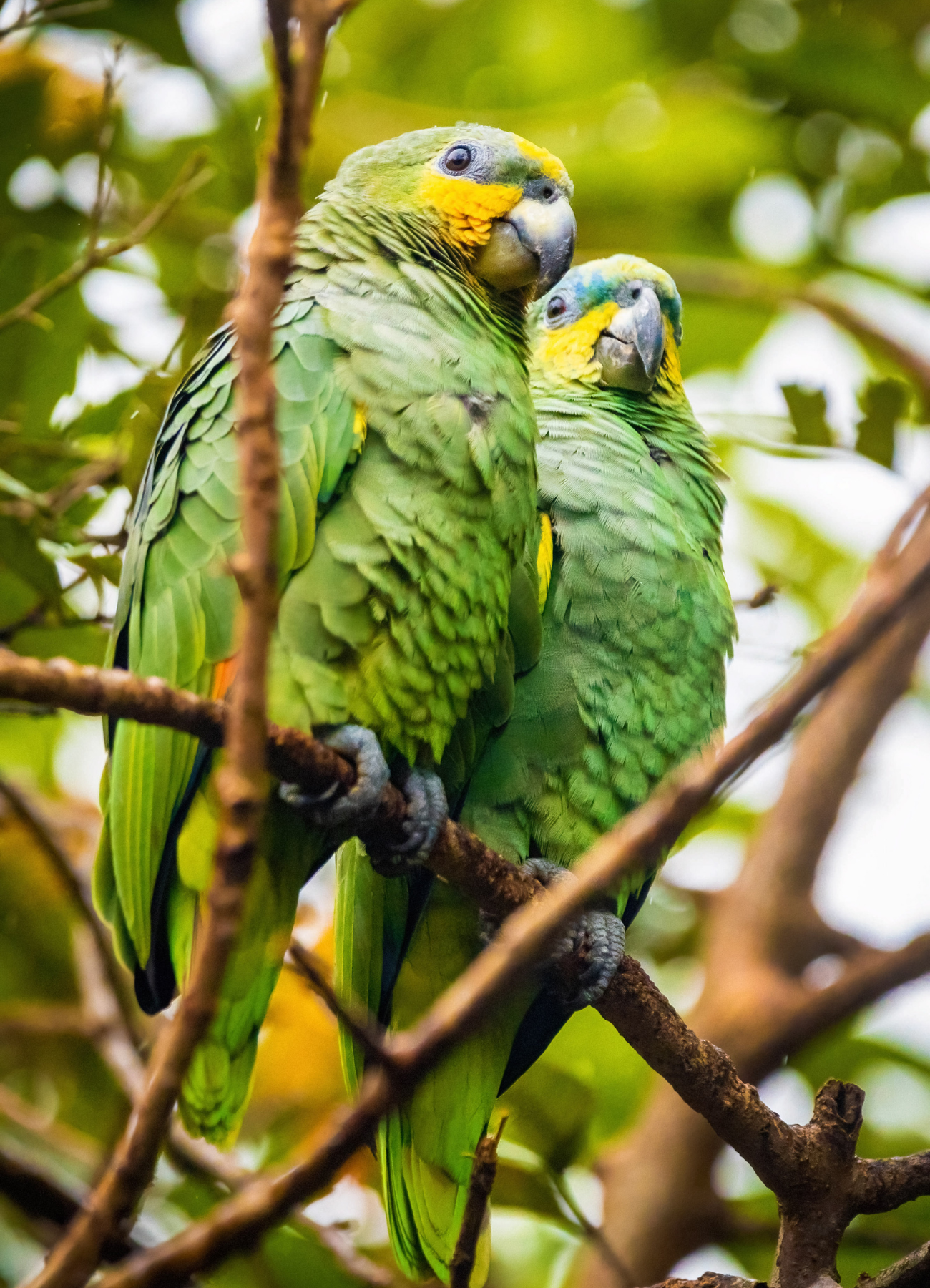
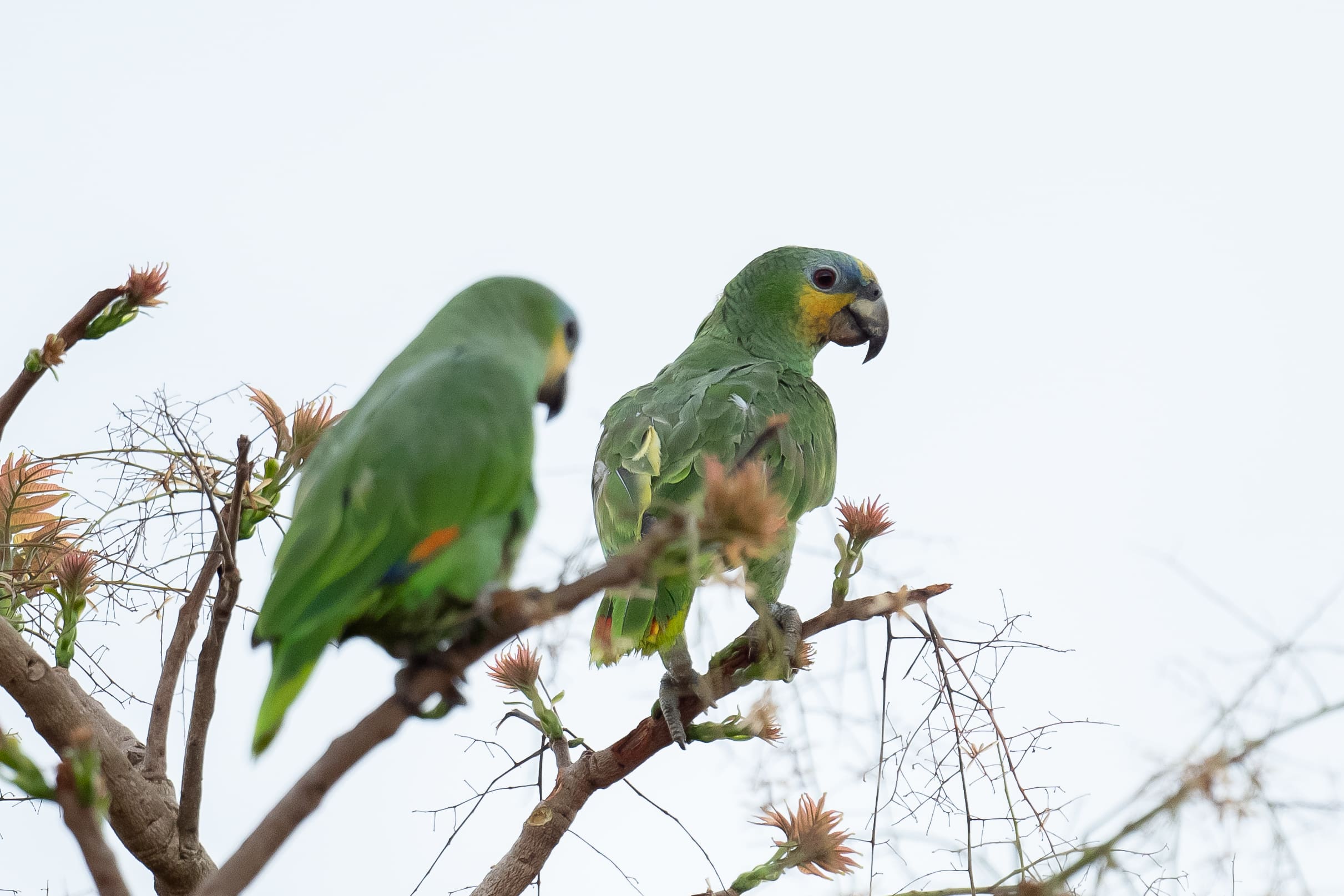
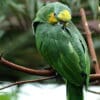
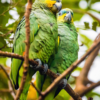
![© Charlesjsharp (Sharp Photography) [CC BY-SA 4.0] via Wikimedia Commons Wild Orange-winged Amazons perch on a branch](https://parrots.org/wp-content/uploads/1990/08/Orange-winged-Amazons-Charles-J.-Sharp-CC-BY-SA-4.0-via-Wikimedia-Commons-e1732302014806-100x100.jpg)
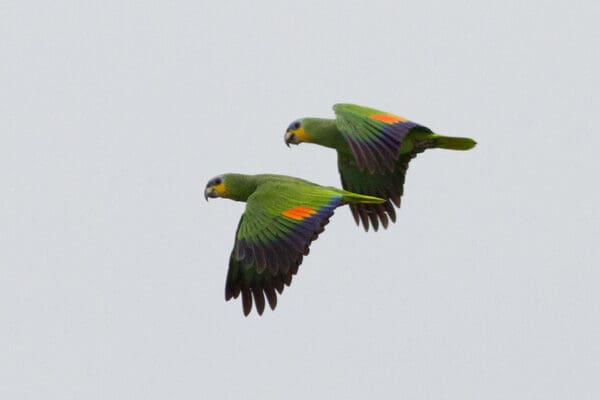
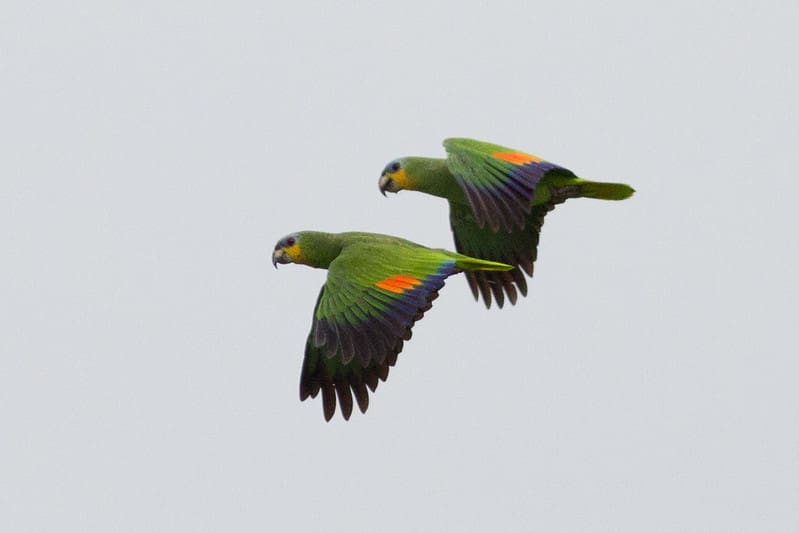
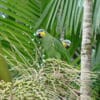
![© Dave Curtis [CC BY-SA 2.0] via Flickr Wild Orange-winged Amazons fly in tandem](https://parrots.org/wp-content/uploads/2023/01/wpt_Orange-winged-Amazon_1419-22-100x100.jpg)
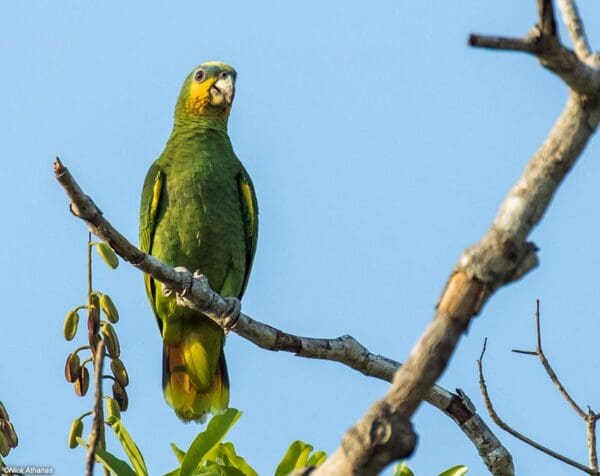
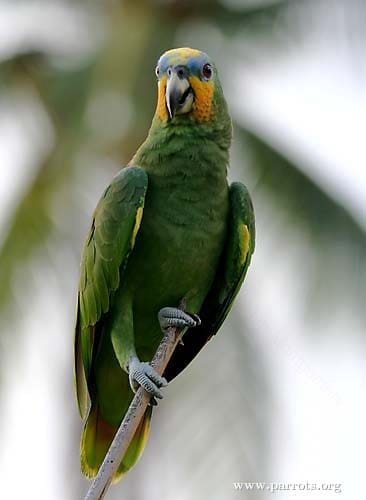
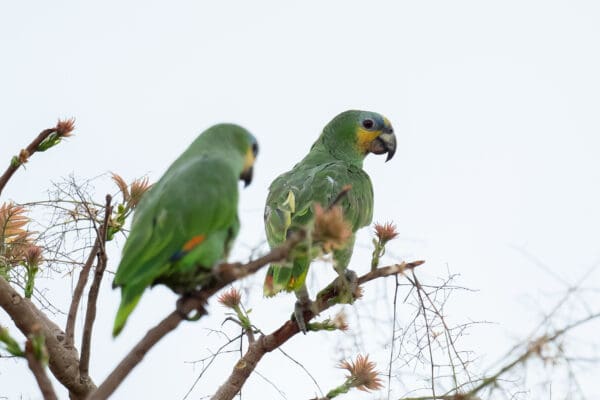
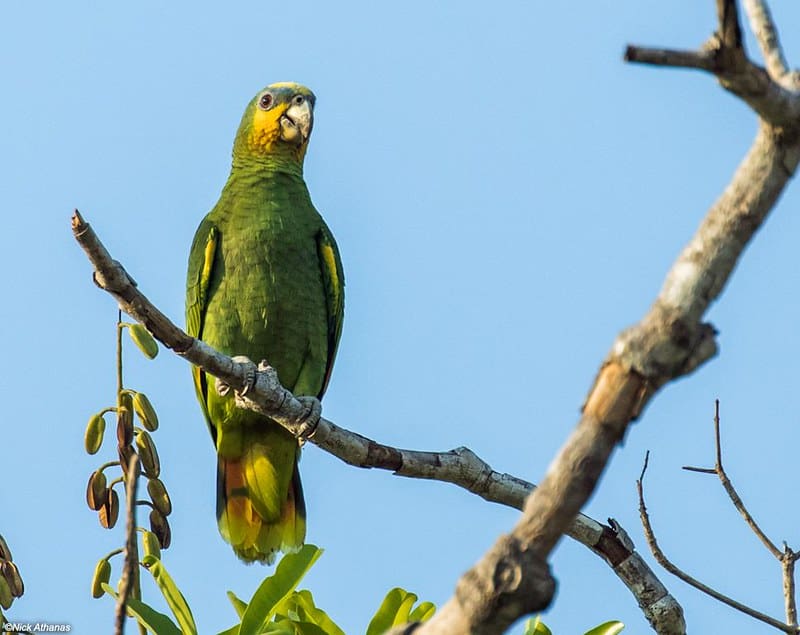
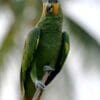
![© Nick Athanas [CC BY-SA 2.0] via Flickr A wild Orange-winged Amazon perches on a branch](https://parrots.org/wp-content/uploads/2023/01/wpt_Orange-winged-Amazon_1419-21-100x100.jpg)
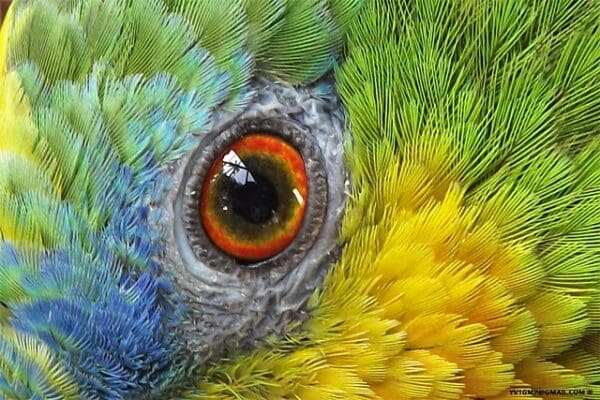
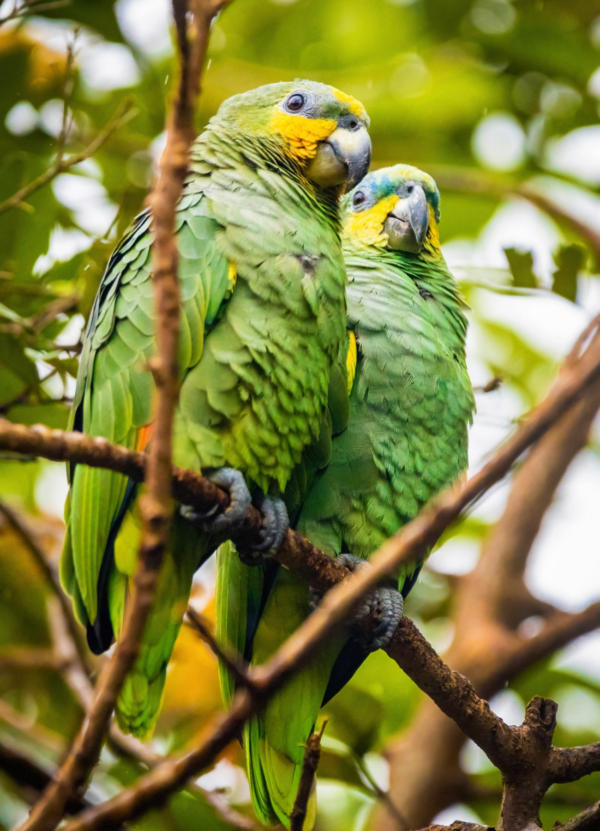
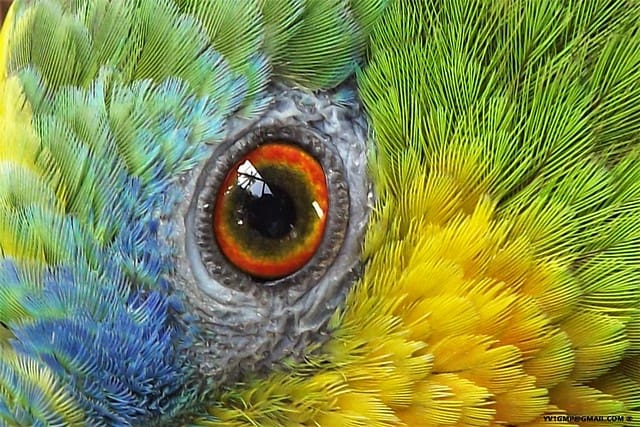
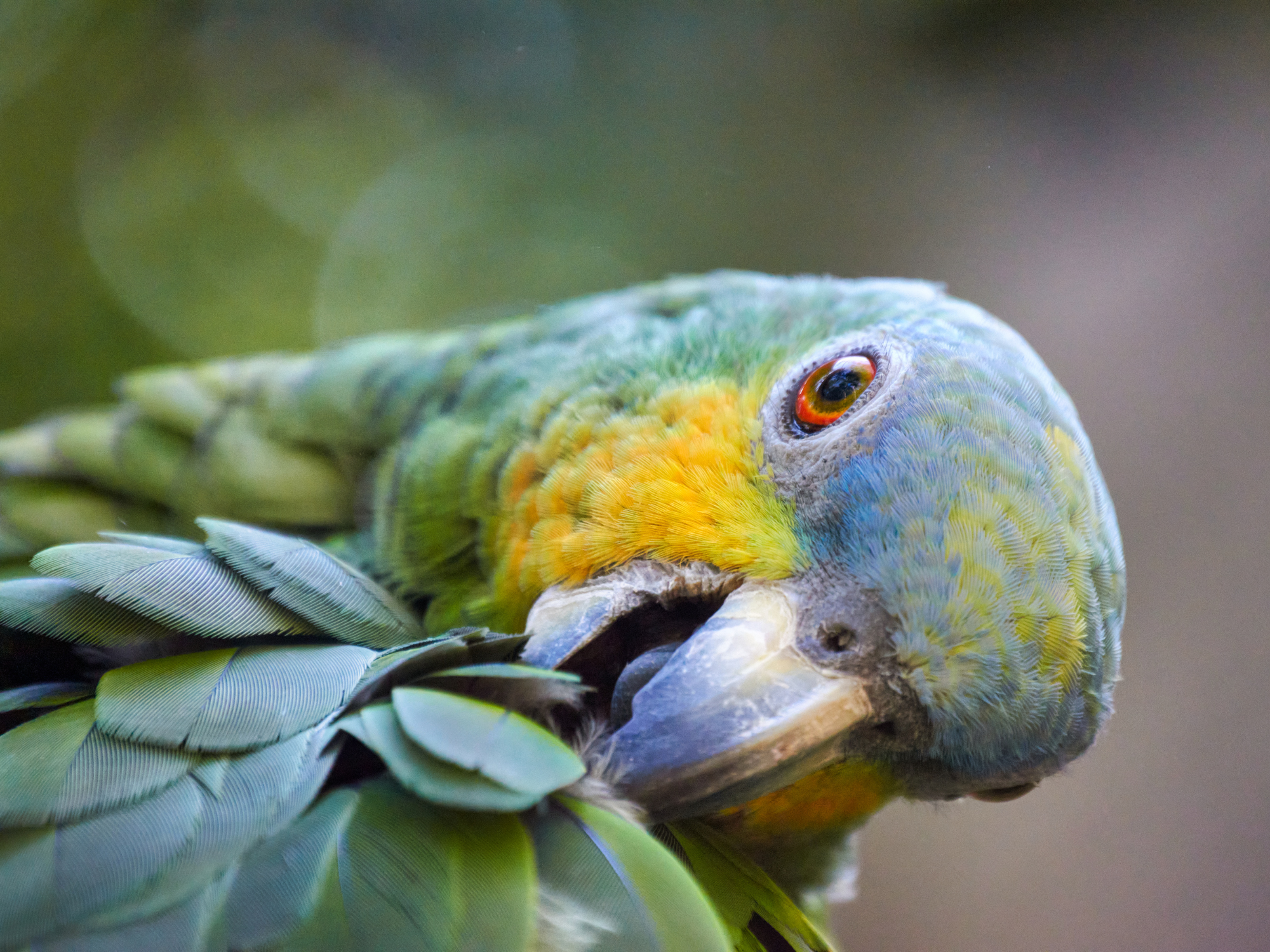
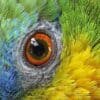
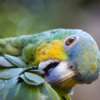
![© Carlos E. Pérez S.L. [CC By-SA 2.0] via Flickr A closeup of an Orange-winged Amazon](https://parrots.org/wp-content/uploads/2023/01/wpt_Orange-winged-Amazon_1419-20-100x100.jpg)
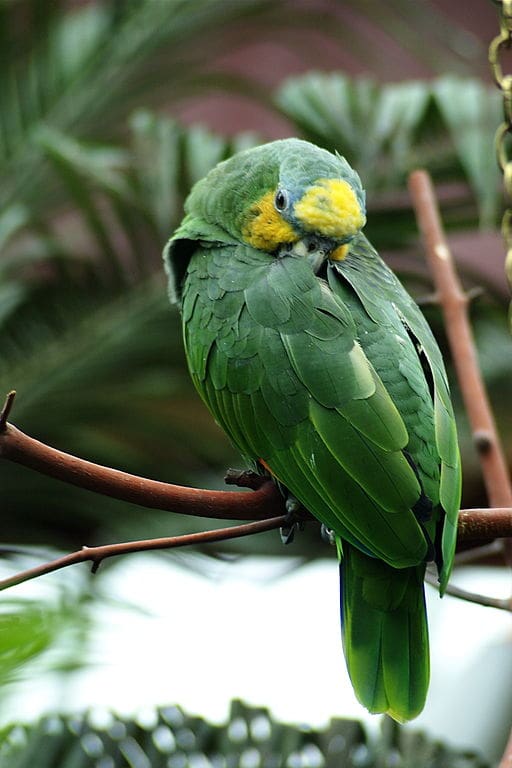
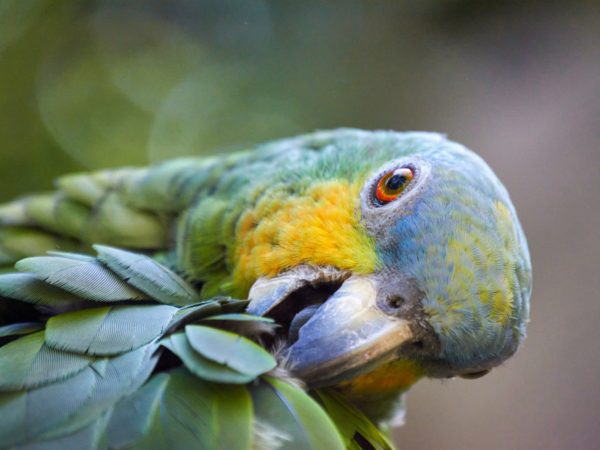
![© Kyle Flood [CC BY-SA 2.0] via Wikimedia Commons An Orange-winged Amazon tucks itself in to rest](https://parrots.org/wp-content/uploads/2023/01/wpt_Orange-winged-Amazon_1419-12-100x100.jpg)


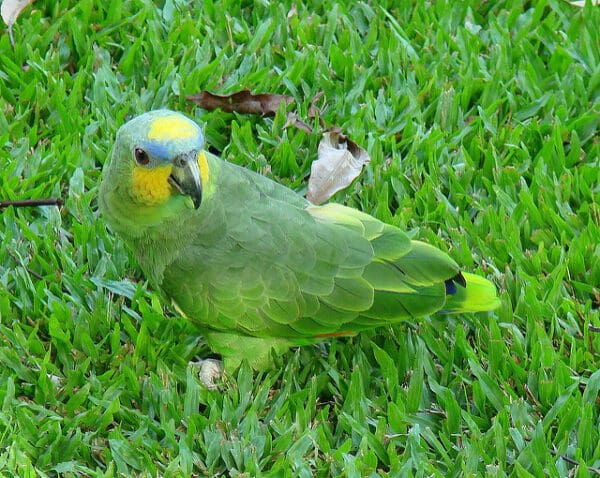
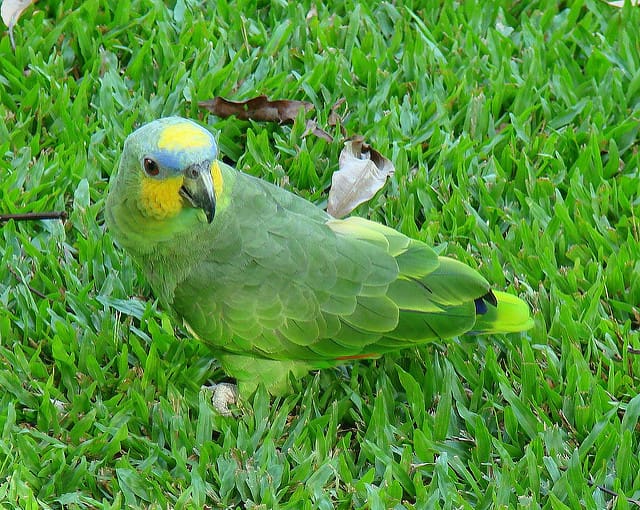
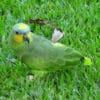
![© barloventomagico [CC BY-SA 2.0] via Flickr An Orange-winged Amazon walks in grass](https://parrots.org/wp-content/uploads/2023/01/wpt_Orange-winged-Amazon_1419-18-100x100.jpg)
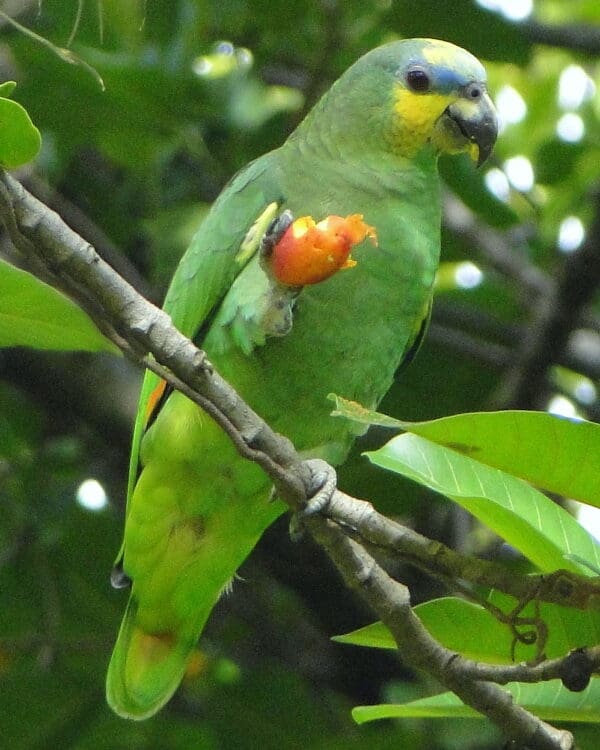
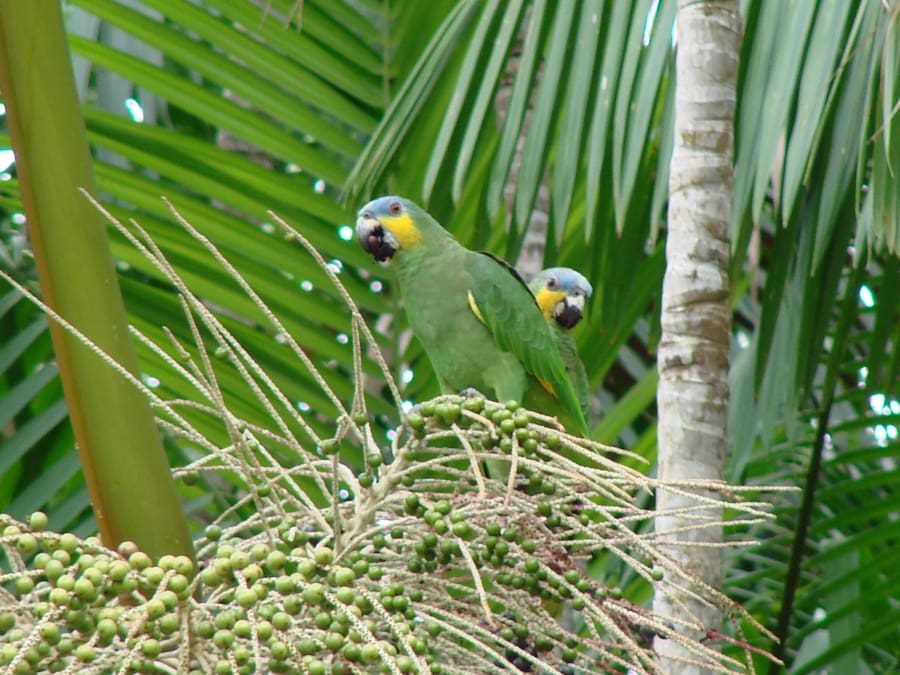
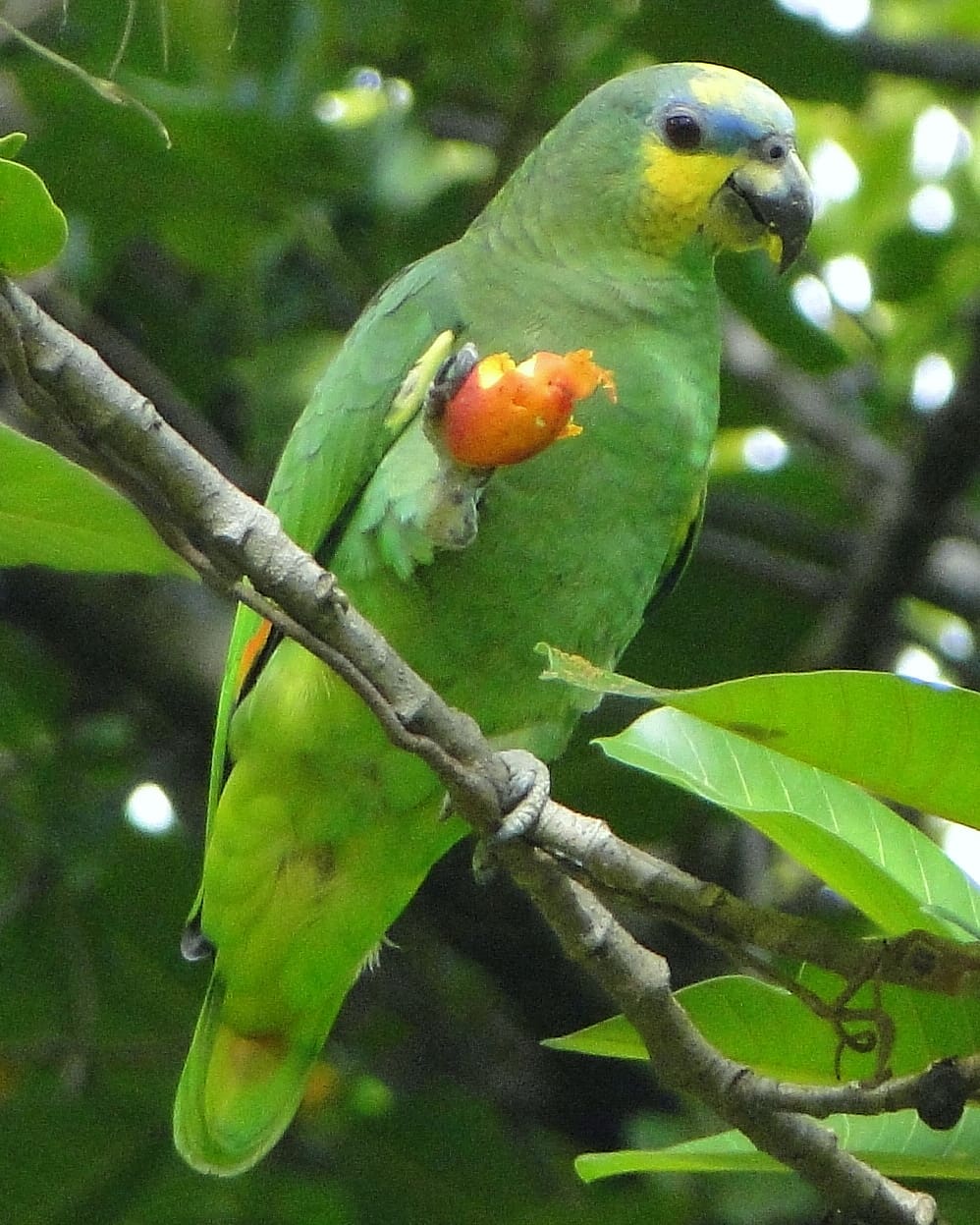
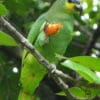
![© barloventomagico [CC BY-SA 2.0] via Flickr A wild Orange-winged Amazon feeds on fruit](https://parrots.org/wp-content/uploads/1990/08/Orange-winged-Amazon-barloventomagico-100x100.jpg)


One sound the Orange-winged Amazon makes resembles the Black-headed Gull.

Amazona

amazonica
Size:
31 cm (12 in)
Weight:
298-470 g (10.4-16.5 oz)
Subspecies including nominate:
two: A.a. amazonica, A.a. tobagensis
Colour Adult:
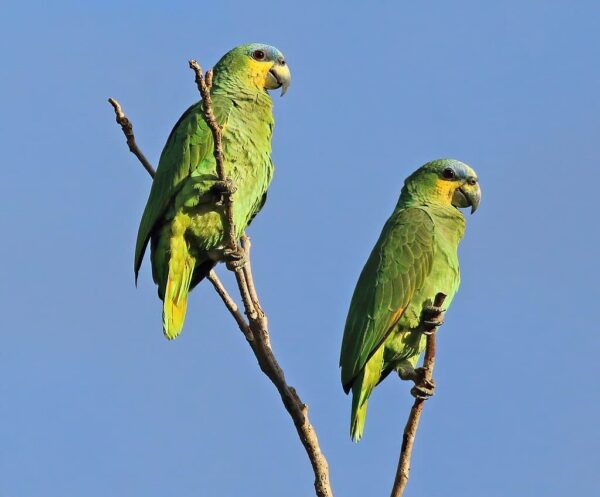
A.a. amazonica: Both adults forehead, crown and forecheeks yellow; lores and band between eyes violet/blue; throat yellow/green tinged with blue; orange bases of secondary feathers 1 to 3, the remainder green tipped with blue; central tail feathers green, side tail feathers green tipped yellow/green, the orange/red on inner webs of wings banded in centre with dark green and with red at bases of feathers. Beak horn-coloured with dark grey near tip. Eye ring grey/white, eye orange.
A.a. tobagensis: Both adults differ from amazonica by having more extensive orange bases to the secondary feathers 1 to 4.
Colour Juvenile:
As in adults but with grey/white eye ring, eye grey/brown.
Call:
Wide variety of sounds. Harsh screeches, screams, squawks, trills, bubbles and whistles.
More Information:
Content Sources:
CITES
BirdLife International
Cornell Lab of Ornithology/Birds of the World
Parrots: A Guide to Parrots of the World, Juniper and Parr, 1998
Parrots of the World, Forshaw and Cooper, 1977. 2010 edition
Parrots of the World, Forshaw, 2006
Parrots in Aviculture, Low, 1992.
Psittacine Aviculture, Schubot, Clubb and Clubb, 1992.
Captive Status:
Fairly common.
Longevity:
50-60 yrs
Housing:
Aviary or suspended enclosure, minimum length 3 m (9.8 ft).
Diet:
Fruit such as: apple, pear, orange, cactus fruits, pomegranate, etc, forming about 30 percent of diet; vegetables such as: carrots, celery, green peas and beans, corn; green leaves such as: Swiss chard, lettuce, dandelion; spray millet, small seed mixture low on oily and sunflower seeds; cooked beans and pulses, and complete kibble.
Enrichment:
Provide lots of bird-safe wood and leather chew toys, puzzle toys, food foraging toys, swings, ladders; bathing and companionship.
Nest Box Size:
Vertical box, 12″ x 12″ x 24″ (30.5 cm x 30.5 cm x 61 cm).
Clutch Size:
3 or 4
Fledging Age:
8 weeks
Hatch Weight:
—
Peak Weight:
—
Weaning Weight:
—
World Population:
Unknown, decreasing.
IUCN Red List Status:
Least Concern
CITES Listing:
Appendix II
Threat Summary:
Heavily trapped for the wild-bird trade: 268,510 wild-caught individuals have been recorded in international trade since 1981. Is also hunted for food, and habitat loss is a concern. May benefit when land clearance leaves a mosaic landscape.
Range:
A.a. amazonica: Eastern Colombia, throughout Venezuela and the Guianas, south through eastern Ecuador and eastern Peru to northeastern Bolivia, and across Brazil to the states of Mato Grosso and Paraná.
A.a. tobagensis: Trinidad and Tobago.
Habitat:
Uses many kinds of lowland forest and wooded country, near water, including tropical rainforest, savanna and other seasonal woodlands, cultivated areas with trees, mangroves, váreza forest, palm swamp forest with Mauritia flexuosa or Roystonea oleracea and gallery woodlands. Mostly below 600m (1968 ft) but up to 1200m (3936 ft). In Brazil and Ecuador, flooded islands in large rivers are where it generally roosts and nests in the forest. In Trinidad and Tobago, the species is seen in both lowland and upland forests; on Tobago, it prefers hill forests.
Wild Diet:
Eats fruits of Elaeis guineensis, Byrsonima crassifolia, Licania tomentosa, Talisia esculenta, Eschweilera ovata, and Avicennia schaueriana. In Amazonas, Brazil, Euterpe oleracea, E. precatoria, Astrocaryum aculeatum, Bactris gasipaes, Calophyllum brasiliense, Clitoria fairchildiana, Inga alba, I. marginata, Leucaena leucocephala, Schizolobium parahyba, Pseudopiptadenia sp., Miconia multiflora, Cedrela fissilis, and Pouteria caimito. In São Paulo, Brazil, Tapirira guianensis, Cecropia pachystachya, Rapanea umbellata [Myrsine umbellata], Sapium glandulosum, and unripe fruits of Ficus insipida and F. obtusiuscula and nectar of Mabea fistulifera. In Mayaro–RÃo Claro, Trinidad and Tobago, Roystonea oleracea, Mauritia setigera, Manilkara bidentata, and Andira inermis. Also consumes cultivated fruits, including Spondias mombin, Mangifera indica, Citrus spp., Anacardium occidentale, Psidium guajava, Psidium cattleyanum, Musa × paradisiaca, Annona muricata, and Carica papaya. In Venezuela and Colombia, it also forages on fruits at feeders. Also, flowers of Cocos nucifera and Erythrina sp. in Guyana and Trinidad and Tobago.
In French Guiana, seeds of Tetragastris altissima. In São Paulo, immature seeds of Anadenanthera colubrina and Apuleia leiocarpa, and in ParaÃba, it forages on unripe Zea mays and cultivated Vigna unguiculata. In Trinidad and Tobago, Theobroma cacao beans and seeds of Sloanea laurifolia; in Tobago, seeds of Myrcia fallax and Richeria olivieri. In Brazil, seeds of Davilla sp., Melastomataceae and Curatella americana.
Ecology and Behaviour:
Likes to be near water; roosts communally in clumps of trees, giant bamboos or palms. Several pairs combine in loose flocks with groups up to 50 individuals quite common and 200 or more not unusual. May also visit urban areas.
Clutch and Egg Size:
3 or 4 elliptical to ovate eggs, 37.5 x 29.0 mm (1.5 x 1.1 in).
Breeding Season:
Variously December-June depending on locality. Nest is in cavity in large tree.
Related Links:
—