Also known as:
Patagonian Parrot, Burrowing Parrot, Greater Patagonian Conure (C.p. bloxami)
Also known as:
Patagonian Parrot, Burrowing Parrot, Greater Patagonian Conure (C.p. bloxami)


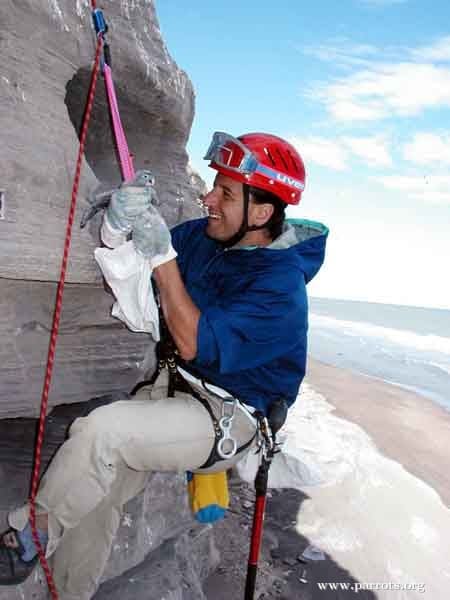
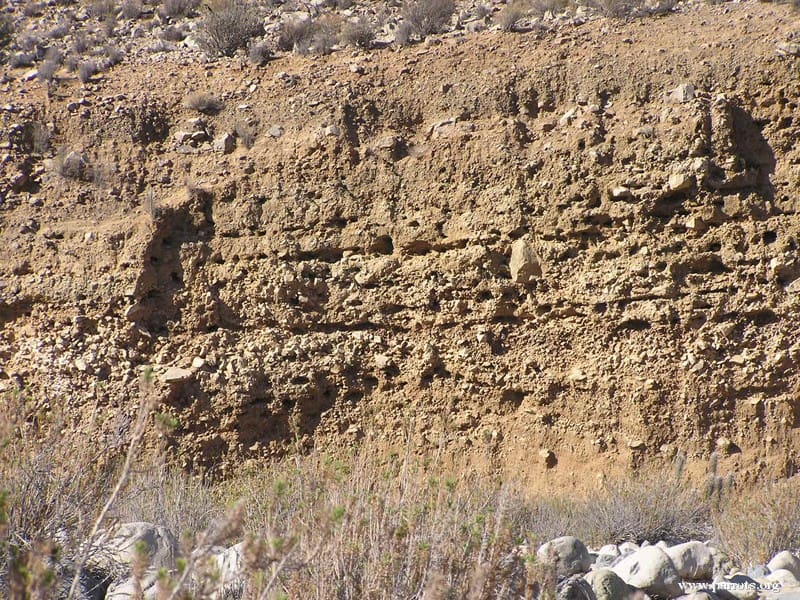
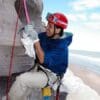
A recent study by Masello et al found over 35,000 active nest burrows at El Condor, Argentina.

Cyanoliseus

patagonus
Size:
45 cm (17.5 in)
Weight:
256-281 g (9-10 oz) (patagonus) 315-390 g (11-13.6 oz) (bloxami)
Subspecies including nominate:
four: C.p. patagonus (Lesser), C.p. andinus, C.p. bloxami (Greater), C.p. conlara
Colour Adult:
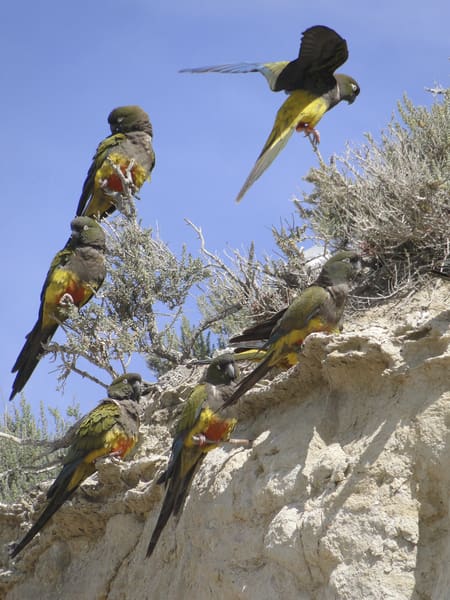
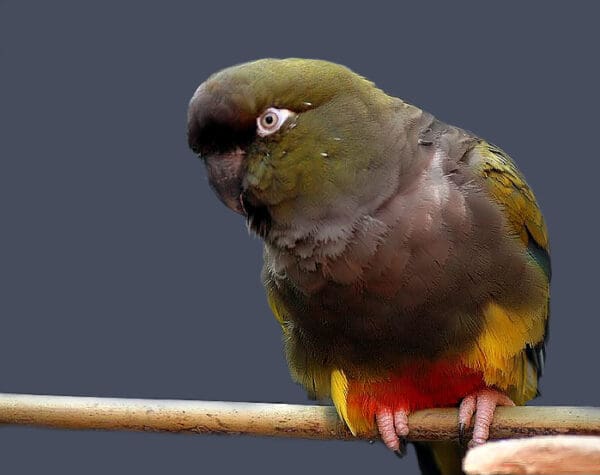
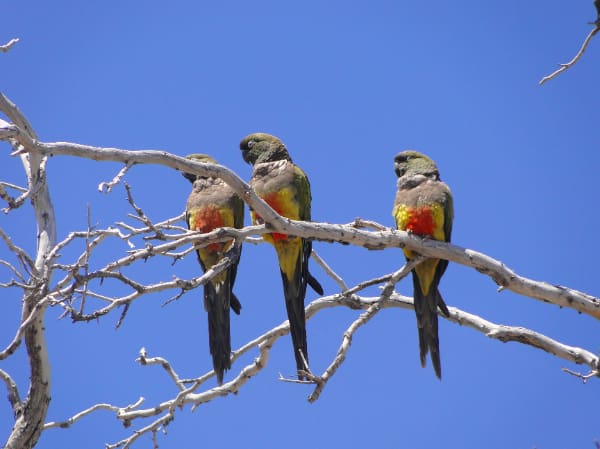
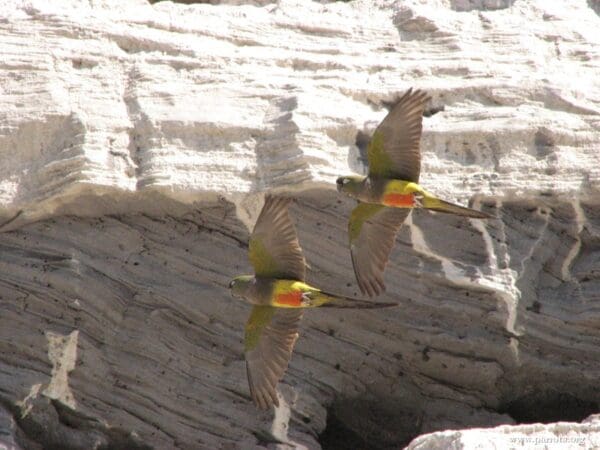
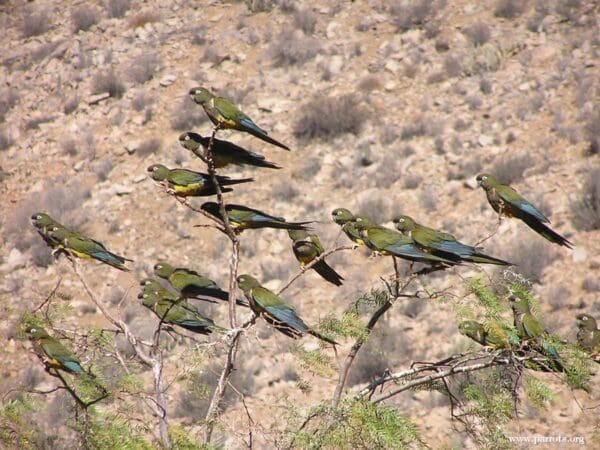
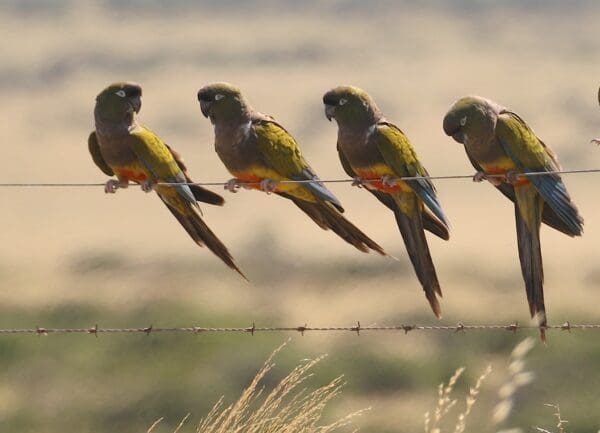
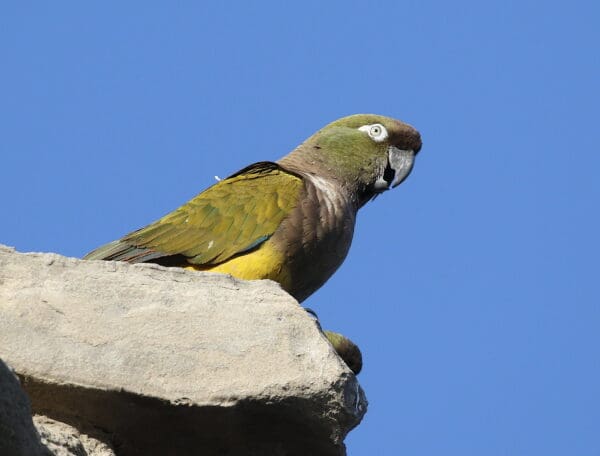
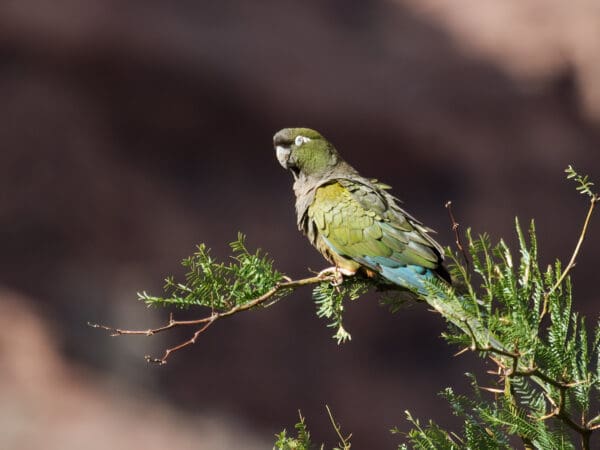
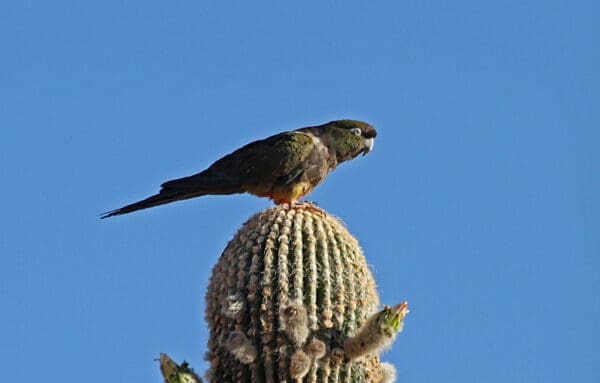
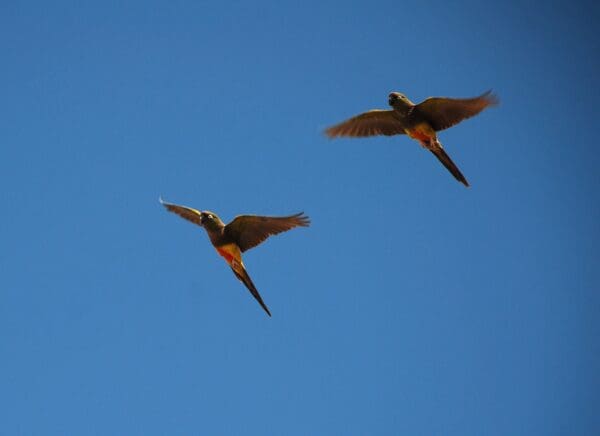
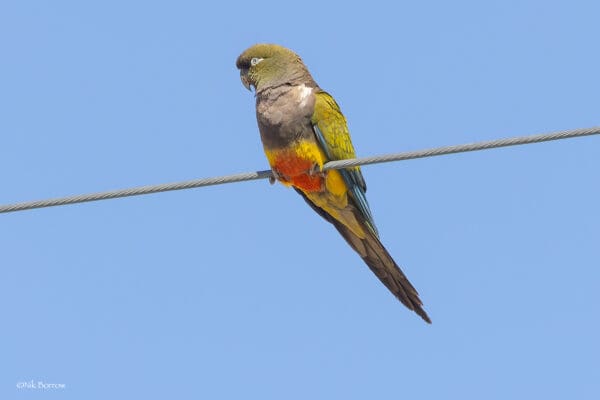
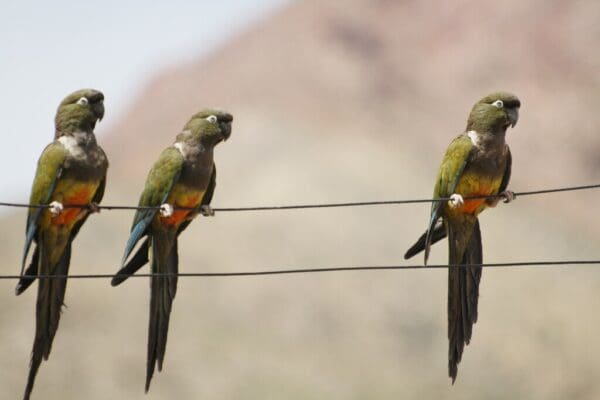
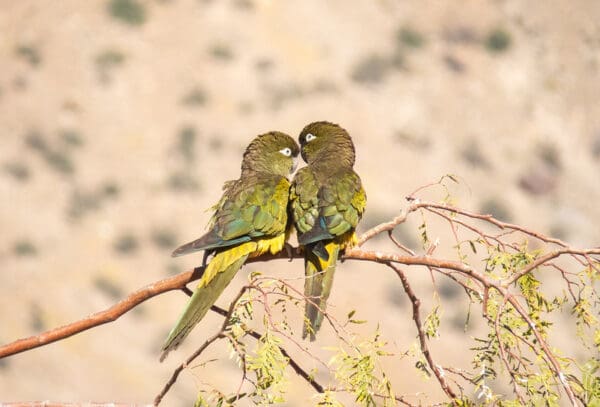
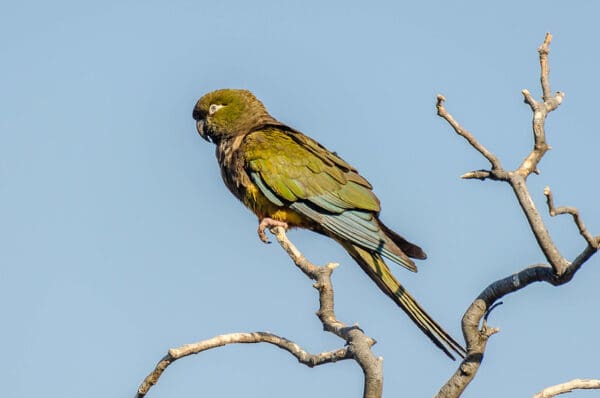
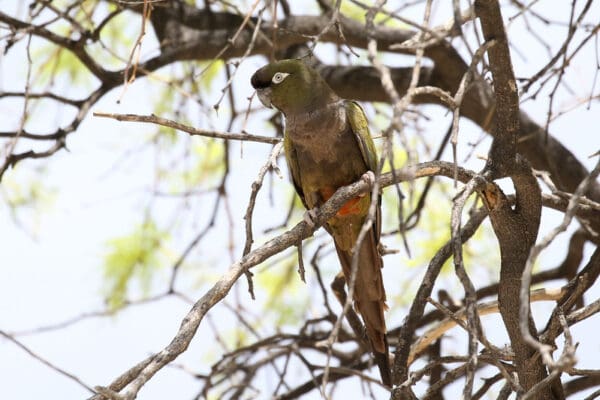
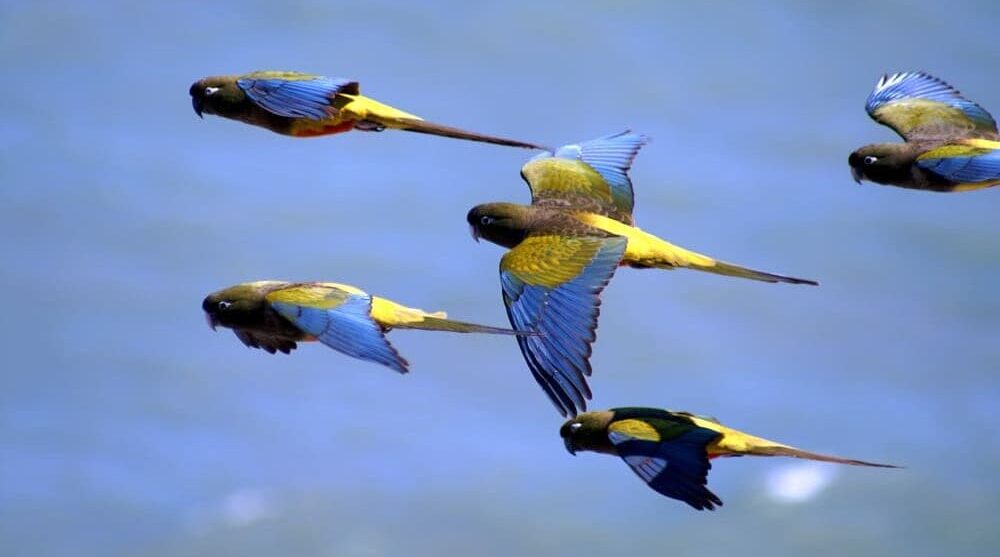
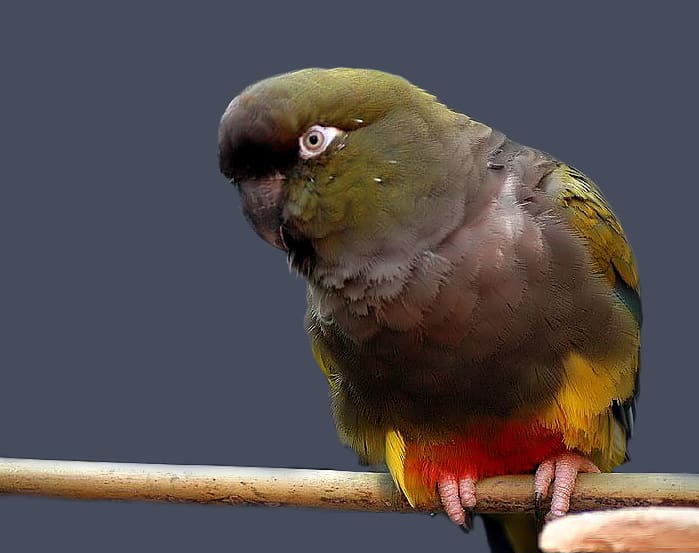
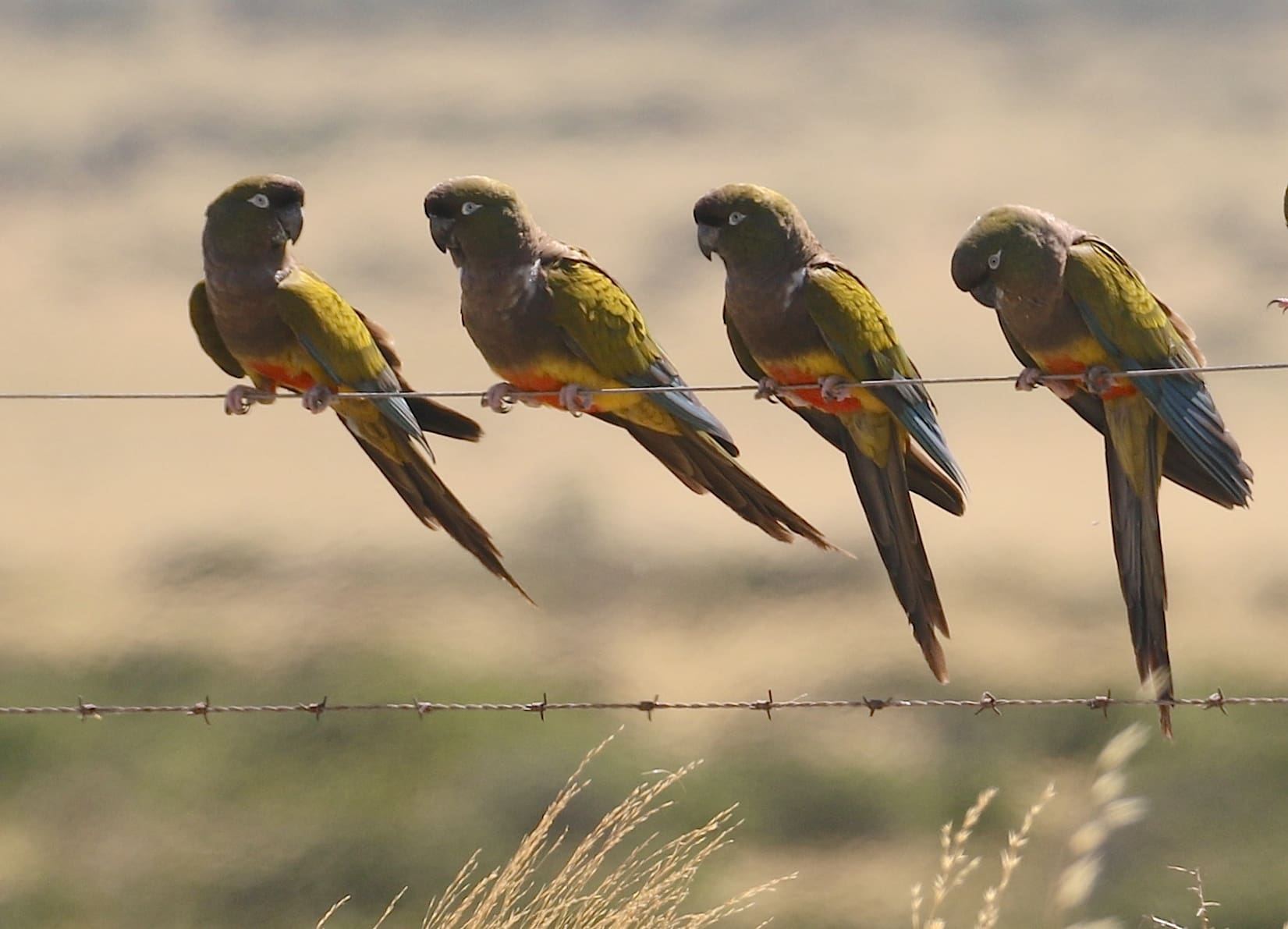
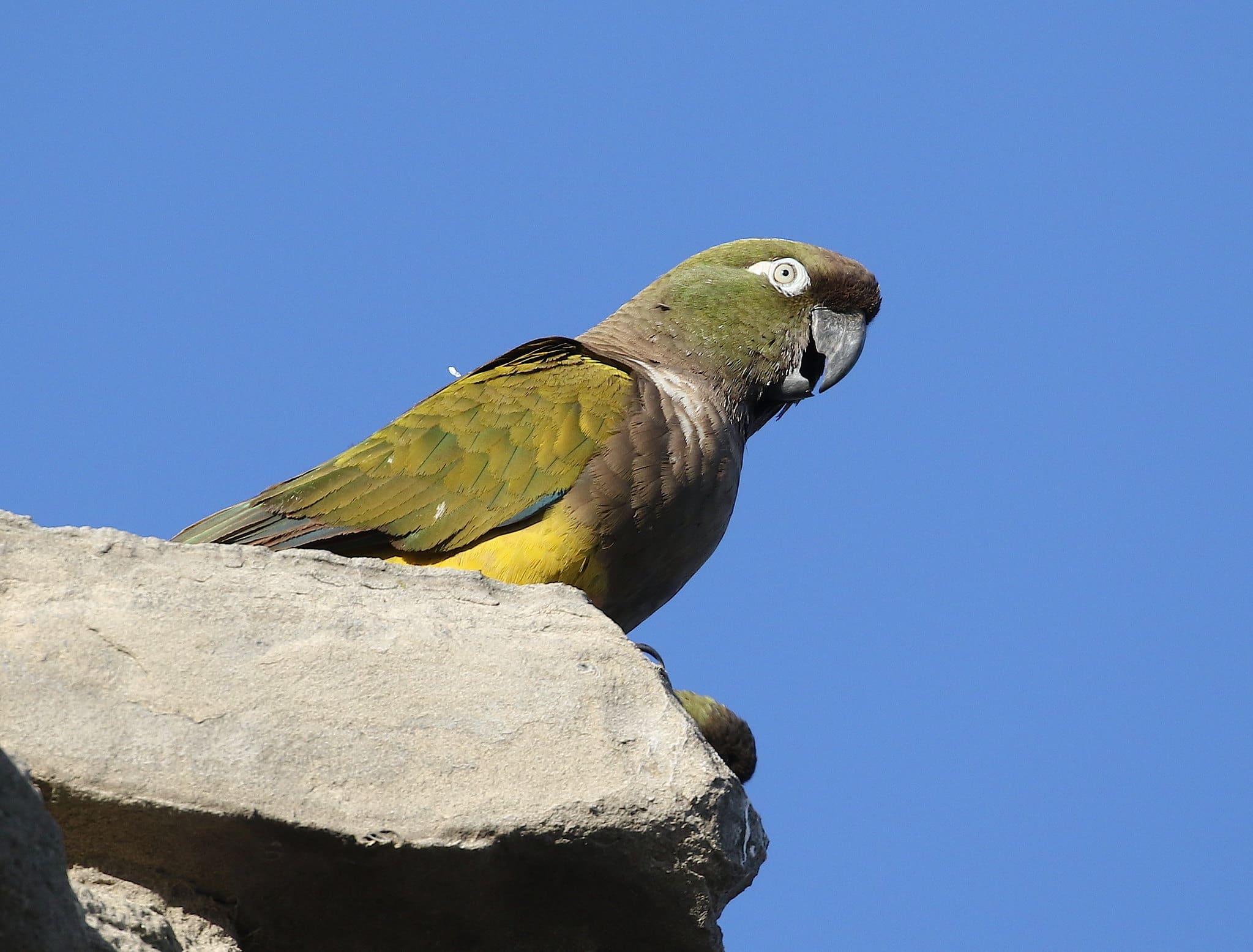
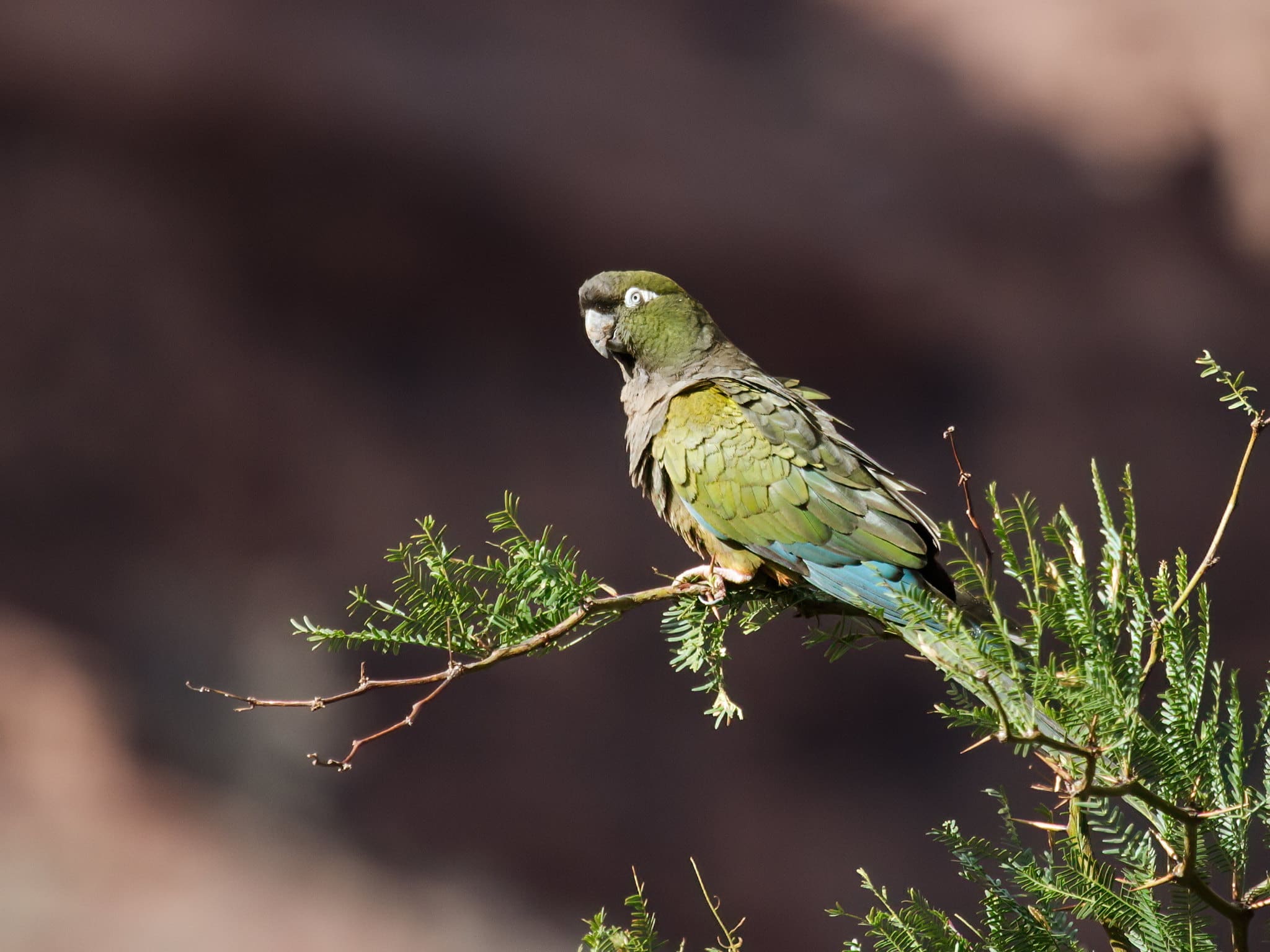
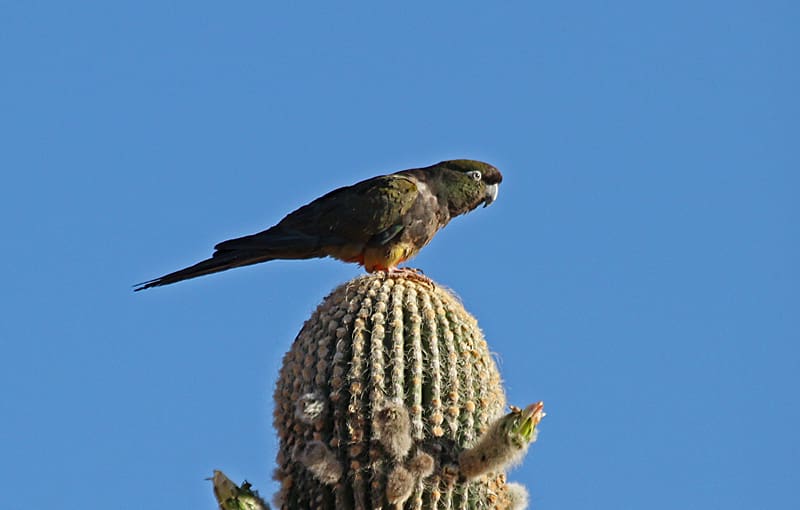
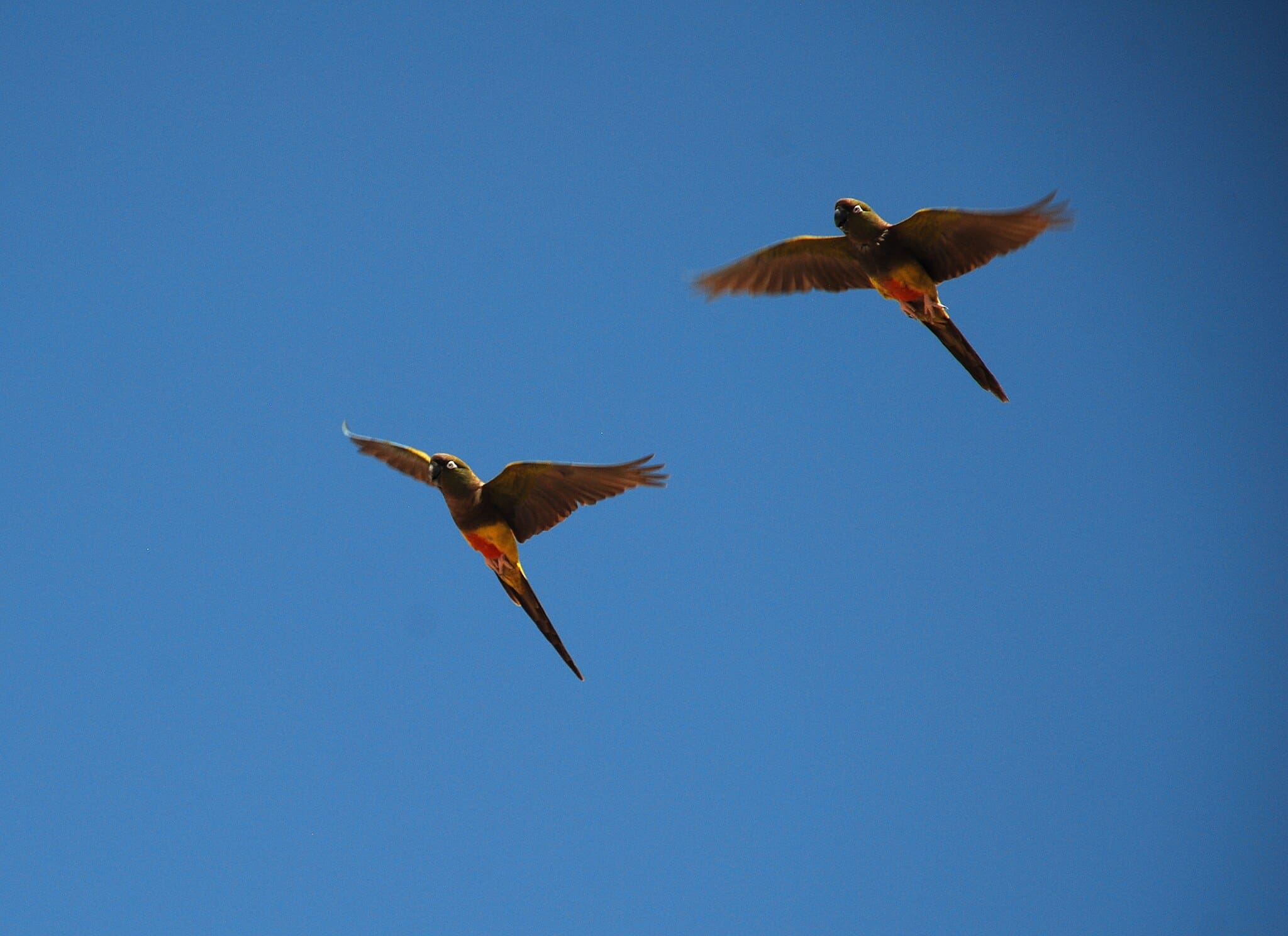
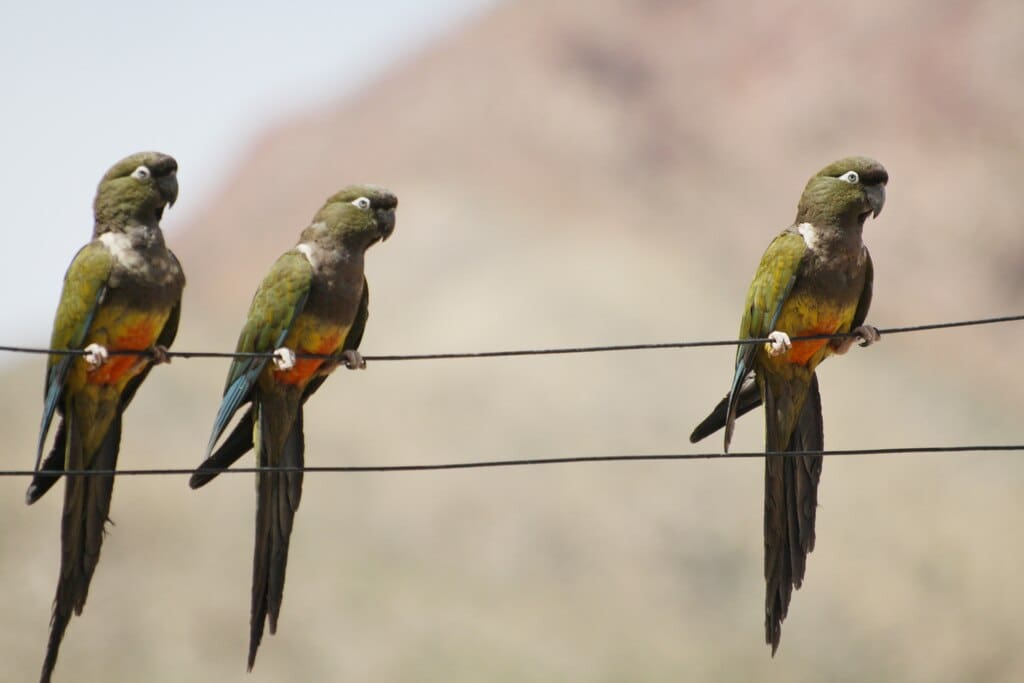
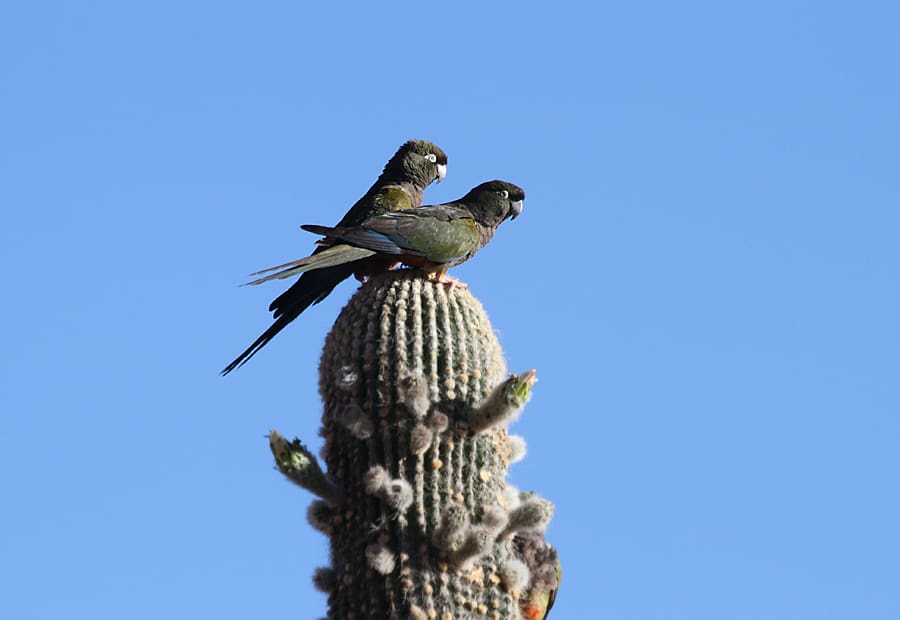
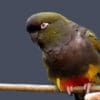
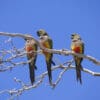
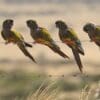
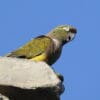
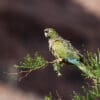
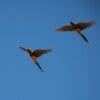
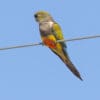
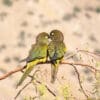
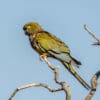
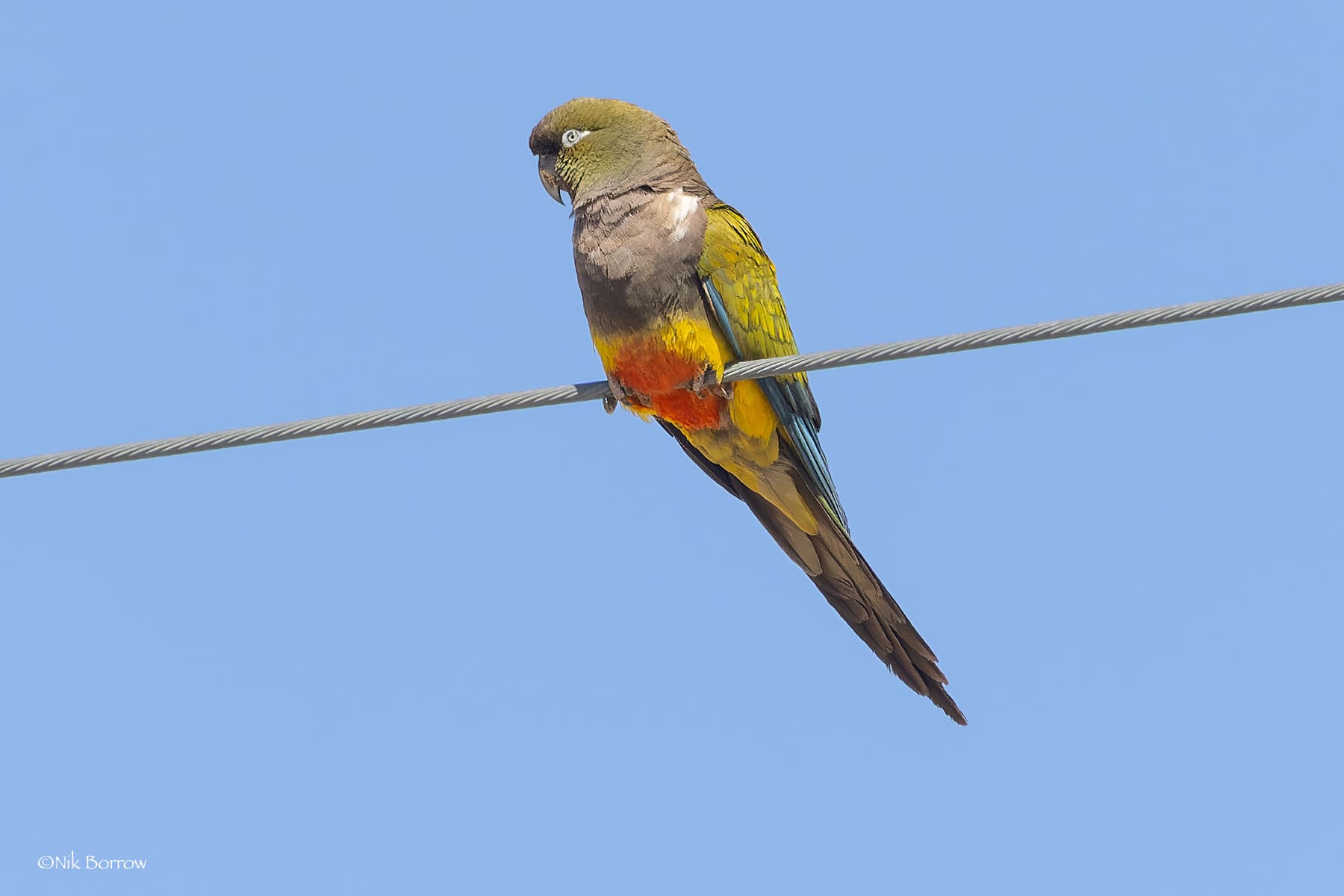
C.p. patagonus: Both adults olive/brown head, neck, back and breast; lower back to tail and upper abdomen yellow; orange/red thighs and centre of abdomen; throat and breast grey/brown, white marks at bend of wing on breast; tail olive/green tinted with blue, undertail brown/grey. White bare eye-ring, eye pale yellow. Beak dark grey.
C.p. conlara: Both adults as in patagonus, but with darker breast.
C.p. andinus: Both adults duller than patagonus; little yellow on lower underparts; centre of abdomen dull orange/red; white markings on breast very faint.
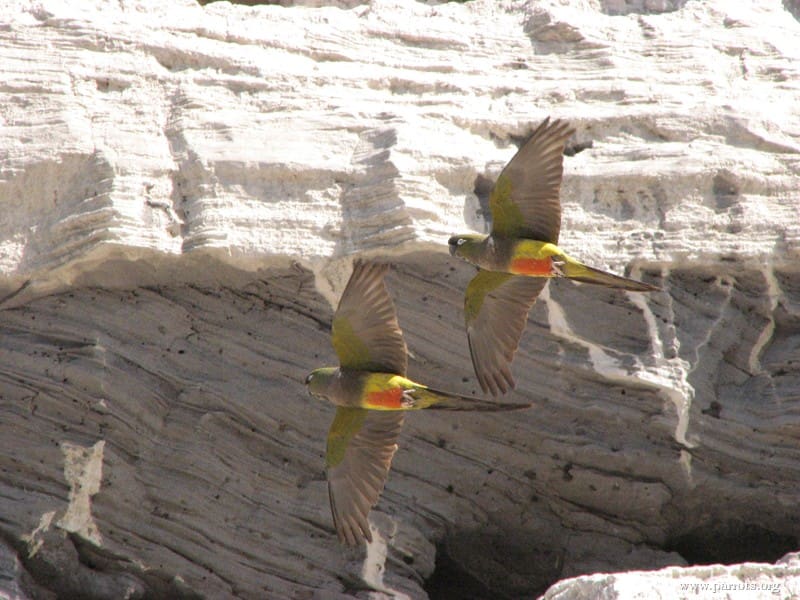
C.p. bloxami: Both adults brighter yellow on lower underparts, brighter red on thighs and centre of abdomen, more extensive white on breast forming a wide band; larger.
Colour Juvenile:
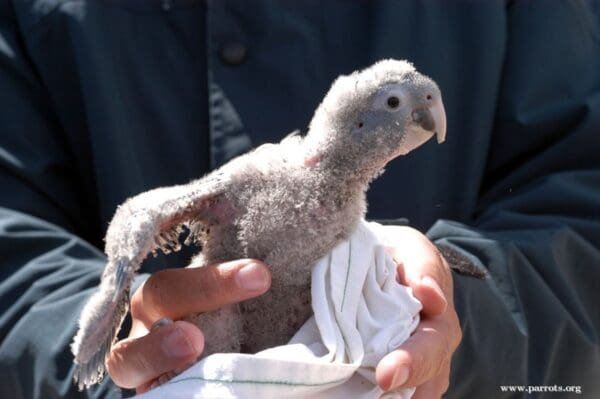
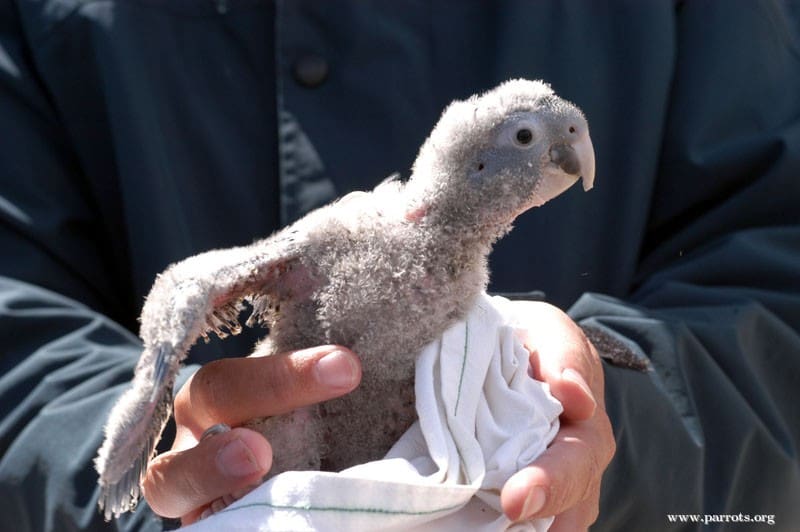
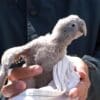
As in adult but generally duller; shorter tail. Upper mandible horn-coloured. Eye pale grey.
Call:
Calls very noisy; shrieking; alarm calls gyeee gyee gyeee.
More Information:
Content Sources:
CITES
Avibase
BirdLife International
Cornell Lab of Ornithology/Birds of the World
Parrots: A Guide to Parrots of the World, Juniper and Parr, 1998
Burrowing Parrots, Masello, Juan
Parrots of the World, Forshaw and Cooper, 1977. 2010 edition
Parrots of the World, Forshaw, 2006.
Parrots in Aviculture, Low, 1992.
Parrots: Their Care and Breeding, Low, 1986.
Captive Status:
Fairly common.
Longevity:
Up to 35 yrs.
Housing:
Walk in aviary or enclosure, minimum length 4.5-7 m (14.7-23 ft).
Diet:
Mix of soaked or sprouted sunflower seed; boiled maize; cooked or sprouted beans; cooked whole rice; fresh vegetables such as carrot, green beans, zucchini; fresh fruits such as apple, orange, banana separately; mix of small seeds (canary, oat), complete commercial pellet.
Enrichment:
Love bathing, puzzle toys, bird-safe woods such as fir, pine, willow, elder; other bird-safe chewables (vegetable tanned leather toys), climables (ladders, swings); noise makers, foraging toys.
Nest Box Size:
14″ x 14″ x 24″ (35.5 cm x 35.5 cm x 61 cm) rectangular box.
Clutch Size:
2 to 5
Fledging Age:
7-9 weeks (longer for bloxami)
Hatch Weight:
—
Peak Weight:
—
Weaning Weight:
—
World Population:
Around 95,000 mature individuals, decreasing.
IUCN Red List Status:
Least Concern
CITES Listing:
Appendix II
Threat Summary:
Heavily trapped for wild bird trade; since 1981, 122,914 individuals have been recorded in international trade. Also persecuted as a crop pest and at threat from the destruction of breeding colonies. The population size of the four subspecies was estimated as follows by Masello et al. in 2011: patagonus 43,330 nests, conlara 1,700 individuals, andinus 2,000 nests, bloxhami 5,000-6,000 individuals.
Range:
C.p. patagonus: Central to southeast Argentina (Mendoza and southern Buenos Aires to northeastern Santa Cruz), ranging occasionally into Uruguay in winter.
C.p. conlara: West-central Argentina, in San Luis and Córdoba provinces.
C.p. andinus: Northwestern Argentina, from Salta and Catamarca south to San Juan.
C.p. bloxami: Central Chile, now restricted to a few localities mainly in O’Higgins and Maule, but in Atacama, formerly widespread from Atacama to Valdivia.
Habitat:
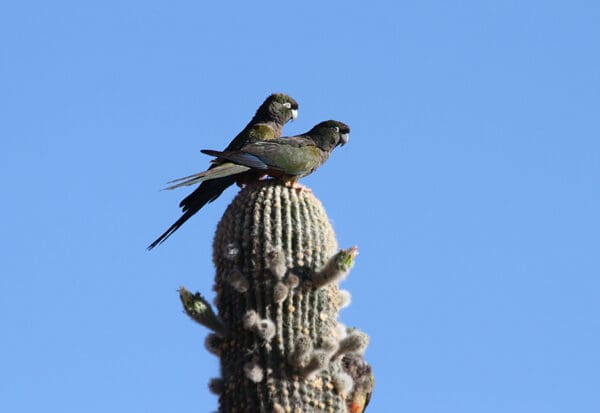
Found in open grass country, also reported in savanna, wooded valleys with cliffs and farmland to about 2000 m (6560 ft). Also, in arid country near streams and rivers, and scrub and humid scrub.
Wild Diet:
In Patagonia, birds forage for berries of Empetrum rubrum, Lycium sp., Discaria sp., and Schinus johnstonii. In northeast Patagonia, individuals have been observed feeding on Silybum marianum, Carduus thoermeri [nutans], Xanthium spinosum, and Xanthium cavanillesii, seeds of Avena fatua and Rumex crispus, and berries of shrubs like Condalia microphylla. Also, fruits of Geoffroea decorticans, Prosopis caldenia, Prosopis chilensis, and Prosopis flexuosa. In Chile, additional foods include American pepper seeds (Schinus molle) and Sunchu brittlebush flowers (Encelia canescens). In areas with farming activity, the species consumes crops (flowers, seeds, or buds), including common fig (Ficus carica), English walnut (Juglans regia), common grape vine (Vitis vinifera), and pomegranate (Punica granatum), but damage is reportedly not significant. Foraging for roble (Nothofagus obliqua) seeds has been reported in the Andean foothills of Curicó, central Chile.
Ecology and Behaviour:
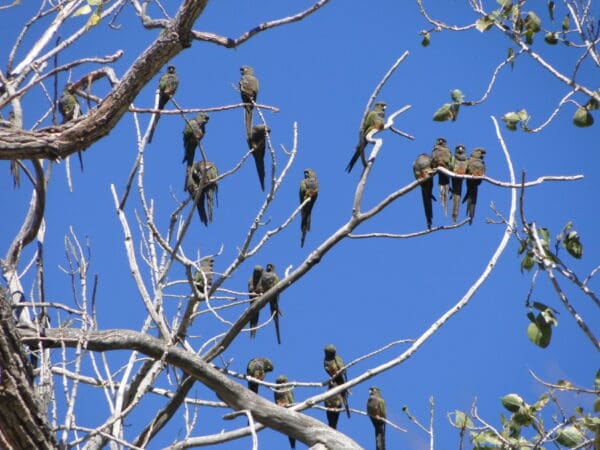
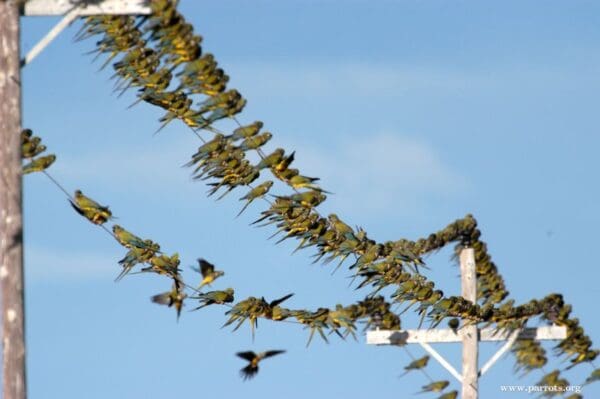
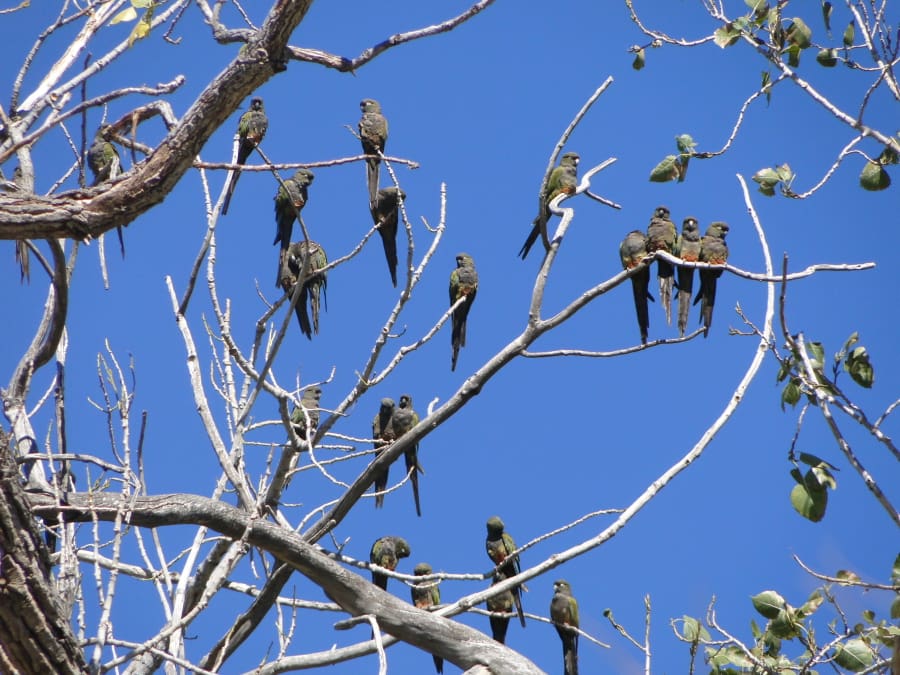
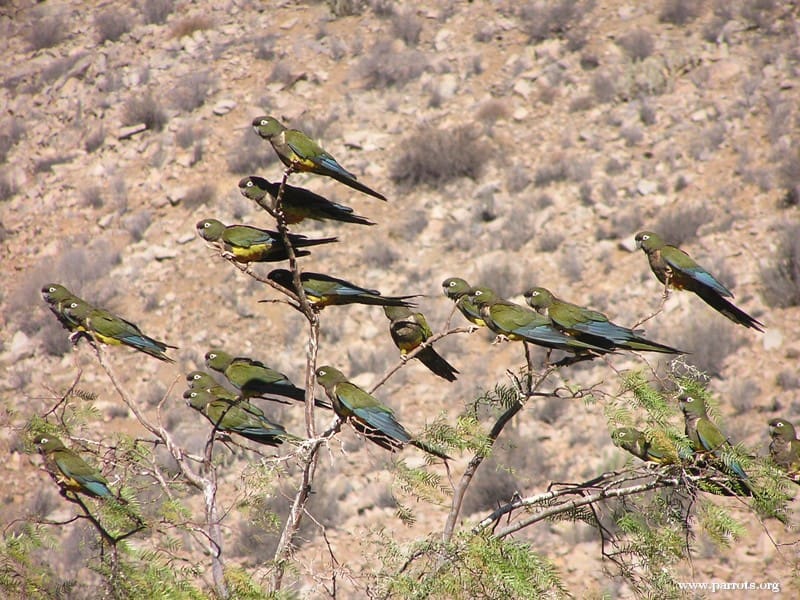
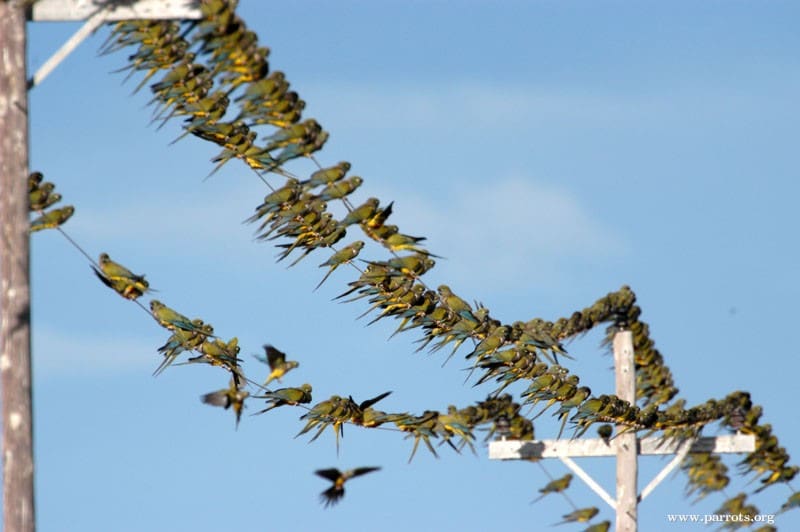
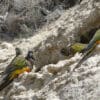
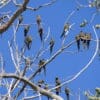
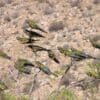
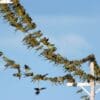
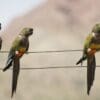
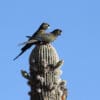
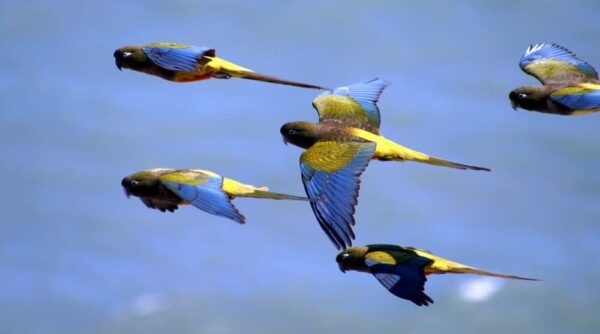
Gregarious parrots, forming large flocks in excess of 1000 birds; roosts communally in trees, wires, and in nest tunnels.
Clutch and Egg Size:
2 to 5 almost spherical eggs, 36.5 x 29.5 mm (1.4 x 1.1 in).
Breeding Season:
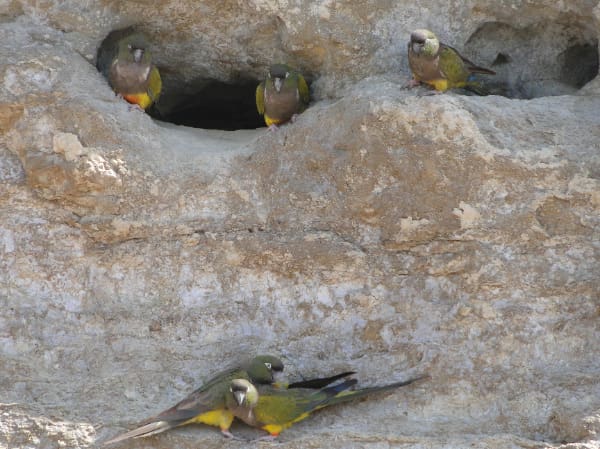
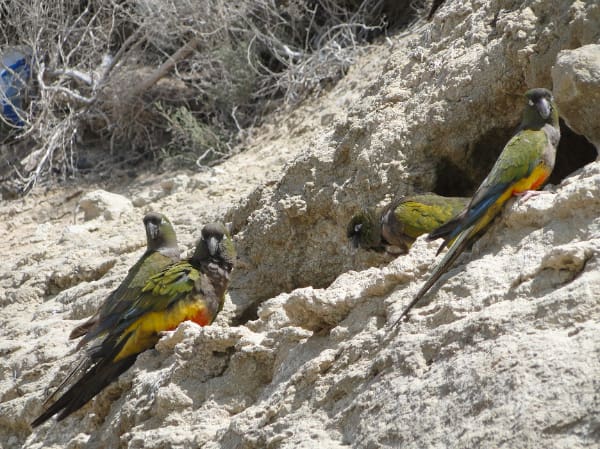
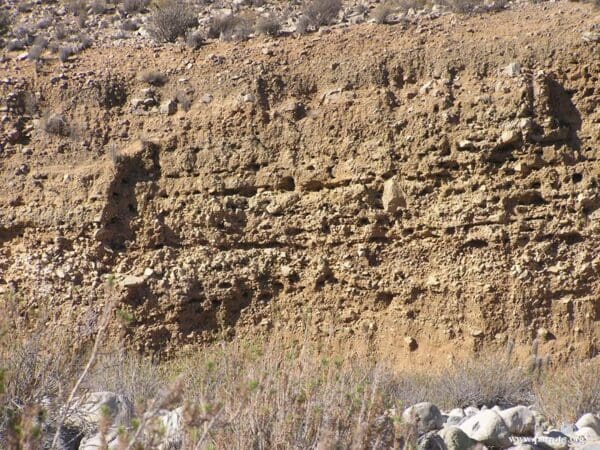
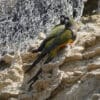
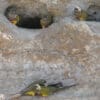
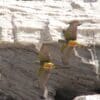
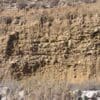
September-February. Nest is in burrow in sandstone, limestone or earth cliff, often by river or body of water.