LEARN

Red-capped Parrot

( Purpureicephalus spurius )

Also known as:
Pileated Parrot or Parakeet, King Parrot, Western King Parrot, Western Australian King Parrot, Hookbill

Also known as:
Pileated Parrot or Parakeet, King Parrot, Western King Parrot, Western Australian King Parrot, Hookbill

Geography:

DID YOU KNOW?

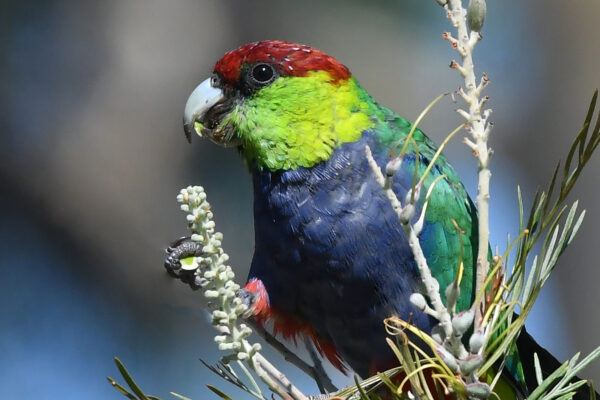
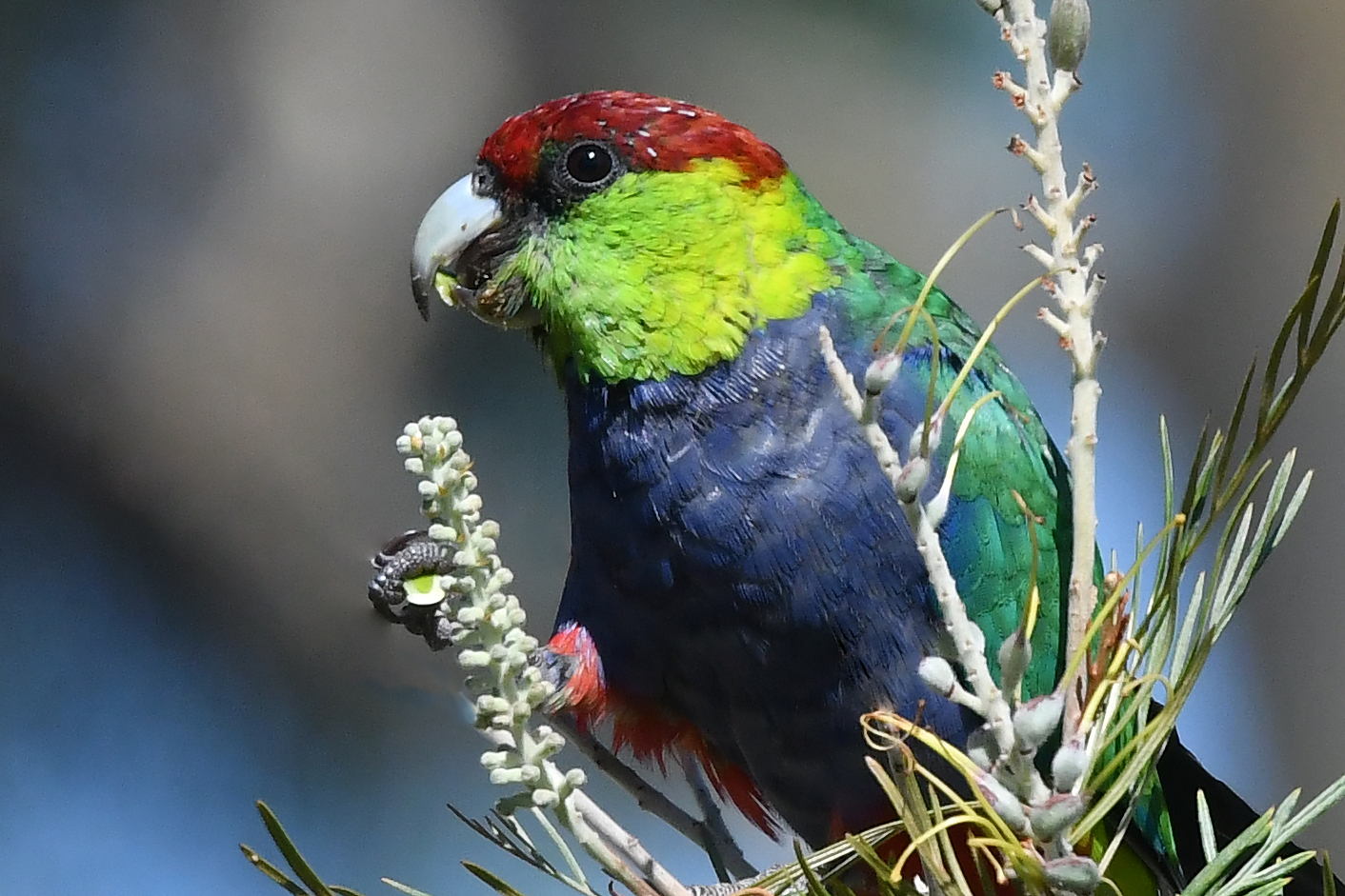
The elongated upper mandible of the Red-capped Parrot is adapted for dislodging the marri plant’s large seeds.

<p><em>Purpureicephalus</em></p>
Genus:

Purpureicephalus

<p><em>spurius</em></p>
Species:

spurius

Size:

37 cm (14.4 in)

Weight:

105-156 g (3.6-5.5 oz)

Subspecies including nominate:

one

Colour Adult:

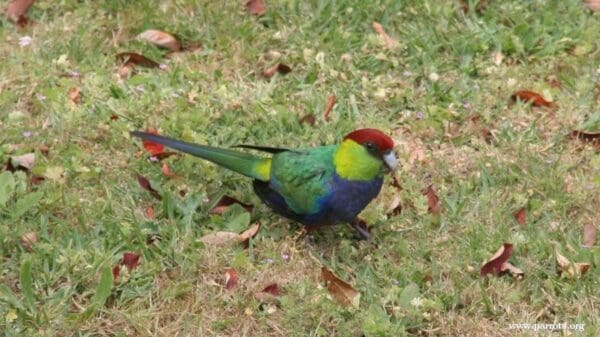
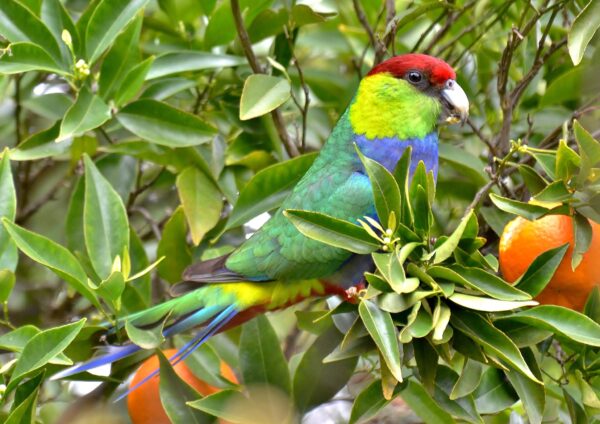
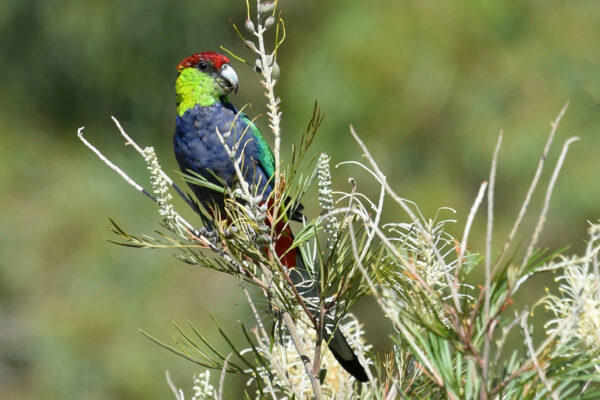
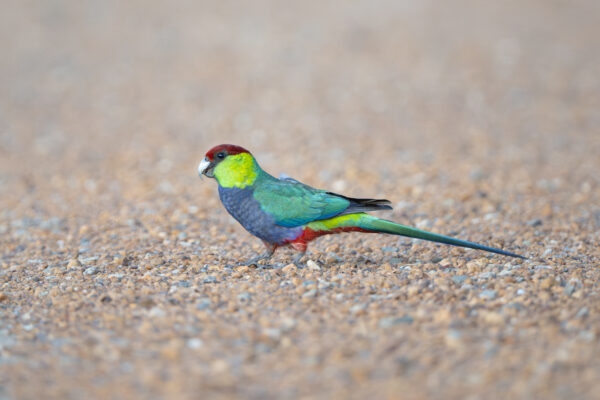
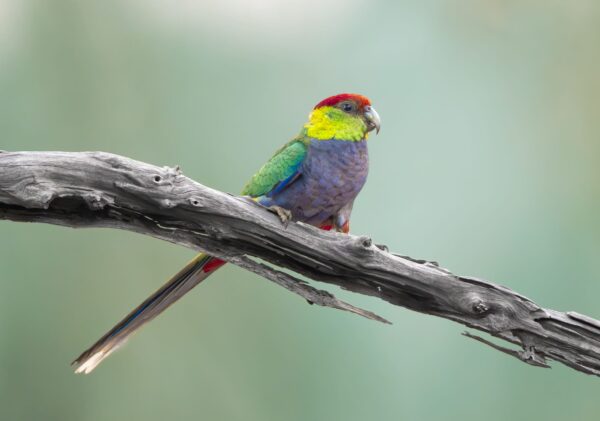
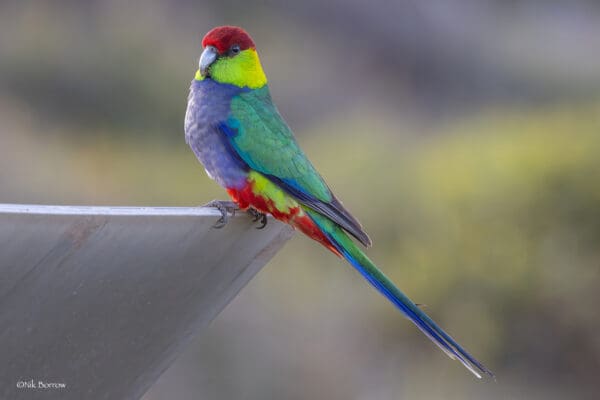
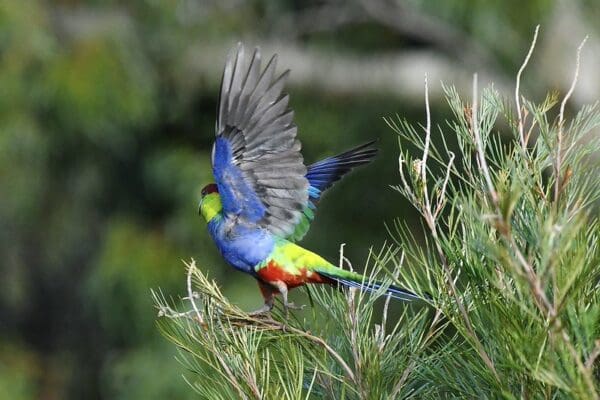
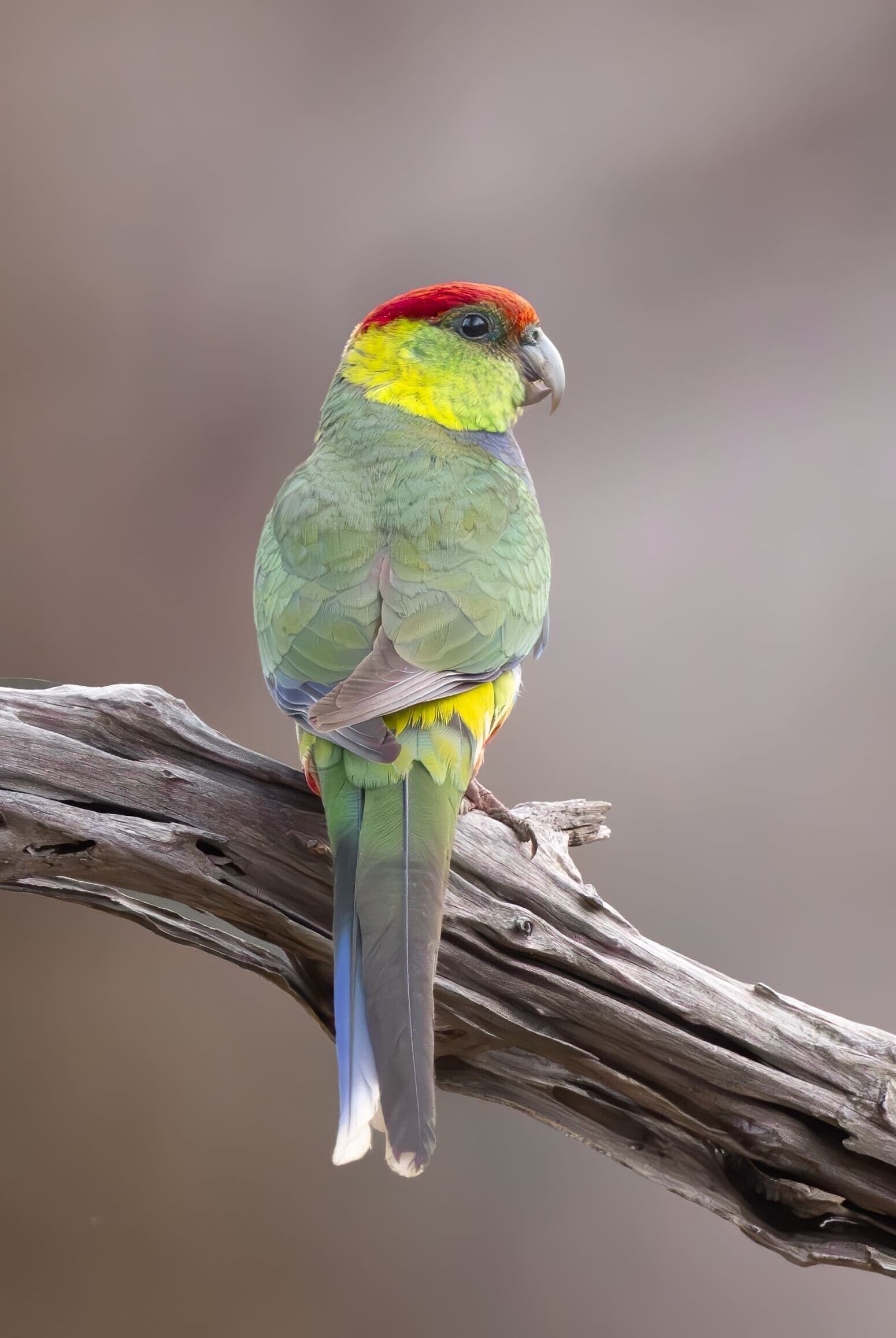
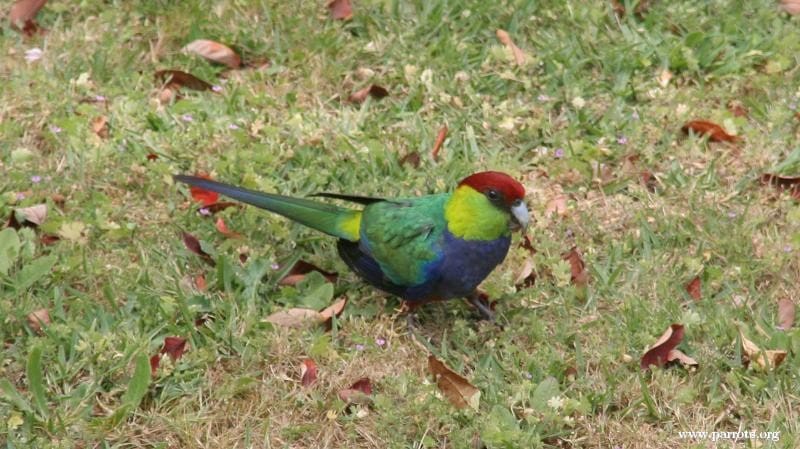
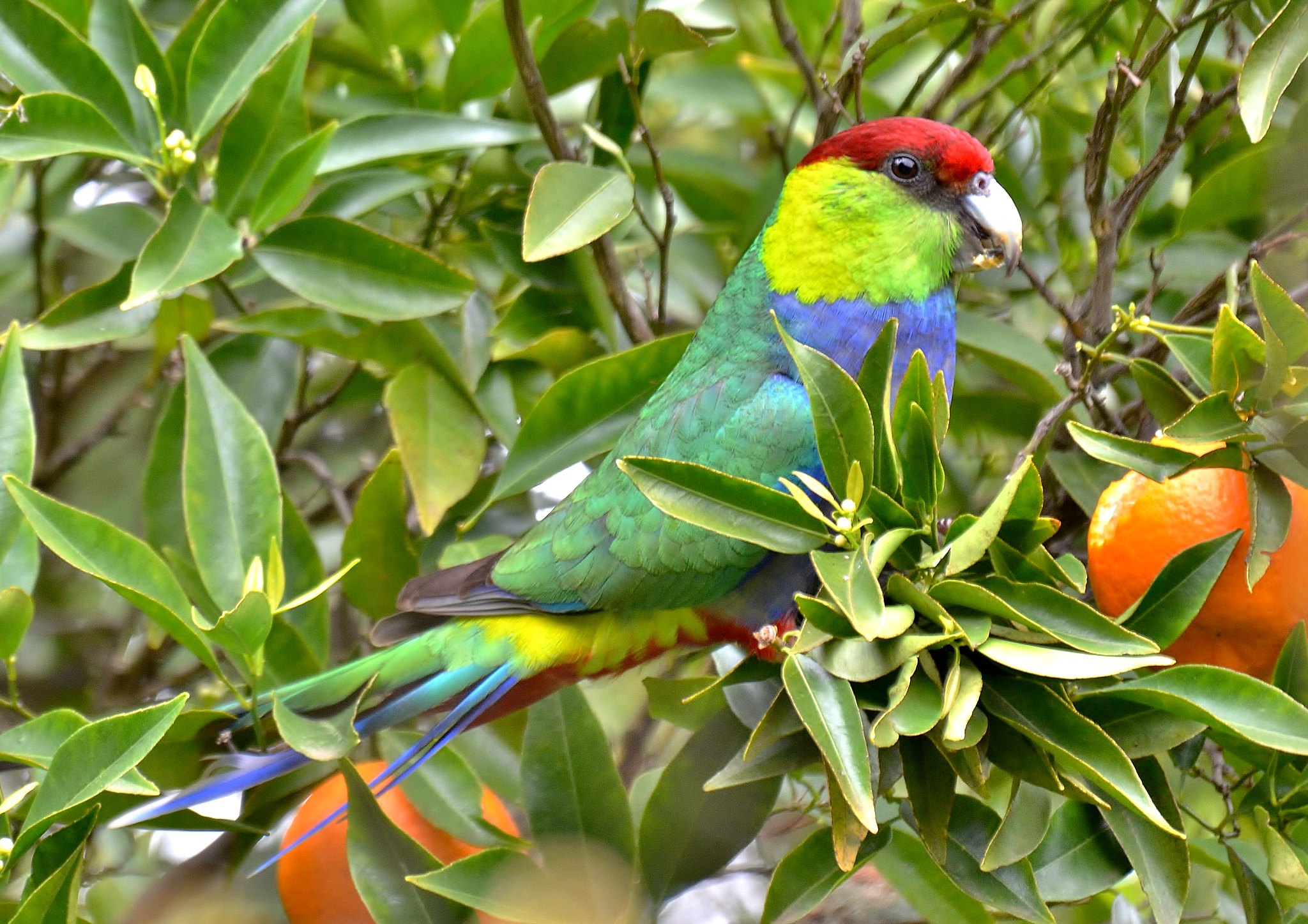
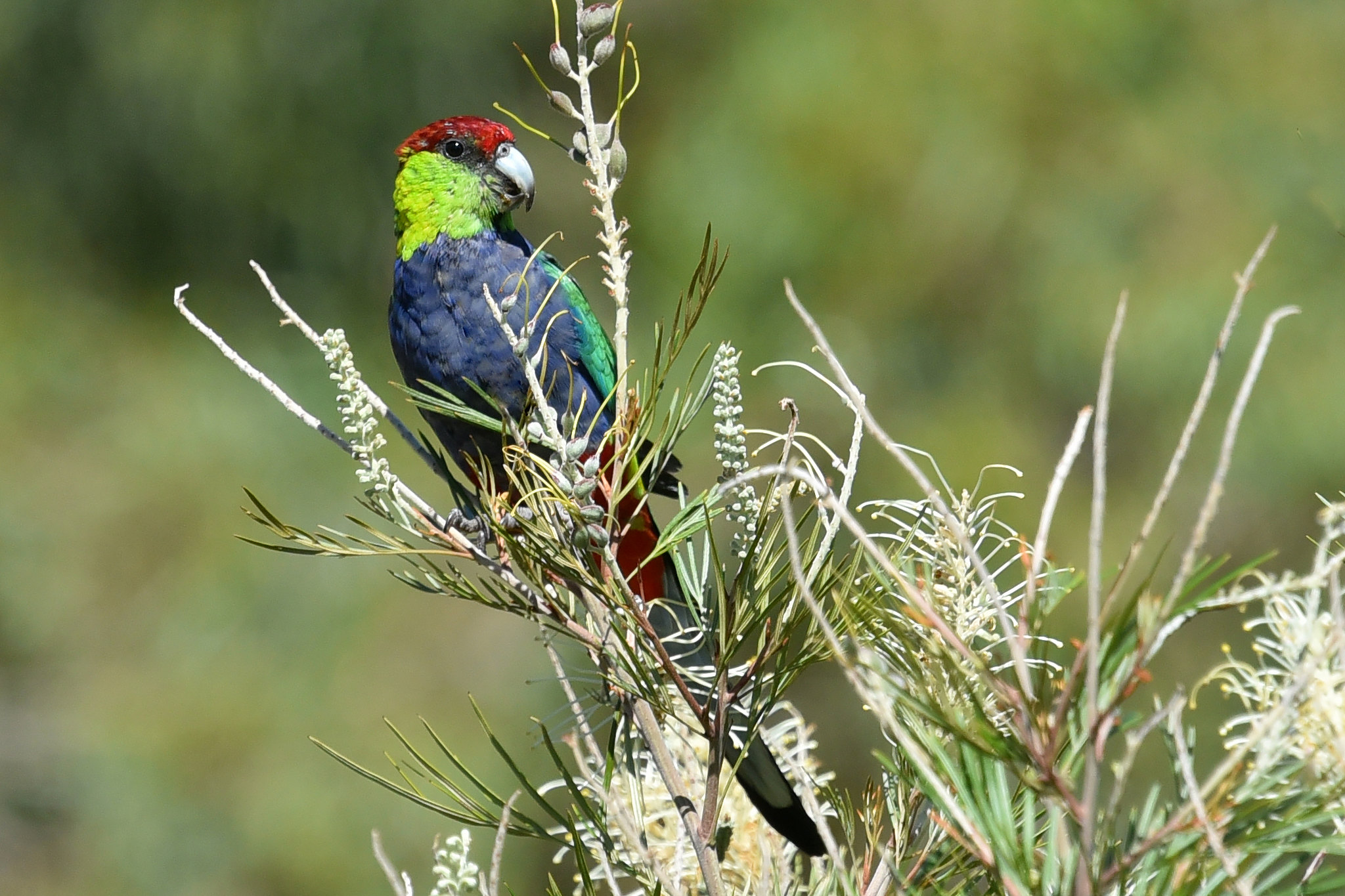
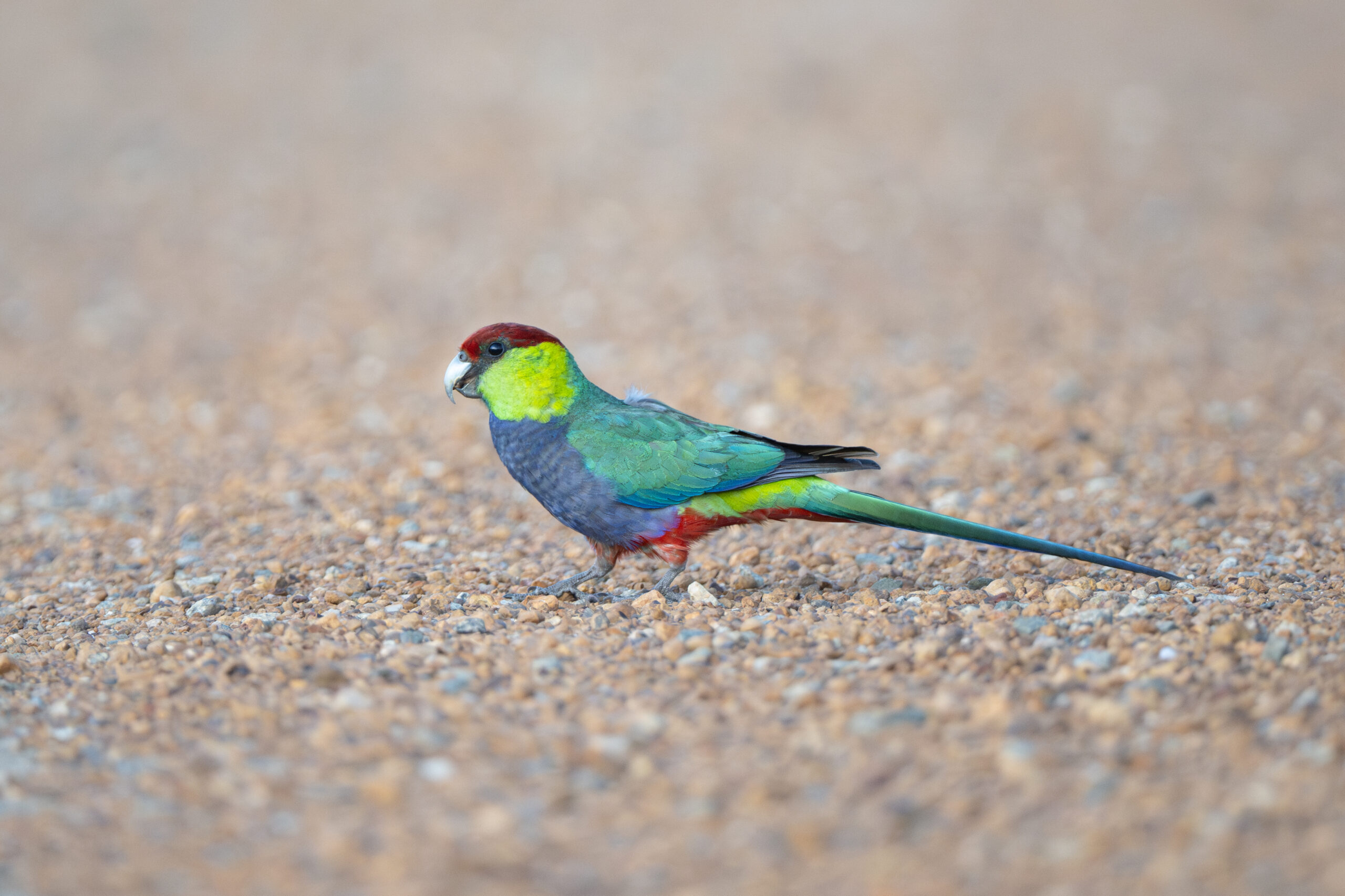
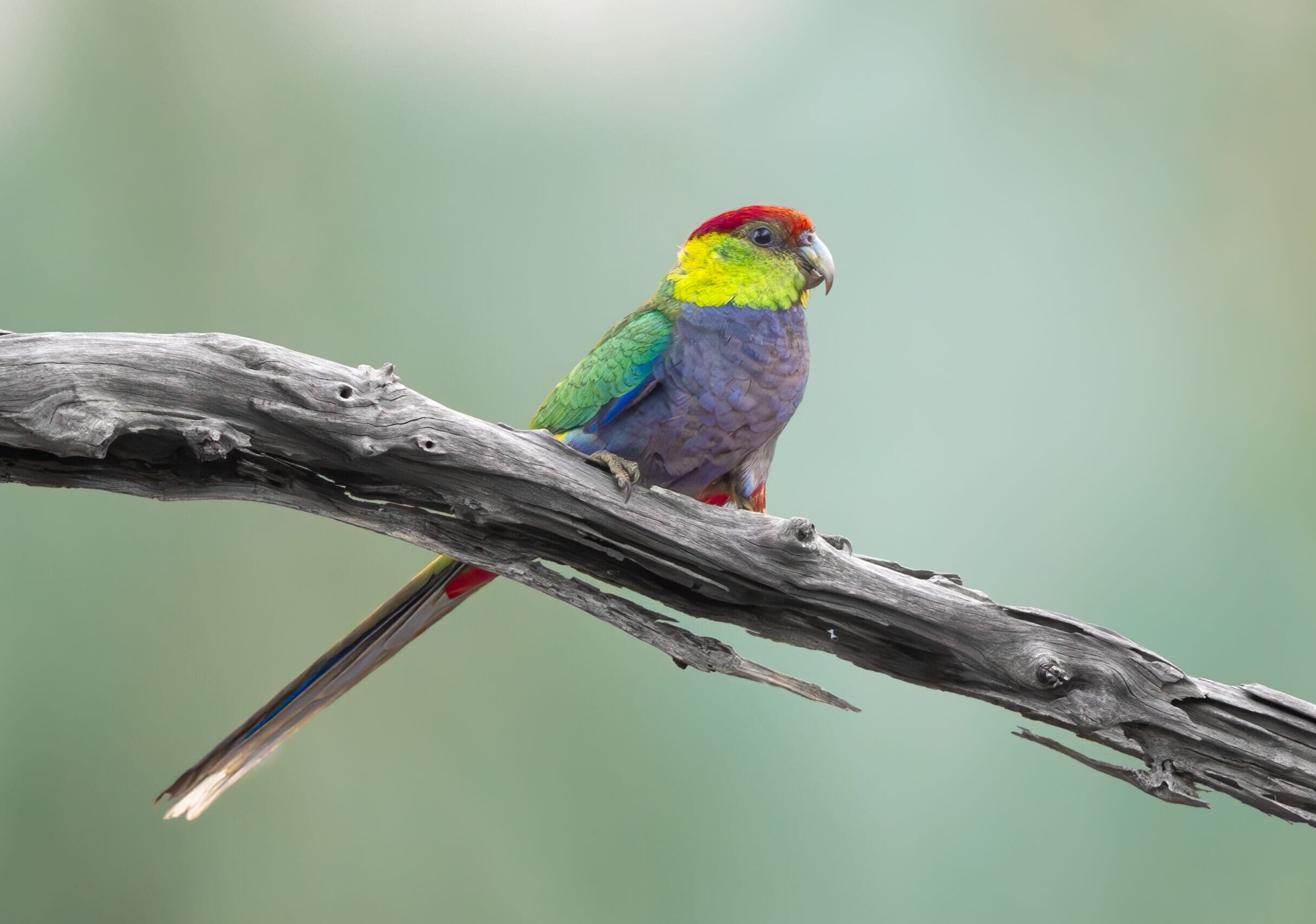
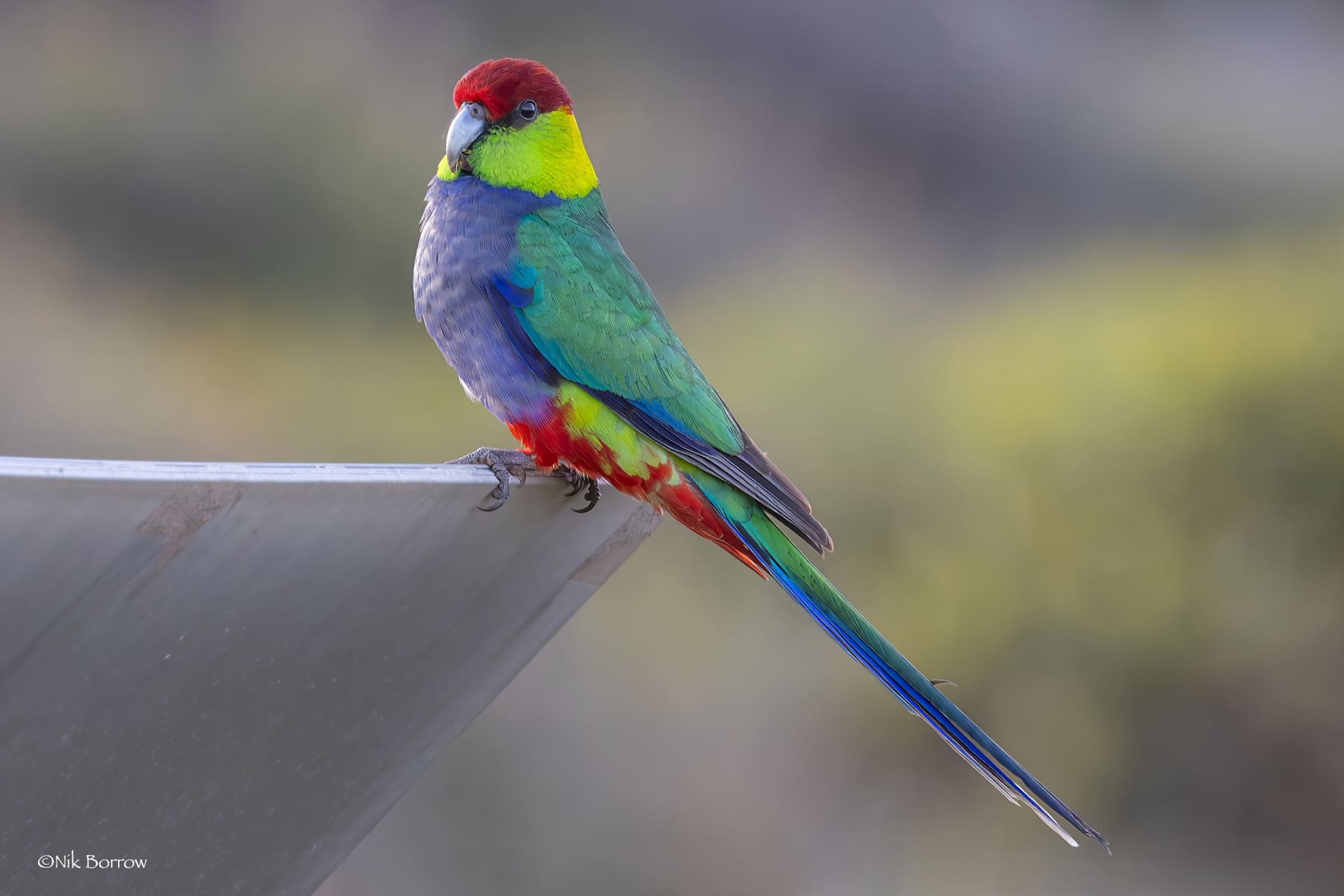
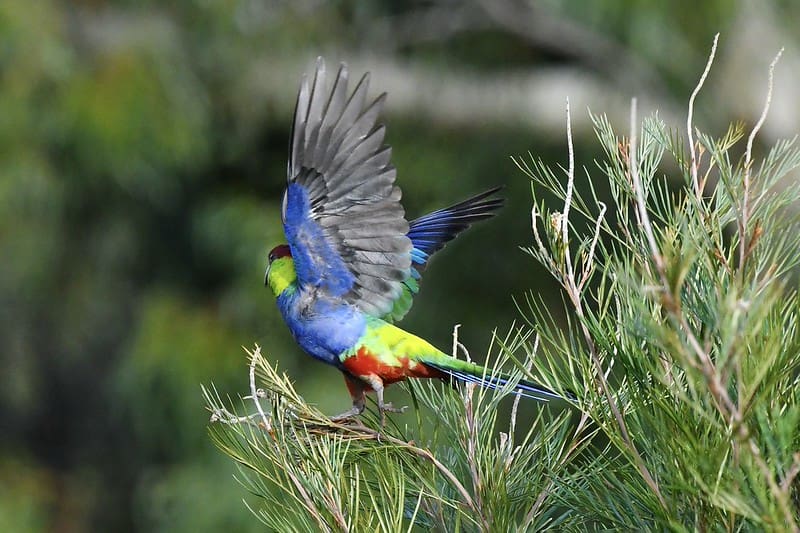
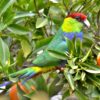
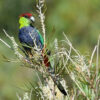
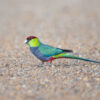
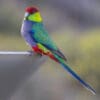
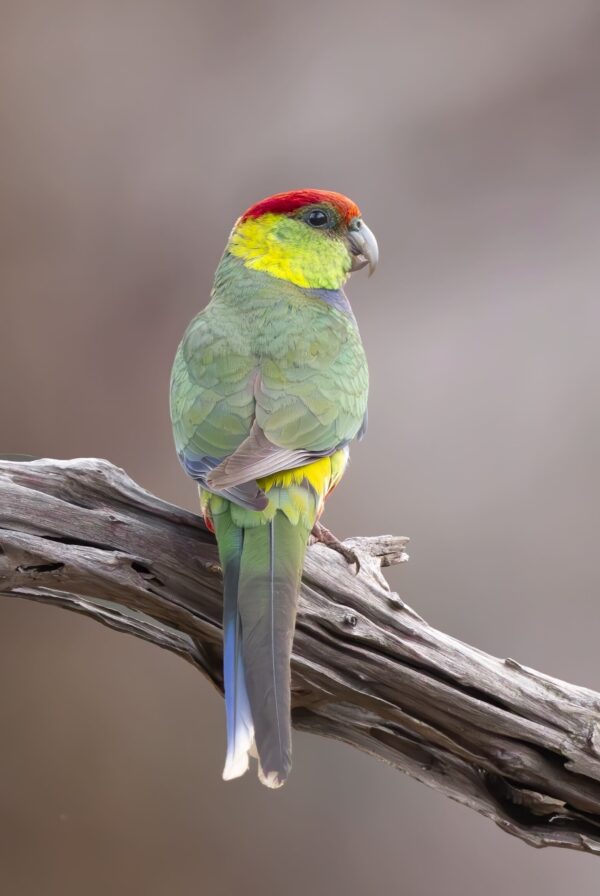
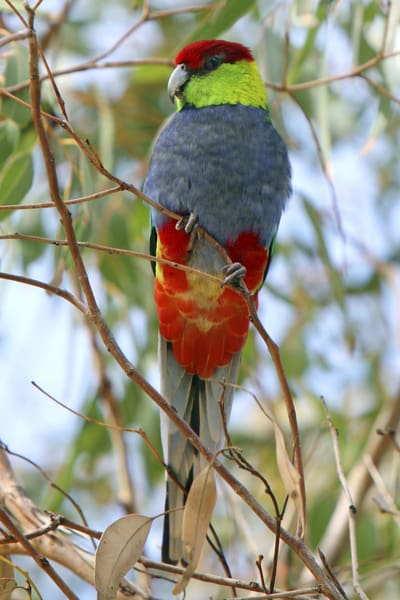
Male-dark red forehead to nape; yellow/green cheeks; dark green upperparts; green/yellow rump and upper tail coverts; purple/blue foreneck to abdomen and upper flanks; red lower flanks and thighs to undertail coverts intermixed with yellow/green; dark green tail, widely margined and tipped blue/white. Beak blue/grey. Eye dark brown. Female-in general duller than male; green line above eye, and variable green feather scattered through red crown; dull grey/mauve foreneck and chest, turning to purple/blue towards abdomen; underwing stripe, diminishing with age until absent.

Colour Juvenile:

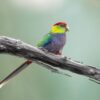
Frontal band rust coloured; dull green crown, nape, throat and foreneck; dull red/brown on breast and abdomen; abdomen suffused with purple/blue; underwing stripe more evident in females. Beak horn-coloured with dull yellow at base of lower mandible.

Call:

Calls are described as distinctive and harsh, sometimes rapid. Also a series of sharp shrieks when alarmed. In defence of nest gives rapid chatter.

Xeno-canto Wildlife Sounds-Red-capped Parrot

More Information:

Avibase
Birds in Backyards

Content Sources:

CITES
BirdLife International
Cornell Lab of Ornithology/Birds of the World
Parrots: A Guide to Parrots of the World, Juniper and Parr, 1998
Parrots of the World, Forshaw and Cooper, 1977. 2010 edition
Parrots of the World, Forsaw, 2006.
Parrots in Aviculture, Low, 1992.
Lexicon of Parrots, Thomas Arndt.

Captive Status:

Not common

Longevity:

Housing:

Walk-in enclosure, minimum length 4.5 m (14.7 ft).

Diet:

Small seed mix such as: canary, millet, and smaller amounts of oats, buckwheat, safflower and a little hemp; limited sunflower seed; spray millet; green leaves such as: Swiss chard, lettuce, sowthistle, dandelion, chickweed; seeding grasses; rearing food made from hard-boiled egg, wholegrain bread and carrot, all ground to crumbly consistency; fruits such as: apple, orange, banana, pomegranate, cactus fruits; complete kibble.
Enrichment:

Enjoys bathing, so provide overhead spray misters or bowls of water. Vigorous chewer, so provide bird-safe, non-sprayed branches of pine, fir and others, heat sterilized pine cones, vegetable tanned leather toys and wood block toys.

Nest Box Size:

Diagonal box 7″ x 7″ x 28″ (17.8 cm x 17.8 cm x 71.1 cm).

Clutch Size:

4-7

Fledging Age:

5 weeks

Hatch Weight:

Peak Weight:

Weaning Weight:

World Population:

Unknown, increasing.

IUCN Red List Status:
Least Concern

CITES Listing:
Appendix II

Threat Summary:

Not globally threatened. Fairly common, sometimes entering suburbs of Perth. The spread of marri is thought to have benefited this parrot, however, poor regeneration of nest trees is a long-term cause for concern, and the restricted range of the species compounds the situation. It is further threatened by hunting and persecution.

Range:

Extreme southwestern Australia, mainly within 100 km of the coast.

Habitat:

Found up to 200 m (656 ft) in marri Eucalyptus calophylla forest, mallee, altered landscapes such as orchards, towns, and wooded paddocks.

Wild Diet:

Feeds on fruits, seeds of marri and other eucalypts, notably jarra Eucalyptus marginata and E. cornuta; also those of Grevillea, Hakea, Casuarina, Xylomelum, Agonis and grasses Avena fatua. Also takes blossoms of several eucalypts, leaf buds and insects and their larvae, particularly psyllid lerps. Sometimes, damage is caused to cultivated fruits.

Ecology and Behaviour:

Paired adults quiet, but noisy groups of 20 or more young birds travel in search of food. May forage on roadsides for grass seeds. Courtship is colourful and loud.

Clutch and Egg Size:

4-7 rounded eggs, 26.5 x 22.5 mm (1 x 0.8 in).

Breeding Season:

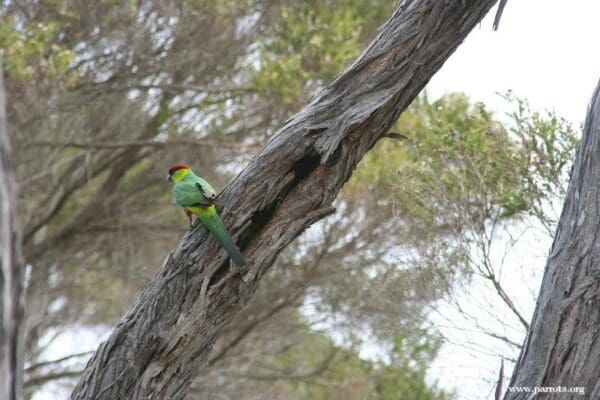
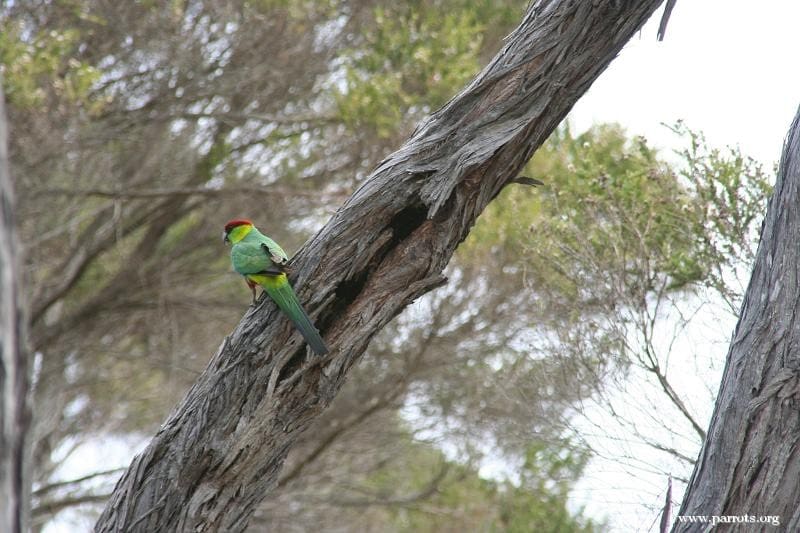
August-December. Nest is in hollow limb or tree cavity.

Related Links:

Join Our Flock

FlockTalk our monthly newsletter for parrot people everywhere:

+ News from the world of parrots

+ Updates on wild parrot projects

+ Inspiring updates from partners

+ Real stories from the parrot flock

+ Plus, expert tips for caring for your feathered friends at home.


Stay In The Loop, Sign Up Now.

FlockTalk: our monthly newsletter for parrot people everywhere:

Parrot news. Conservation wins. Pet care tips. All in one monthly email.

We do not sell or share your information with anyone