![© Vassil (Own work) [Public Domain] via Wikimedia Commons](https://parrots.org/wp-content/uploads/2023/01/wpt_Red-vented-Corella_1128-6-100x100.jpg)


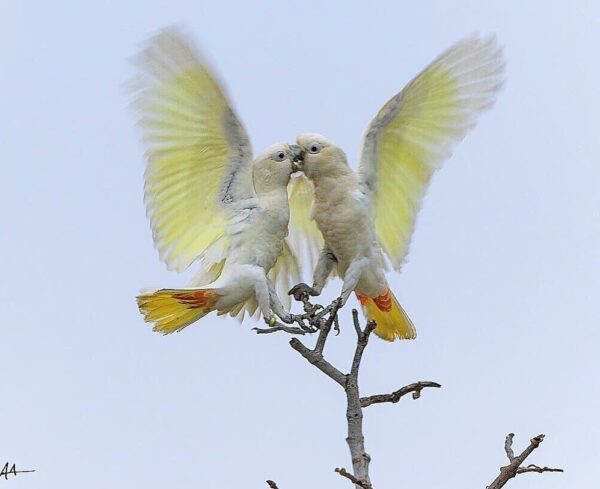
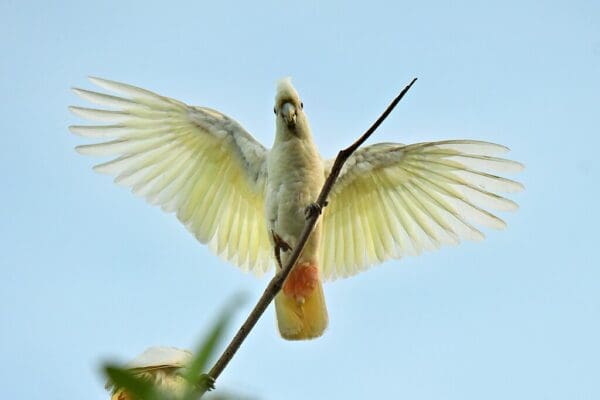
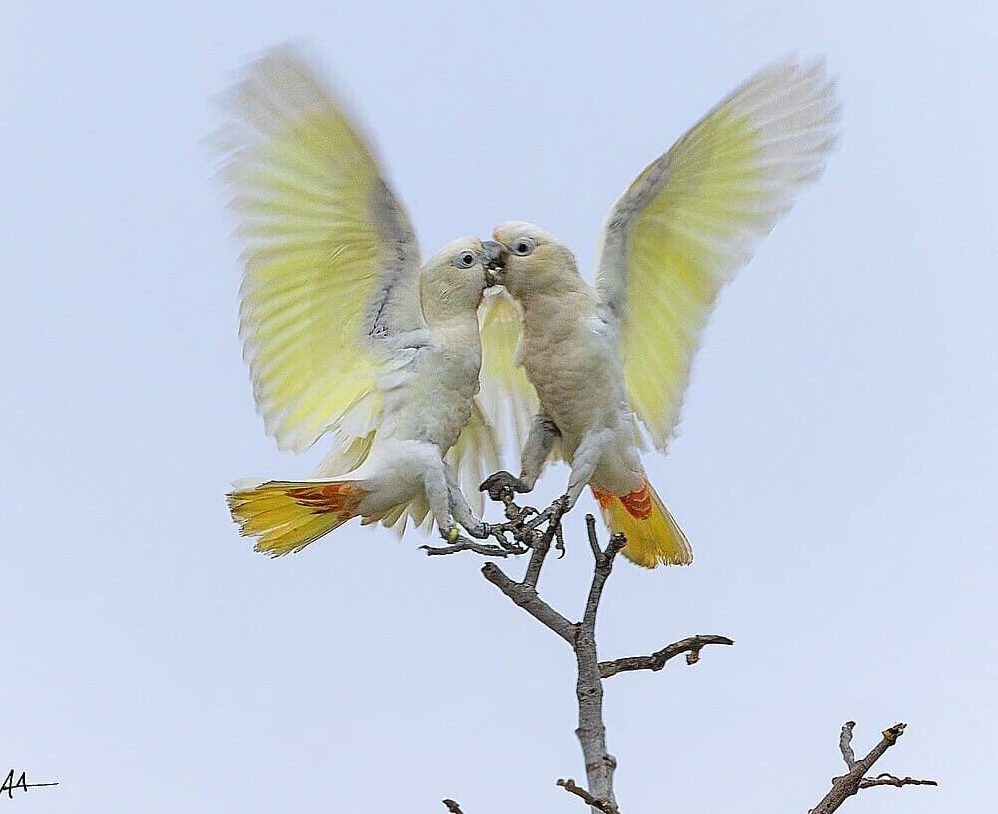
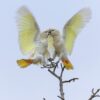
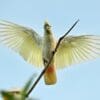
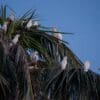
The Red-vented Cockatoo flies with rapid wingbeats, evading swift predators with acrobatic flying.

Cacatua

haematuropygia
Size:
31 cm (12.1 in)
Weight:
340 g (12 oz)
Subspecies including nominate:
one
Colour Adult:
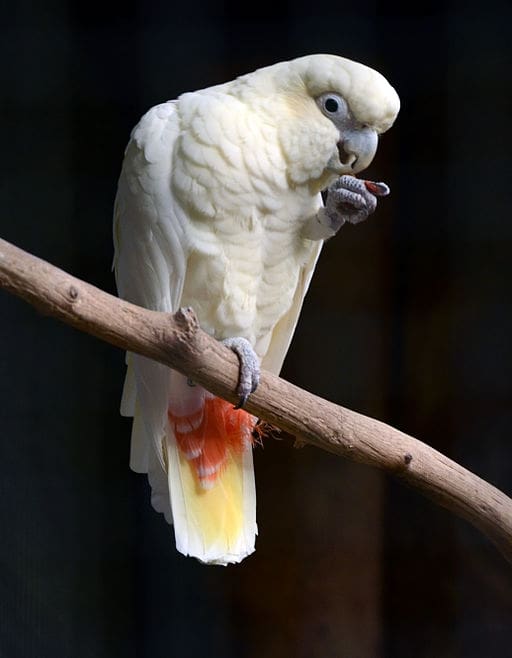
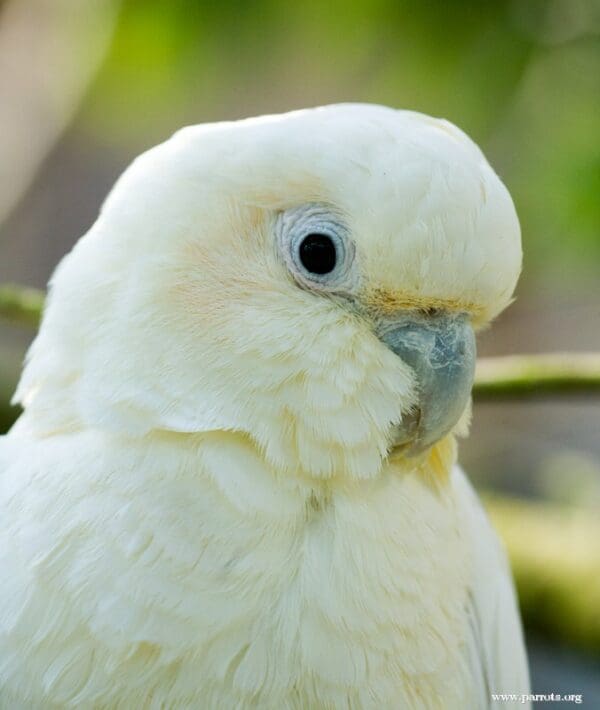
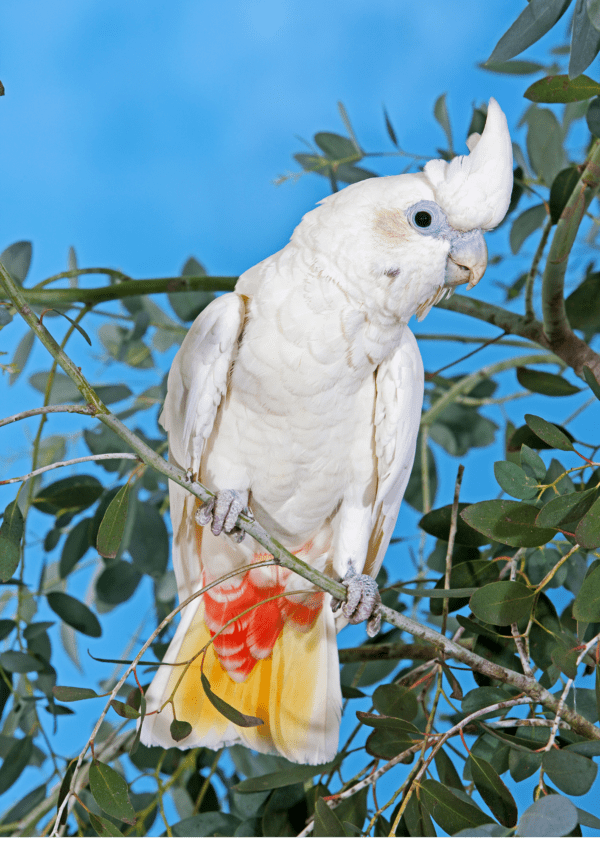
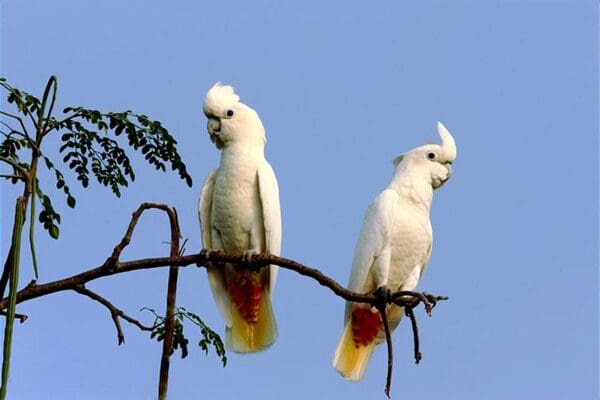
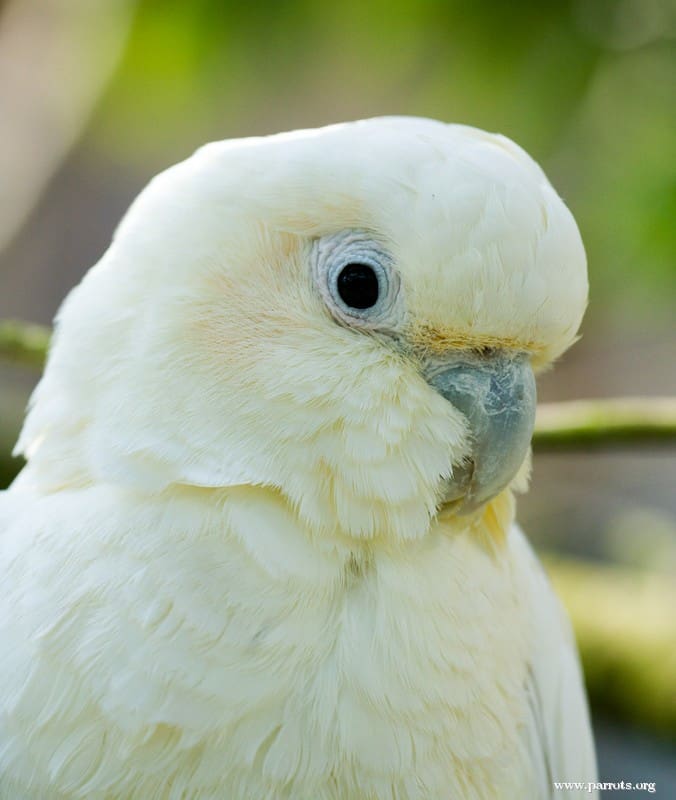
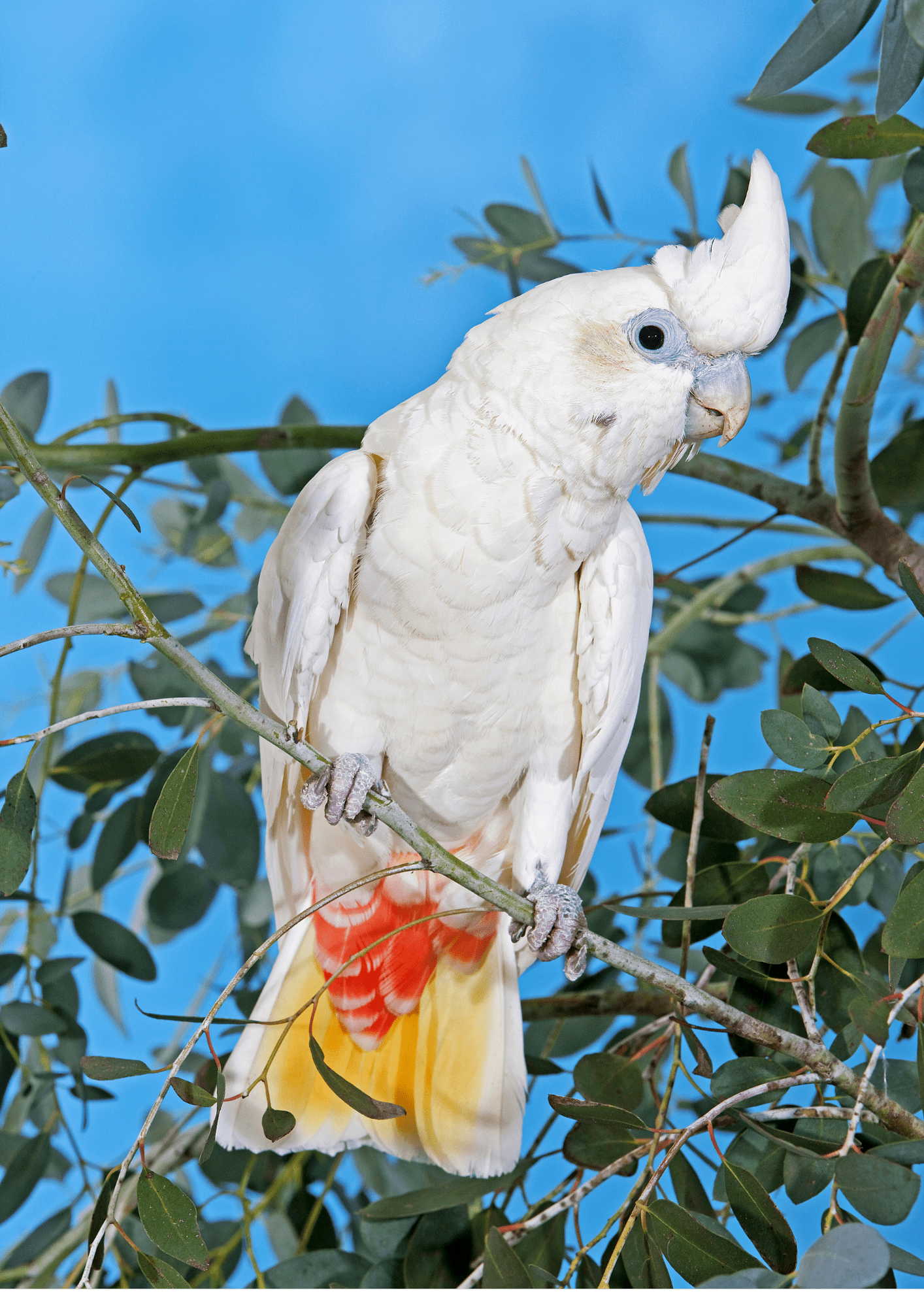
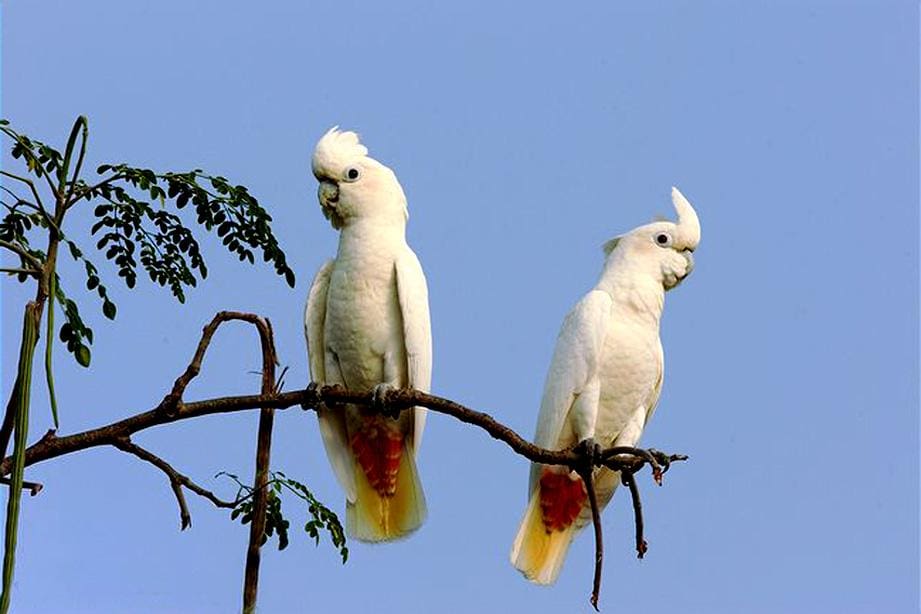
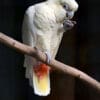
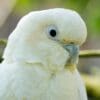
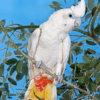
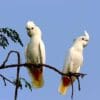
Both adults small, white; crest base feathers washed with yellow and rose/pink; yellow/pink tint to ear coverts; red undertail coverts; and yellow suffusion undertail. White eye ring. Eye in male brown/black; in female reddish.
Colour Juvenile:
As in adult but with grey eye.
Call:
Loud call, at times harsh and croaking and others rasping.
More Information:
Content Sources:
CITES
Avibase
BirdLife International
Cornell Lab of Ornithology/Birds of the World
A Guide to Parrots of the World, Juniper and Parr, 1998
Parrots: Status Survey and Conservation Plan 2000-2004, Snyder, McGowan, Gilardi and Grajal, 2000.
Vanished and Vanishing Parrots, Forshaw, 2017.
Parrots of the World, Forshaw, 2006.
Parrots in Aviculture, Low, 1992.
Psittacine Aviculture, Schubot, Clubb and Clubb, 1992.
Avian Pediatric Seminar Proceedings, various authors, 1988.
Captive Status:
Rare
Longevity:
Up to 50 yrs.
Housing:
Walk-in aviary of minimum length 3 m (9.8 ft).
Diet:
Mixture of small seeds: canary, millet and smaller amounts of oats, safflower; limited sunflower seed, millet spray; green leaves and other vegetables, peas in the pod, beans, fruits, nuts: walnuts, hazelnuts, pecans and roasted peanuts, complete kibble.
Enrichment:
—
Nest Box Size:
Vertical box, 12″ x 12″ x 24″ (30.5 cm x 30.5 cm x 61 cm).
Clutch Size:
2 to 3
Fledging Age:
11 weeks
Hatch Weight:
—
Peak Weight:
—
Weaning Weight:
—
World Population:
430-750 mature individuals, decreasing.
IUCN Red List Status:
Critically Endangered
CITES Listing:
Appendix I
Threat Summary:
Endured a rapid decline of 80% in 40 years. Trapping has been heavy, and deforestation and mangrove destruction have been severe. Increasingly stronger typhoons are an emerging threat. However, the current population trend may be more favourable since some protected populations are increasing thanks to targeted conservation.
Range:
Once widespread throughout the Philippines but now restricted to Palawan (including Rasa, Dumaran, Pandanas) and Sulu Is, with a few recorded in Polillo Is and on Samar and Bohol; possibly extinct in Masbate, Siquijor, Siargao and western Mindanao.
Habitat:
Originally found in dipterocarp forest in rolling country of the interior, but most of this has now been cleared; mangroves are suggested to be important. It can currently be found at forest edge and on nearby maize fields in the non-breeding season.
Wild Diet:
Feed on seeds, fruit (including wild banana), nuts, flowers, the bark of some trees, and berries.
Ecology and Behaviour:
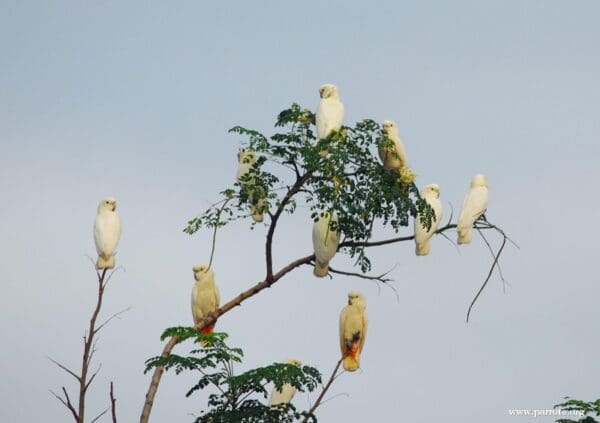
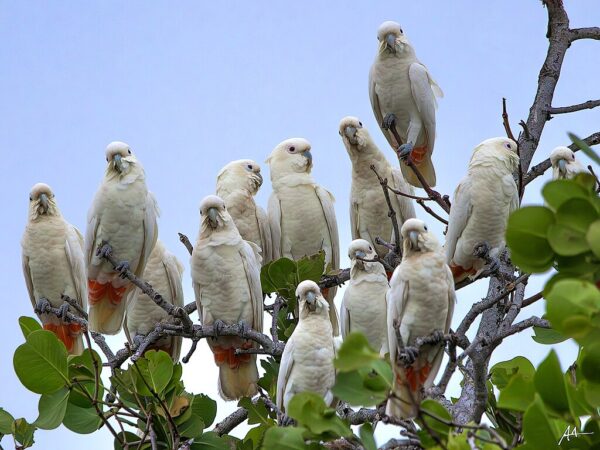
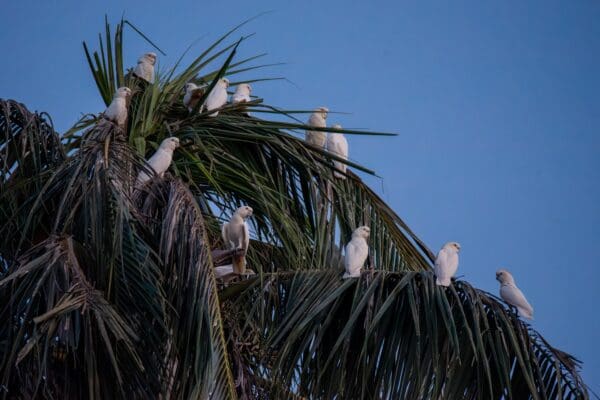
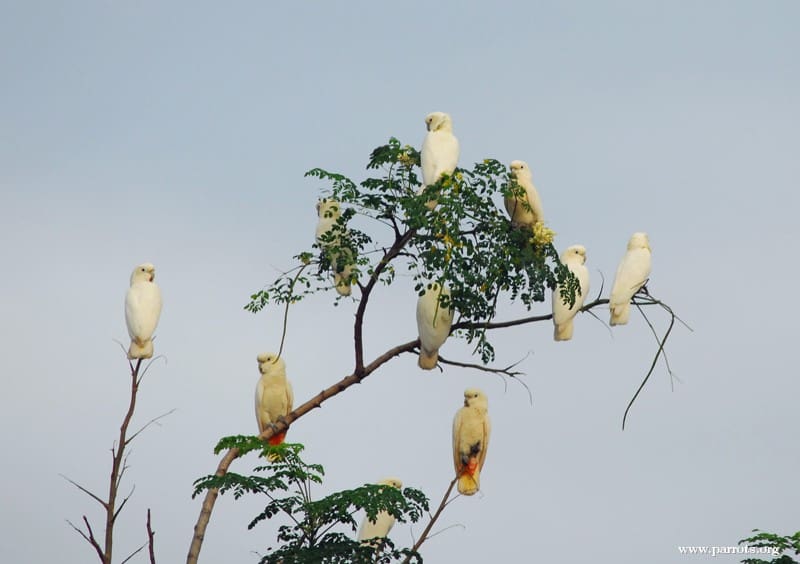
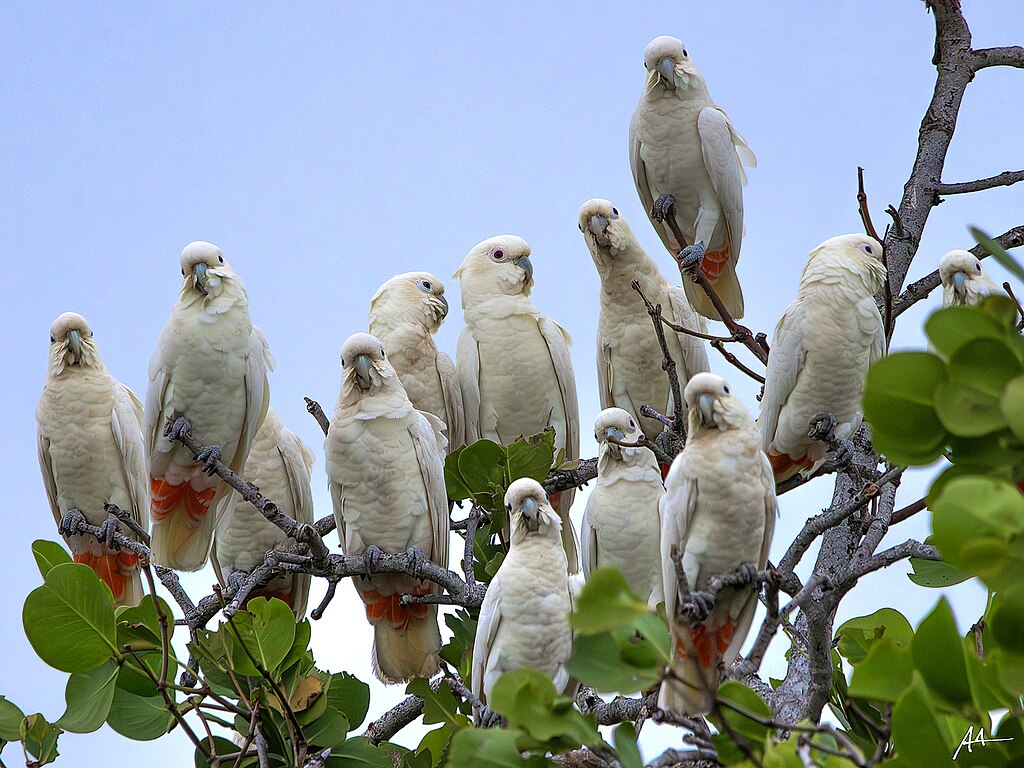
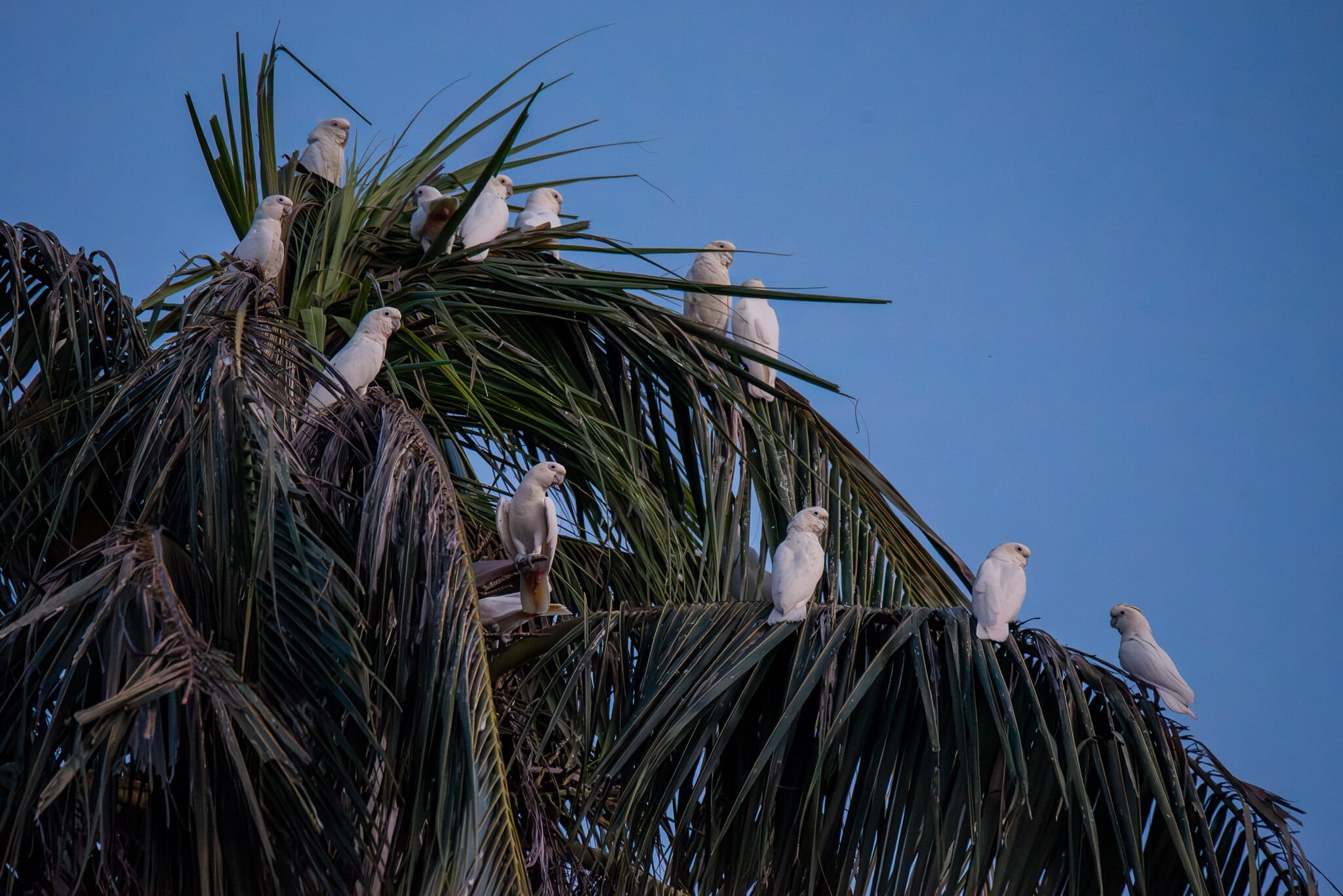
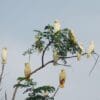
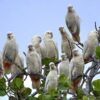
Noisy and fairly conspicuous, gather in groups to feed. Also noisy when gathering to roost. Form larger groups outside breeding season. Said to escape winged predators by rapid, precise flying techniques.
Clutch and Egg Size:
2 to 3 elliptical eggs, 38.0 x 26.5 mm (1.5 x 1 in).
Breeding Season:
February-June. Nest is in tree cavity.
Related Links:
—