LEARN

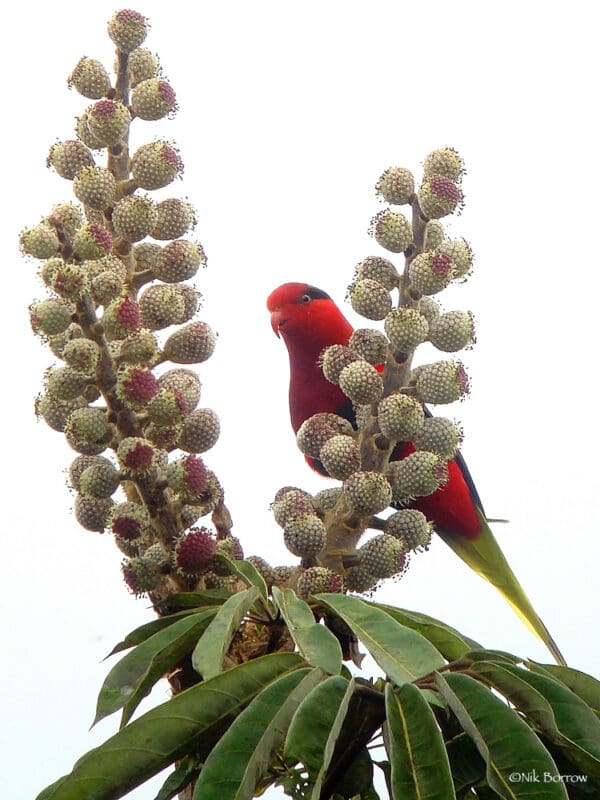
Stella’s Lorikeet

( Charmosyna stellae )

Geography: ,

DID YOU KNOW?

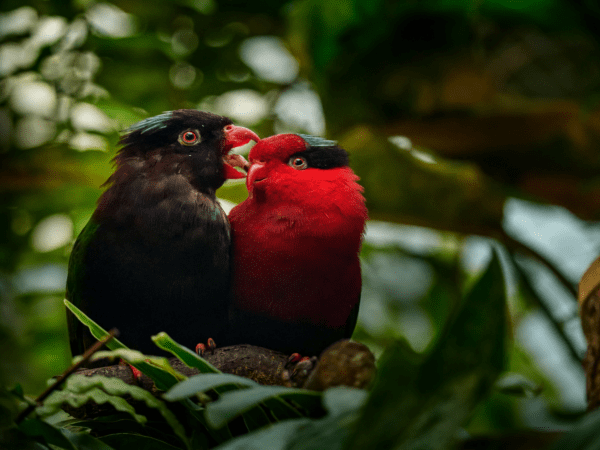
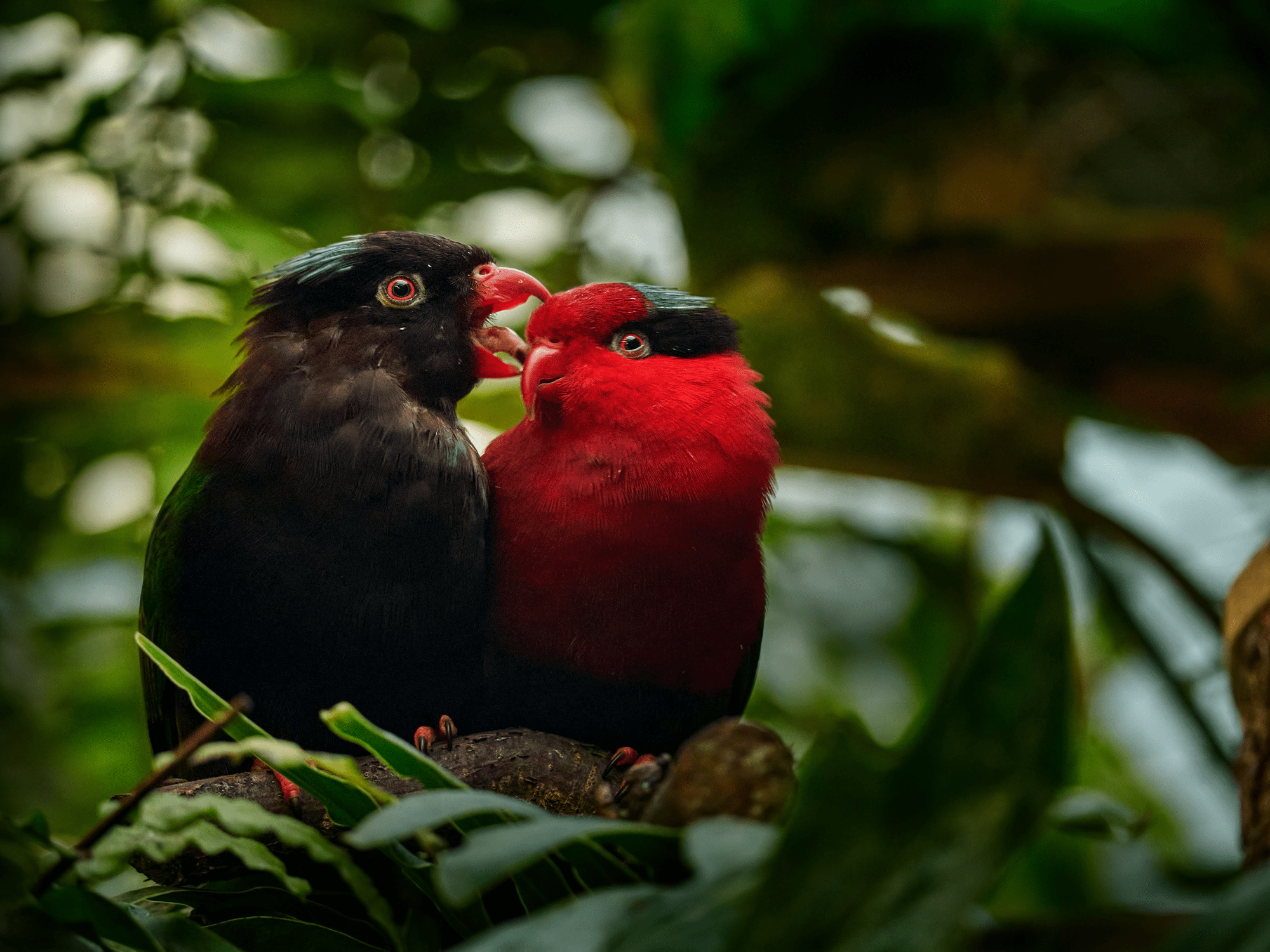
Stella’s Lorikeet has a melanistic phase, whereby its plumage is replaced with varying light/dark black tones.

<p><em>Charmosyna</em></p>
Genus:

Charmosyna

<p><em>stellae</em></p>
Species:

stellae

Size:

25 cm (9.75 in)

Weight:

90-115 g (3.1-4 oz)

Subspecies including nominate:

three: C.s. stellae, C.s. goliathina, C.s. wahnesi

Colour Adult:

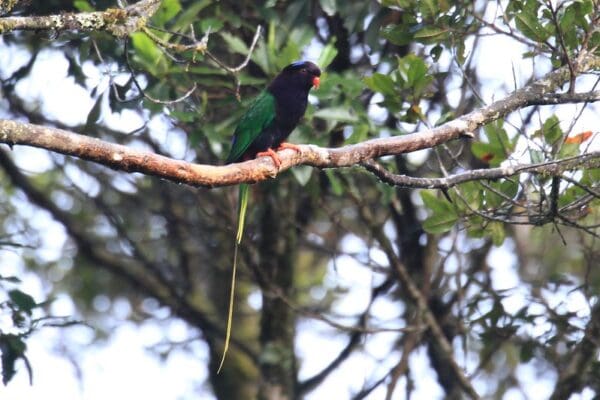
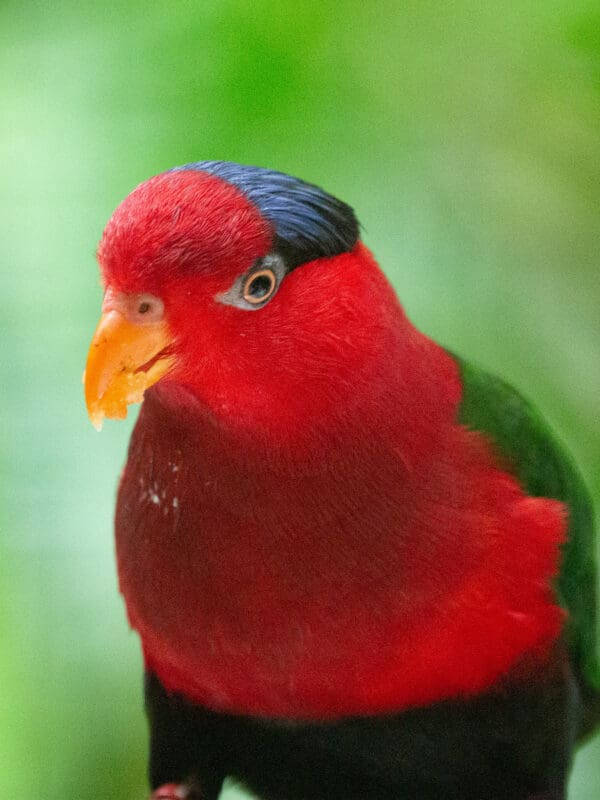
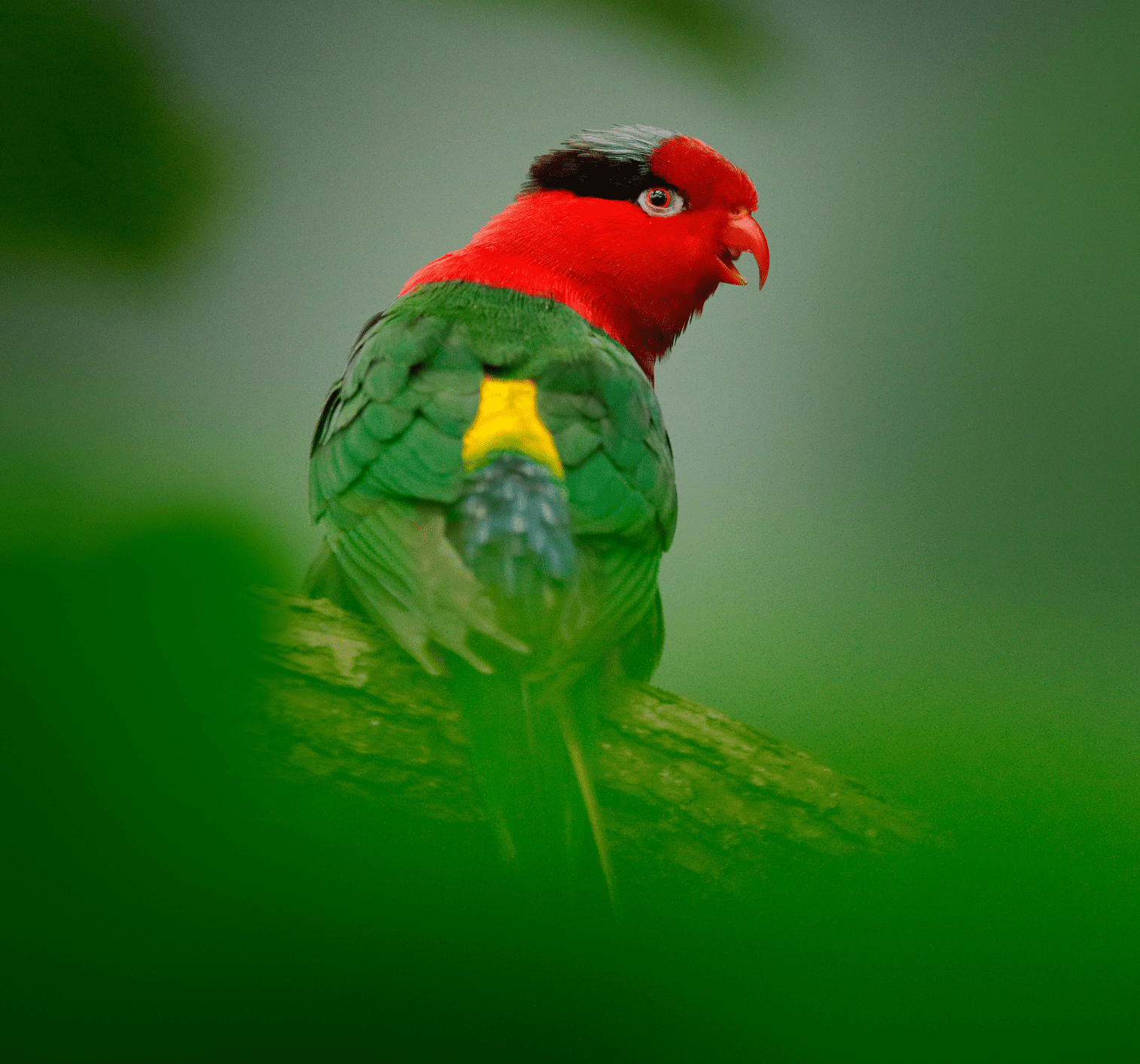
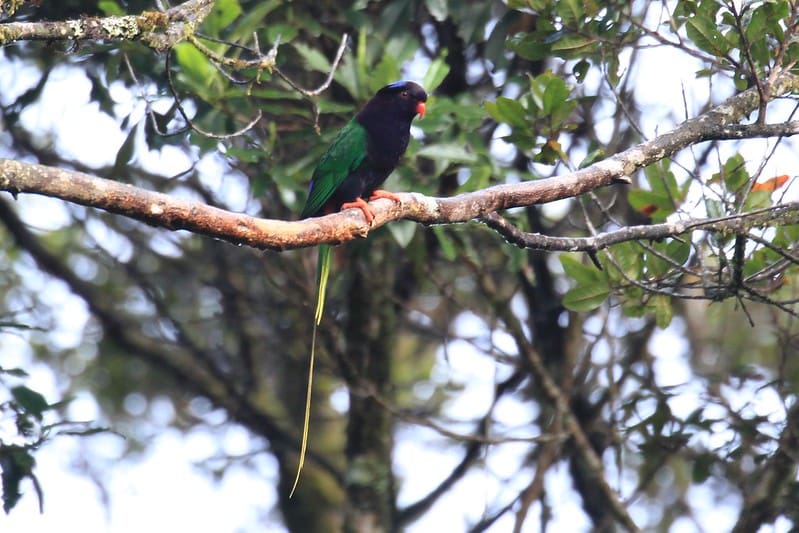
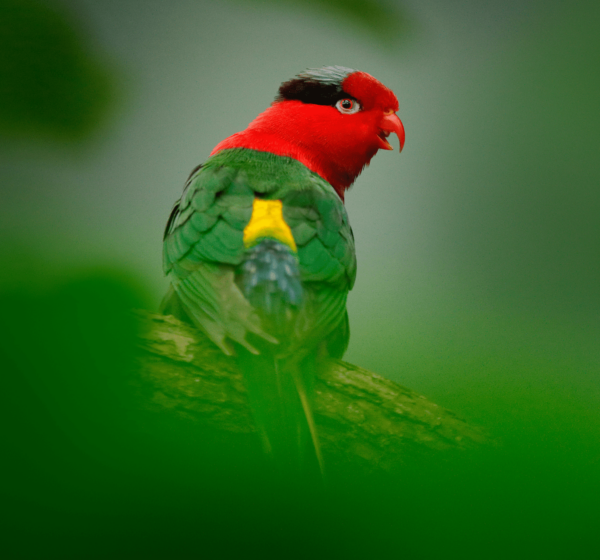
C.s. stellae: (Has melanistic phase, where red is replaced with black) male-black patch reaching from occiput to hindneck and streaked in front with purple/blue; black lower flanks, yellow absent; yellow on sides of breast absent; centre tail feathers elongated and widely tipped with yellow/orange. Female-as in male but lower back and sides of rump yellow.
C.s. goliathina: (Has melanistic phase) both adults as in stellae, but with long central tail feathers widely tipped with yellow.
C.s. wahnesi: (Has melanistic phase) both adults as in stellae, but with broad yellow band across upper abdomen.

Colour Juvenile:

C.s. stellae: In general duller than adults; with black margins on feathers of neck and breast; yellow underwing band in varying proportions; elongated tips to central tail feathers absent.
C.s. goliathina: As in adults.
C.s. wahnesi: As in adults.

Call:

Are described as distinctive; in flight are loud and slurred in upward inflection; also quieter, mellower screech. When feeding or at rest, it gives a nasal, long note that increases in volume.

Xeno-canto Wildlife Sounds – Stella’s Lorikeet

More Information:

Avibase

Content Sources:

BirdLife International
Cornell Lab of Ornithology/Birds of the World
Parrots in Aviculture, R. Low, 1992.

Captive Status:

Rare.

Longevity:

15+ years.

Housing:

Aviary with concrete, sloping floor towards drain, or suspended enclosure over concrete base.

Diet:

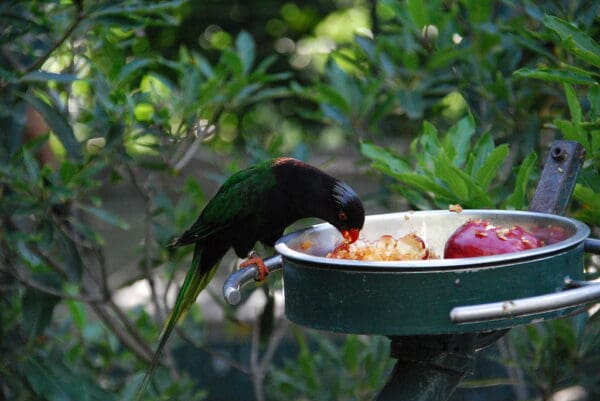
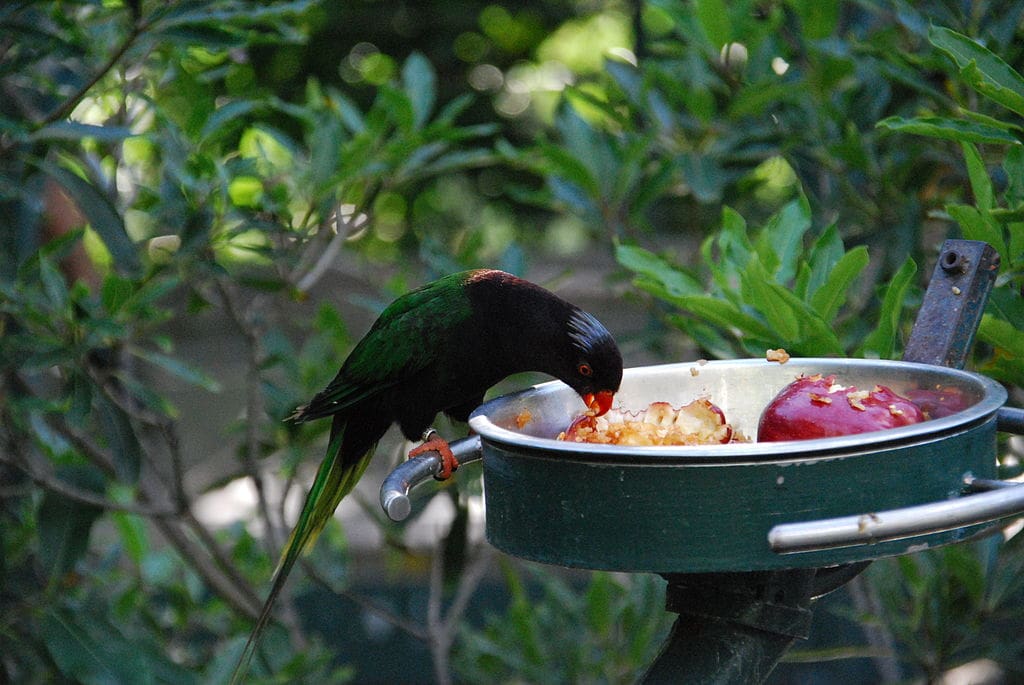
Nectar, either a commercial type or homemade from baby cereal (lactose-free), honey and malt extract or molasses, mixed with filtered water and made fresh daily; fruit (once or twice daily) such as: apple, pear, banana, orange, cactus fruits; vegetables such as: carrot, fresh corn on the cob or unsalted tinned sweet corn, green leaves such as Swiss chard, lettuce or dandelion; rearing food made from hard-boiled egg, wholegrain bread and carrot, all ground to a crumbly consistency.

Enrichment:

Avid bathers, provide water bowls or spray misters once a day; socialization; large enclosure for daily flights. Also provide swings, ladders and other toys, all easy to clean, to appeal to the acrobatic nature of this species.

Nest Box Size:

Vertical box 6″ x 6″ x 12″ (15.2 cm x 15.2 cm x 30.5 cm).

Clutch Size:

2

Fledging Age:

About 7-8 weeks.

Hatch Weight:

Peak Weight:

Weaning Weight:

World Population:

Unknown, decreasing.

IUCN Red List Status:
Least Concern

CITES Listing:
Appendix II

Threat Summary:

Reported to be fairly common but skins are greatly prized as head decorations by highland people and are often traded. This species is considered to have a medium dependency on forest habitat and tree cover is estimated to have declined by 1.6% within its range over the past 10 years. Therefore, it is tentatively suspected that this may have led to a 1-19% population decline over the same time frame.

Range:

C.s. stellae: Mountains of southeast Papua New Guinea, west to the Angabunga River and Herzog Mountains.
C.s. goliathina:  From the Weyland (Kobowre) Mountains to the Eastern Highlands, through central New Guinea.
C.s. wahnesi: Adelbert Mountains and mountains of Huon Peninsula, northeast Papua New Guinea.

Habitat:

Seen in montane forest from 1200–3500 m (3937-11,482 ft), including in disturbed Nothofagus-Podocarpus forest and mossy beech forest.

Wild Diet:

Seen feeding on blossoms, flower buds, pollen, soft fruit of Schefflera and other trees, and epiphytic plants. Also recorded foraging for small seeds and insects (possibly ingested accidentally).

Ecology and Behaviour:

Usually observed singly or in pairs, and can be aggressive towards other lorikeets. Numbers appear to wax and wane with local food supply, suggesting a degree of local nomadism.

Clutch and Egg Size:

2

Breeding Season:

Young birds seen October–November.

Join Our Flock

FlockTalk our monthly newsletter for parrot people everywhere:

+ News from the world of parrots

+ Updates on wild parrot projects

+ Inspiring updates from partners

+ Real stories from the parrot flock

+ Plus, expert tips for caring for your feathered friends at home.


Stay In The Loop, Sign Up Now.
FlockTalk: our monthly newsletter for parrot people everywhere:

Parrot news. Conservation wins. Pet care tips. All in one monthly email.

We do not sell or share your information with anyone