Sulphur-breasted Conure
Also known as:
Sulphur-breasted Parakeet
Also known as:
Sulphur-breasted Parakeet

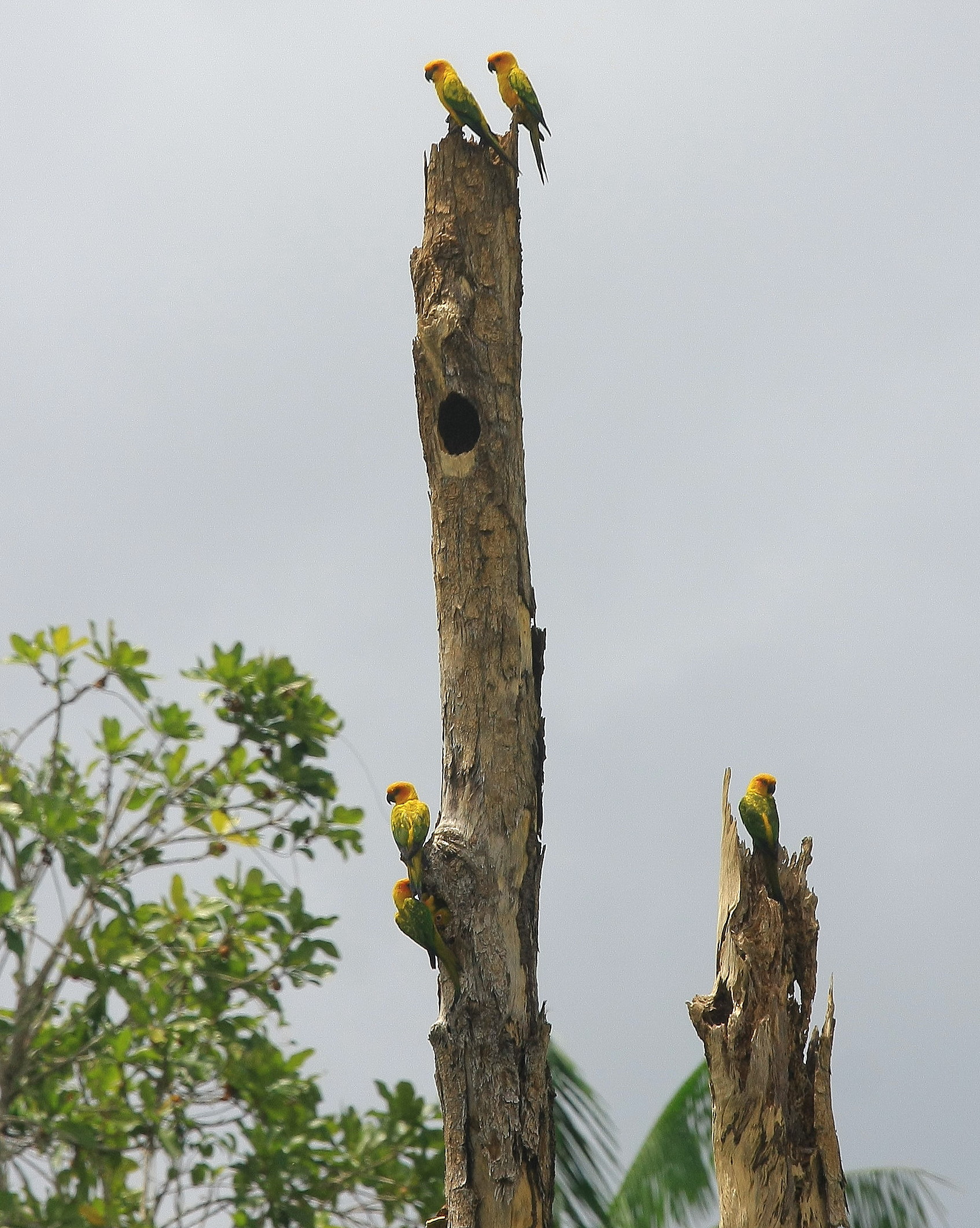

Aratinga
maculata
Size:
30 cm (11.7 in)
Weight:
120-130 g (4.2-4.5 oz)
Subspecies including nominate:
one
Colour Adult:
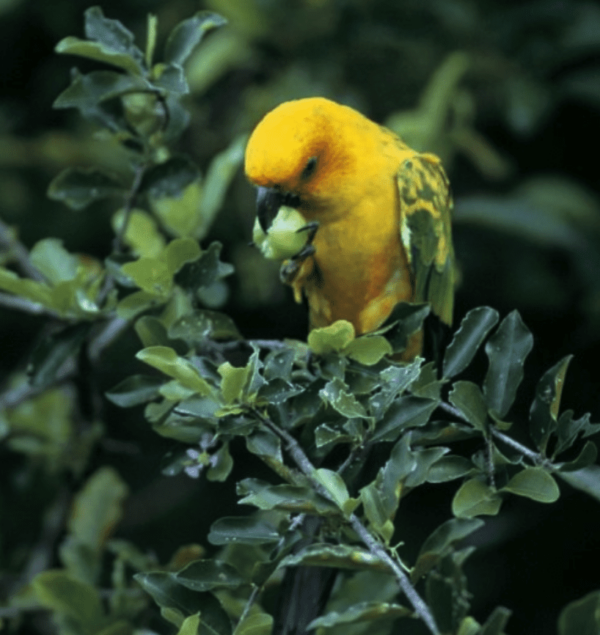
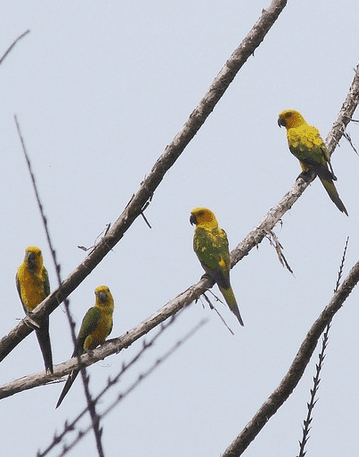
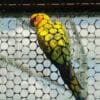
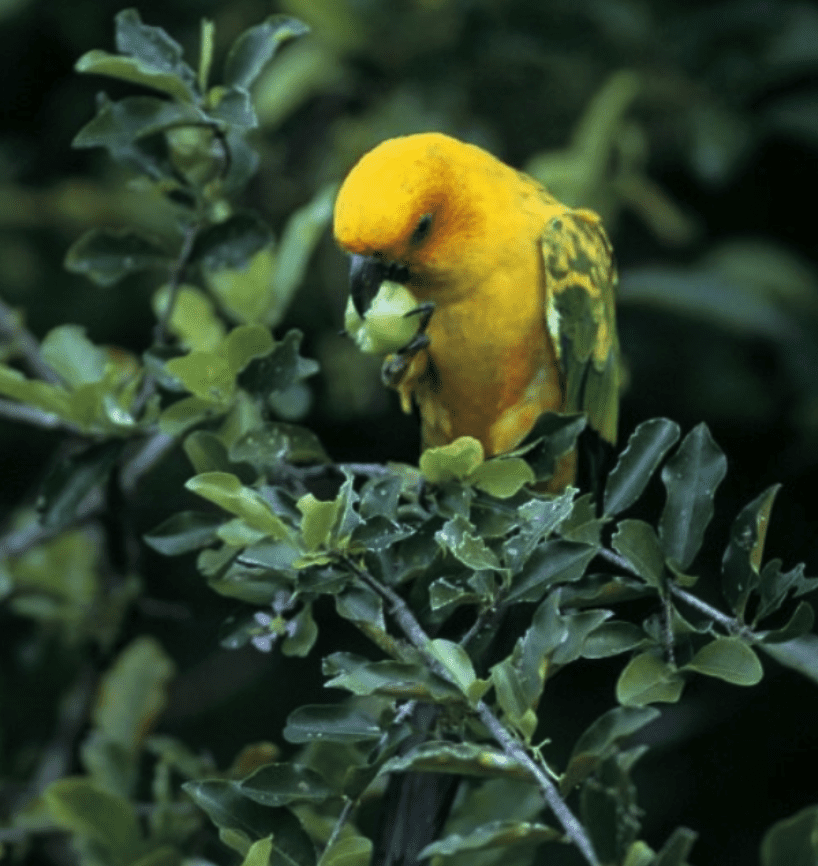
Both adults in general pale orange, with pale yellow-green head and hind neck, throat and breast pale yellow, thighs greenish, flanks pale orange, under-tail coverts greenish, mantle pale yellow-green, back pale yellow, rump pale yellow-orange, tail green-blue, wing green-yellow, under-wing coverts pale yellow. Narrow stripe of orange on forecrown and lores and around eyes. Eye ring light grey. Eye dark grey/brown. Beak nearly black.
Colour Juvenile:
Presumably as in adult but with cheeks and upper breast olive-yellow. (Observed from one specimen).
Call:
Calls made in flight are screechy and rapidly repeated in short notes. While perched emits chuckling and thin, high-pitched wheezy notes.
More Information:
Content Sources:
CITES
BirdLife International
Cornell Lab of Ornithology/Birds of the World
Parrots: A Guide to Parrots of the World, Juniper and Parr, 1998
Parrots of the World, Forshaw and Cooper, 1977.
Parrots of the World, Forshaw, 2006. 2010 edition
Psittacine Aviculture, Schubot, Clubb and Clubb, 1992.
A Guide to Incubation and Handraising Parrots, Digney, 1998.
Captive Status:
Virtually unknown; kept by local people and zoos in Brazil.
Longevity:
Up to 30 yrs.
Housing:
Aviary or suspended enclosure, minimum length 2-3 m (6.5-9.8 ft).
Diet:
Fruit such as: apple, pear, orange, banana, pomegranate, cactus fruits; vegetables such as: carrot, celery, green beans and peas in the pod; fresh corn; green leaves such as: Swiss chard, lettuce, sowthistle, chickweed; spray millet; small seed mix such as: canary, millet and smaller amounts of oats, buckwheat and safflower; soaked and sprouted sunflower seed; cooked beans or pulses, boiled maize, and complete kibble.
Enrichment:
Socialization. Also enjoys bathing, so provide overhead misters or shallow water bowls. Provide bird-safe wood and vegetable tanned leather chew toys, non-toxic hard plastic toys, puzzle toys, foraging toys, ladders, swings and different sized perches.
Nest Box Size:
Vertical box 12″ x 12″ x 18″ (30.5 cm x 30.5 cm x 46 cm).
Clutch Size:
3-4
Fledging Age:
7-8 weeks
Hatch Weight:
—
Peak Weight:
—
Weaning Weight:
—
World Population:
Unknown, decreasing.
IUCN Red List Status:
Least Concern
CITES Listing:
Appendix II
Threat Summary:
This species is considered to have a medium dependency on forest habitat. Tree cover is estimated to have declined by 20.4 % within its range over the past three generations. Therefore, as a precautionary measure, it is tentatively suspected that this may have led to a decline of between 1-19 % in the species’ population over the same time frame.
Range:
Northern Brazil in Pará, from the Rio Maicuru east to the Rio Jari (on the north bank of the lower River Amazon), and north to the southern part of the Grão Pará Ecological Station, as well as east to westernmost Amapá, around Laranjal do Jari; also Rio Canumã, a tributary of the lower Rio Madeira, Amazonas state, near the village of Coatá.
Habitat:
Found in open, sandy areas with scattered small trees and bushes; in some parts of Pará more associated with forest edge and river-edge forest. In Suriname, is seen in relatively large tracts of forest bordering open savanna. Will sometimes enter orchards; also forages in gallery forest, and is reported in igapó (seasonally flooded forest).
Wild Diet:
Poorly known, but reported feeding on seedy fruits and seeds of Guateria sp., Dalechampia sp., Byrsonima sp. and Myrcia sp, as well as unidentified flowers. Also reported: fruits of Euterpe oleracea (Arecaceae), Anacardium occidentalis (Anacardiaceae), Inga sp. (Fabaceae), and Laetia sp. (Salicaceae).
Ecology and Behaviour:
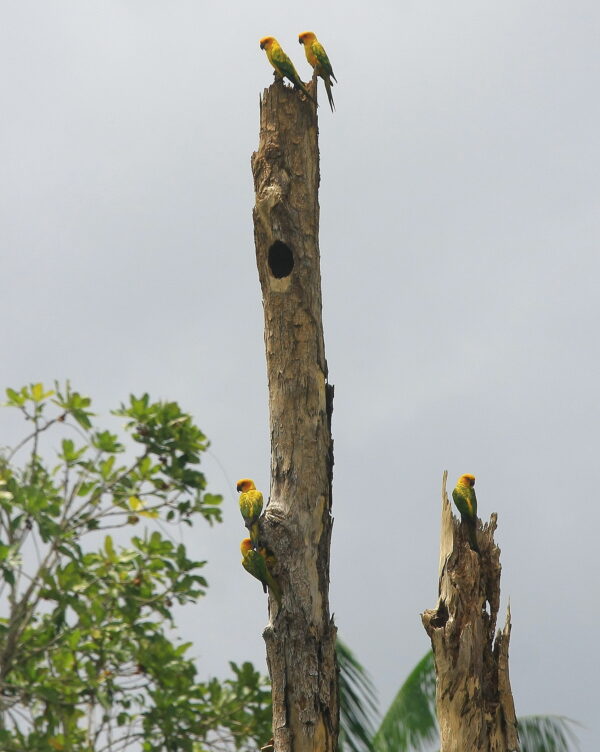
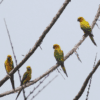
Is similar in behaviour and general ecology to the species of the Aratinga solstitalis group. Found in groups of 2-10 birds and are relatively tame, feeding alongside roads and in orchards.
Clutch and Egg Size:
One nest observed with one egg; size unknown.
Breeding Season:
August-October. Nest is in tree cavity.