Also known as:
Barraband's Parrot or Parakeet, Scarlet-breasted Parrot, Green Leek
Also known as:
Barraband's Parrot or Parakeet, Scarlet-breasted Parrot, Green Leek


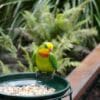
![© George Chapman [CC BY-NC-ND 2.0] via Flickr](https://parrots.org/wp-content/uploads/2023/01/wpt_Superb-Parrot_1180-23-100x100.jpg)
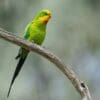
![© Mark Vuaran [CC BY-NC 2.0] via Flickr](https://parrots.org/wp-content/uploads/2023/01/wpt_Superb-Parrot_1180-22-100x100.jpg)
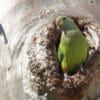
![© Nik Borrow [CC BY-NC 2.0] via Flickr](https://parrots.org/wp-content/uploads/2023/01/wpt_Superb-Parrot_1180-21-100x100.jpg)
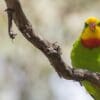
![© Leo [CC BY-SA 2.0] via Flickr](https://parrots.org/wp-content/uploads/2023/01/wpt_Superb-Parrot_1180-17-100x100.jpg)


The male Superb Parrot weighs slightly less than the female. Usually, with most parrot species, it is the other way around.

Polytelis

swainsonii
Size:
40 cm (15.6 in)
Weight:
132-157 g (4.6-5.5 oz)
Subspecies including nominate:
one
Colour Adult:
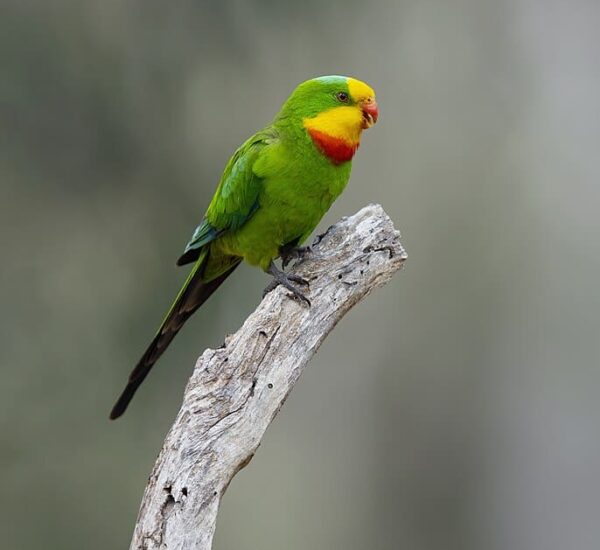
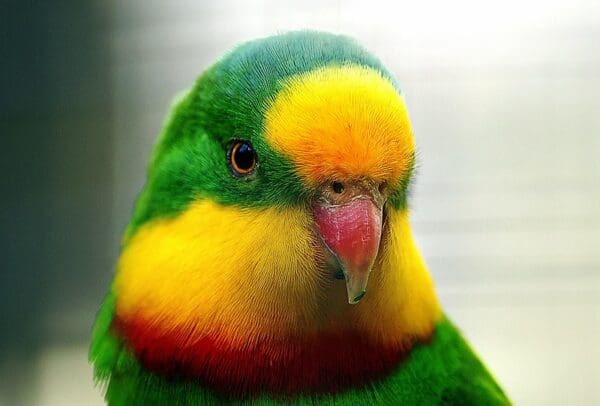
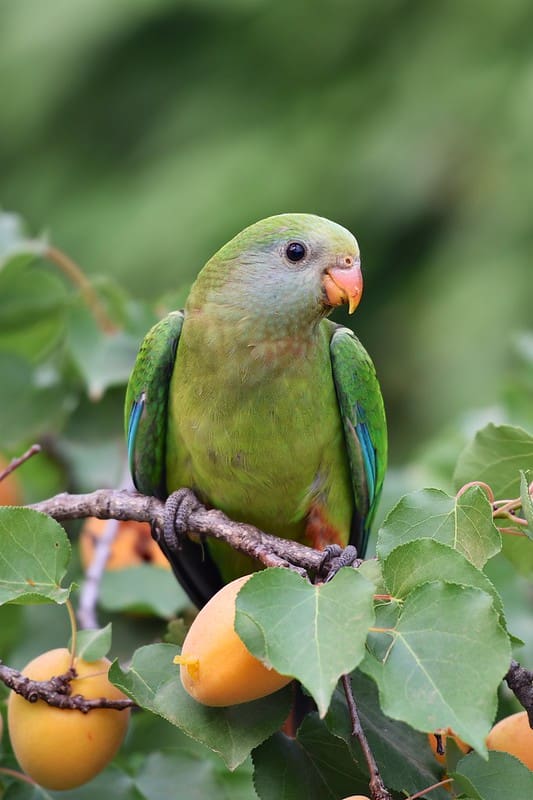
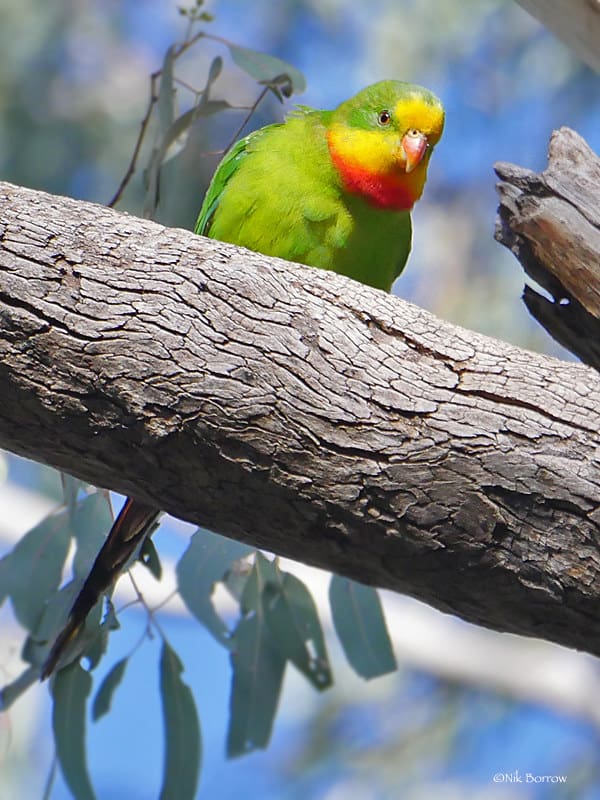
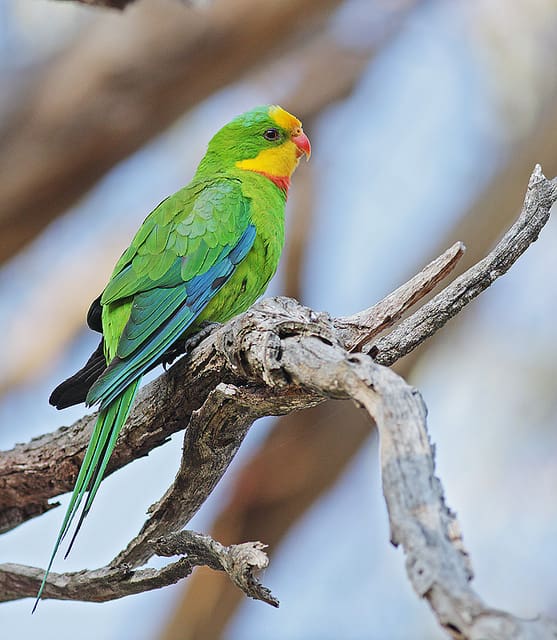
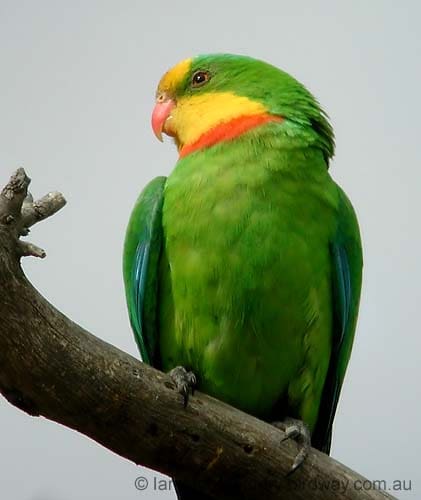
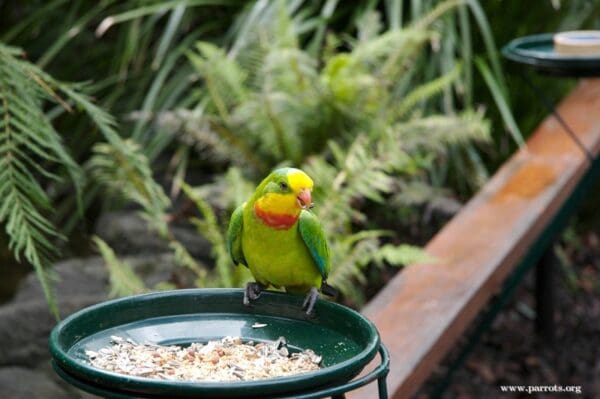
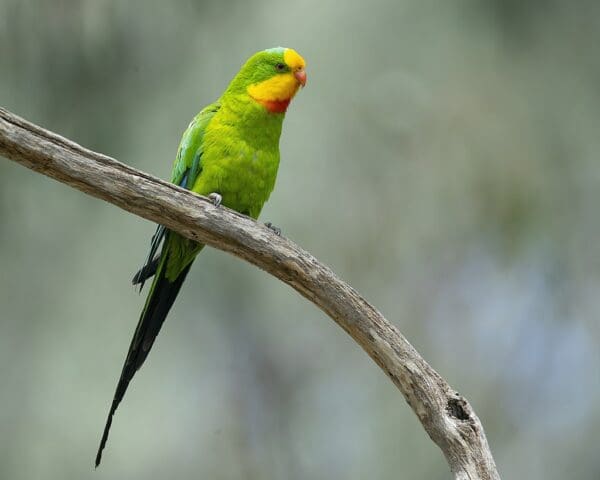
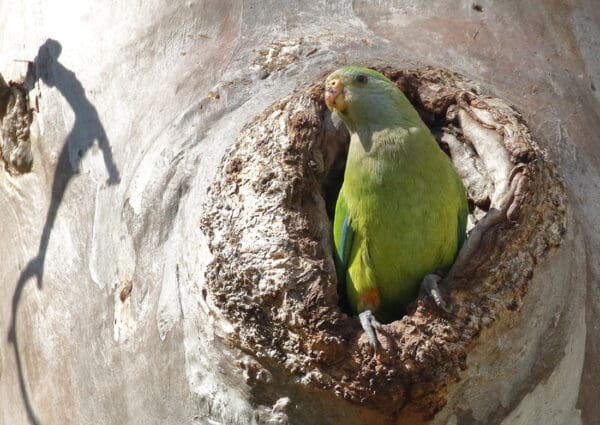
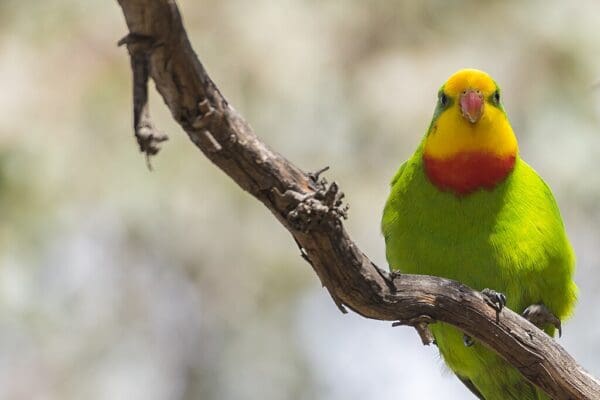
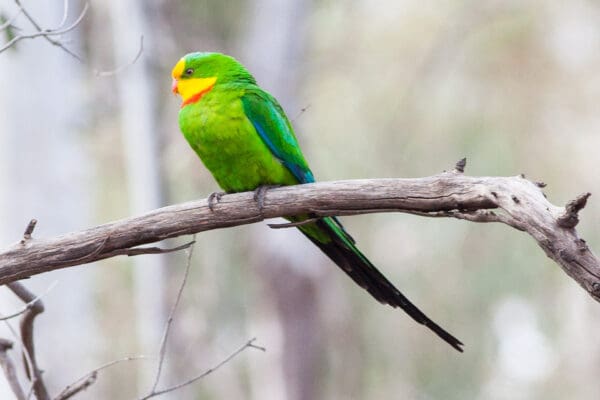
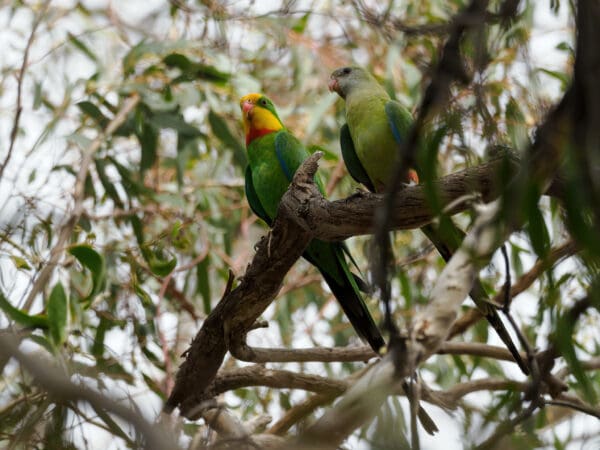
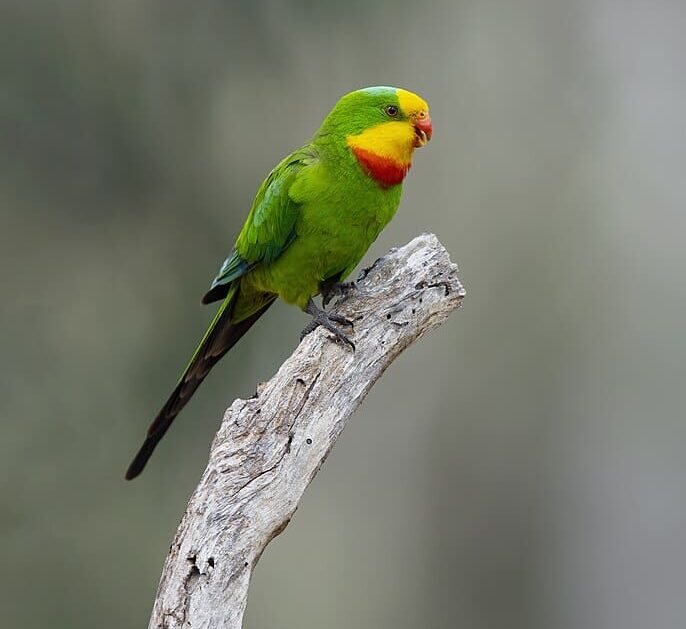
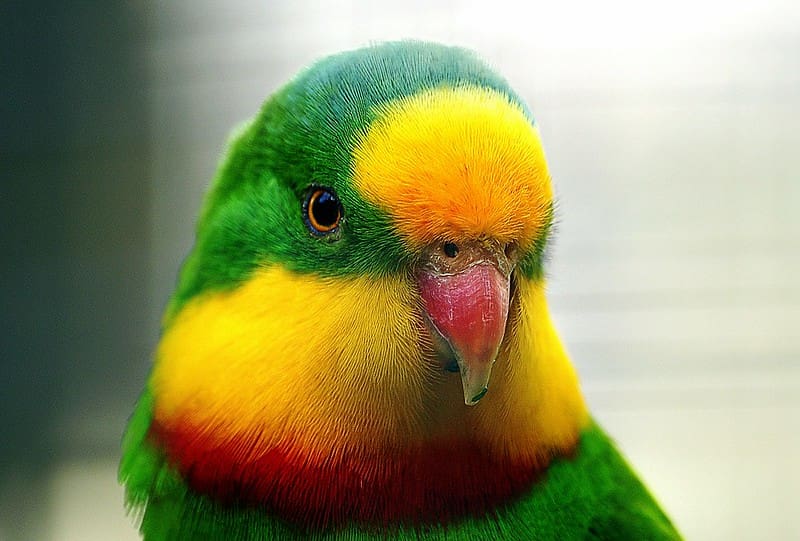
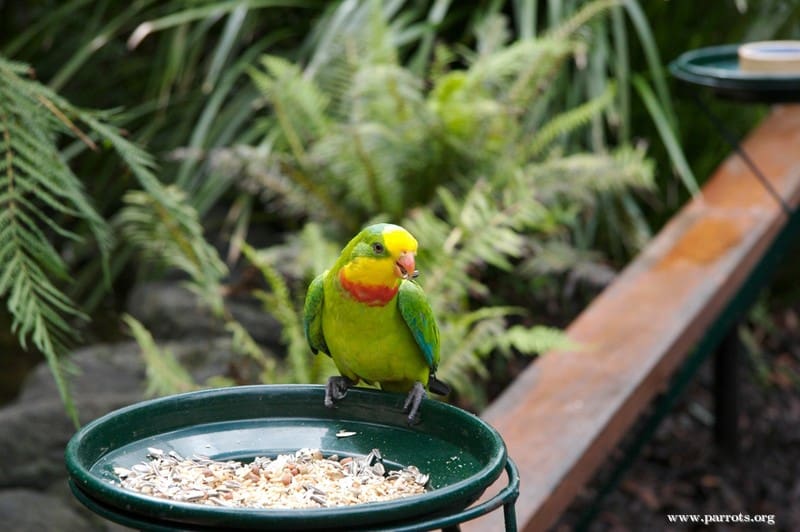
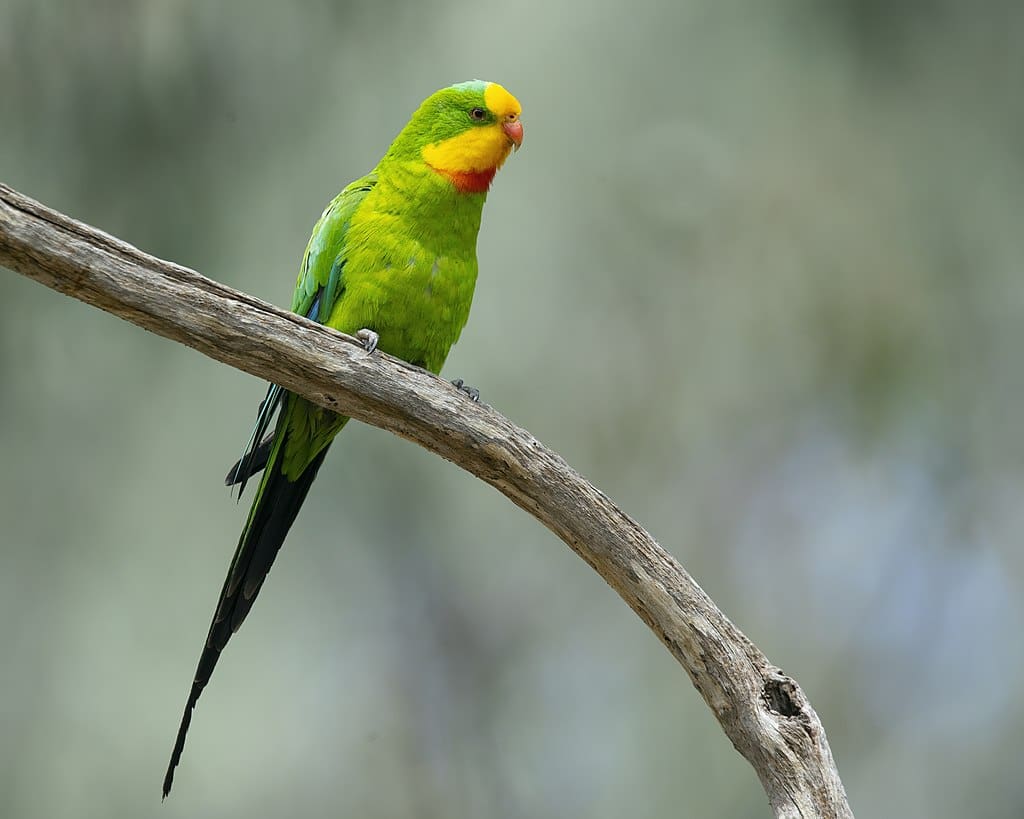
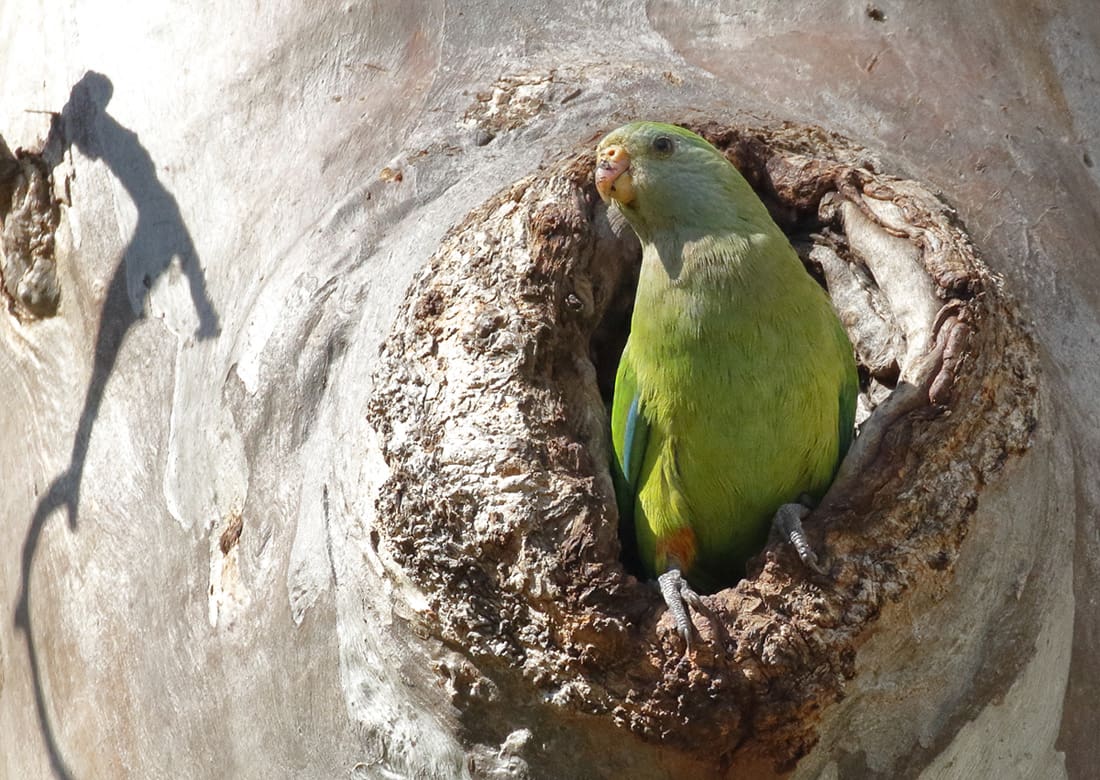
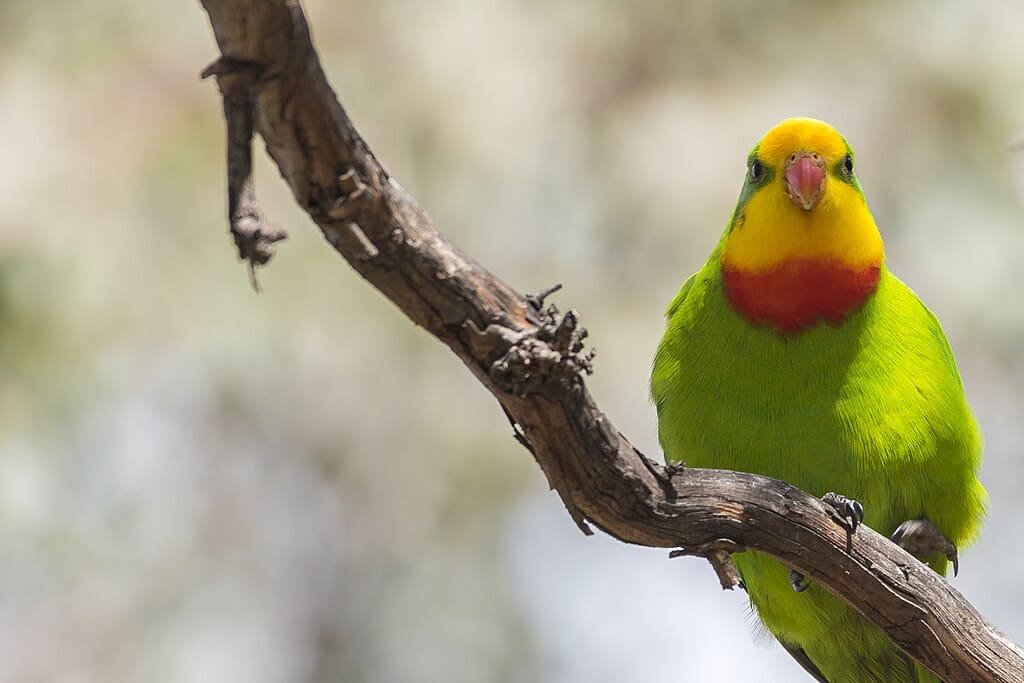
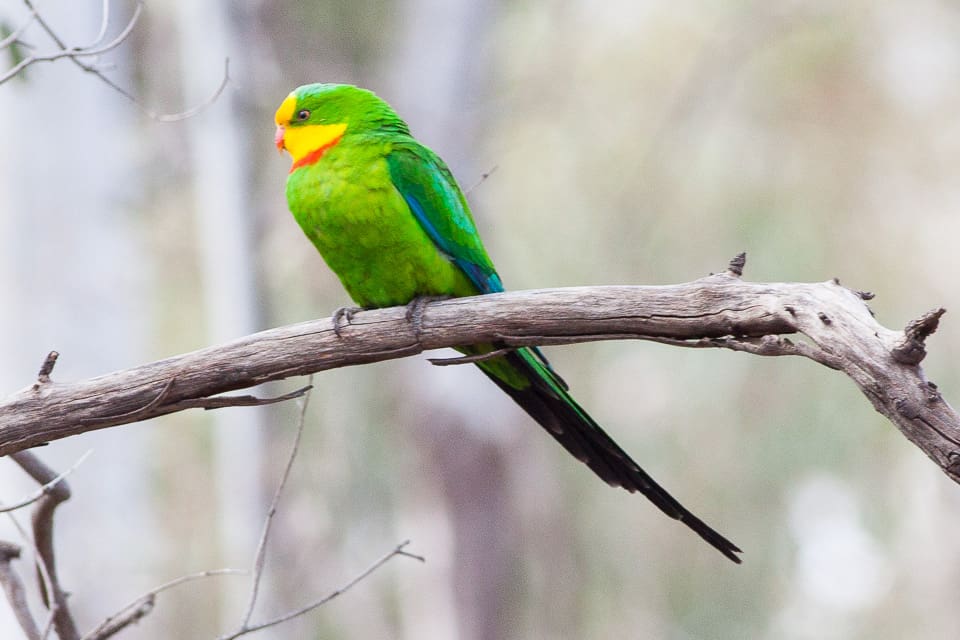
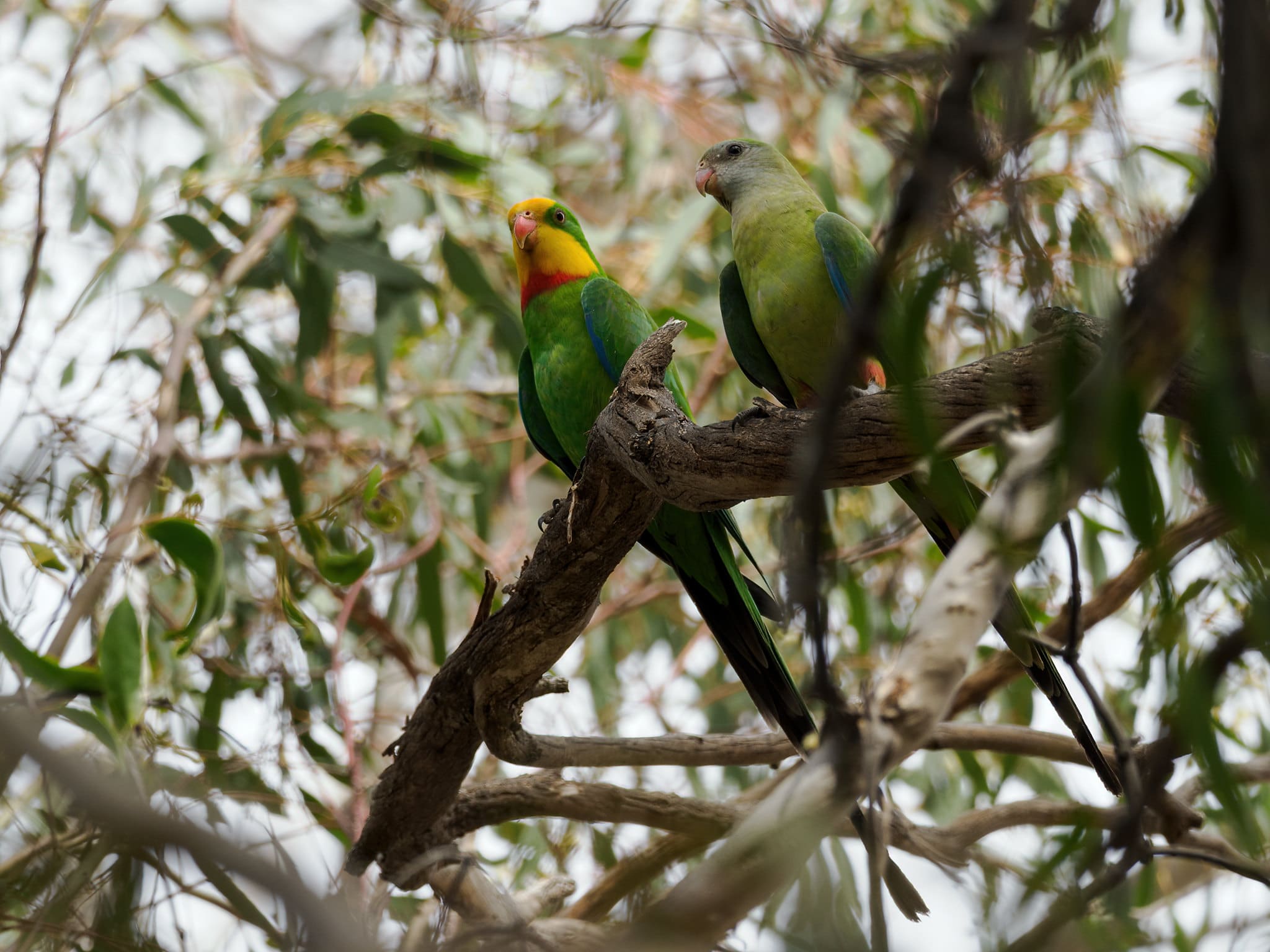
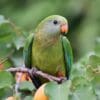
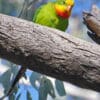
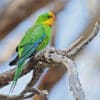
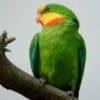
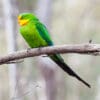
Male-body bright green; face and throat bright yellow; red broad band across neck right below yellow; tail green tipped with dull yellow/white. Undertail slate grey. Beak orange/red. Eye yellow/orange. Female-duller in colour, paler; face green; chin and throat grey/green; neck green tinged with rose/pink; orange thighs; undertail side feathers margined with rose/pink on inner webs.
Colour Juvenile:
As in female but with shorter tail. Eye pale brown.
Call:
In flight a long warbling note queee-eeel…quee-eeel…, each note ending abruptly. Resembles call of Cockatiel but is deeper and harsher tone. Also a sharp, piercing whistle, and harsh alarm call. Soft chattering when feeding or at rest.
Content Sources:
CITES
BirdLife International
Cornell Lab of Ornithology/Birds of the World
Parrots: A Guide to Parrots of the World, Juniper and Parr, 1998
Parrots in Aviculture: A Photo Reference Guide, Low, 1992.
Parrots: Status Survey and Conservation Plan 2000-2004, Snyder, McGowan, Gilardi and Grajal, 2000.
Parrots: Their Care and Breeding, Low, 1986.
Parrots of the World, Forshaw, 2006. 2010 edition
Parrots of the World, Forshaw and Cooper, 1977.
Captive Status:
Fairly common
Longevity:
25+ yrs
Housing:
Walk-in aviary, minimum length 3 m (6.5 ft).
Diet:
Small seed mix such as: canary, millet and smaller amounts of oats, buckwheat, and safflower; limited sunflower seed; spray millet; green leaves such as: Swiss chard, lettuce, sowthistle, dandelion, chickweed and seeding grasses; rearing food made with hard-boiled egg, wholegrain bread and carrot, all ground up; fruits such as: apple, pear, banana, rosehips if available, etc; complete pellet.
Enrichment:
Socialization, bathing; different sized bird- safe perches and branches to chew, made of fir, pine, willow or elder; vegetable tanned leather toys, puzzle toys, foraging toys.
Nest Box Size:
Nest log 20cm (7.8″) in diameter, or nest box 20 cm x 20 cm x 60 cm (7.8″ x 7.8″ x 23″).
Clutch Size:
4 to 6
Fledging Age:
5 weeks
Hatch Weight:
—
Peak Weight:
—
Weaning Weight:
—
World Population:
10,000-20,000 mature individuals, increasing.
IUCN Red List Status:
Least Concern
CITES Listing:
Appendix II
Threat Summary:
Not globally threatened. Listed as Vulnerable in NSW and ACT; Threatened in Victoria (2011). Restricted-range species: present in South-east Australia Endemic Bird Area. Is affected by clearing forest for agriculture, fragmentation of habitat, and loss of nest-sites. Competition for dwindling number of nesting sites is fierce between the Superb Parrot and other species.
Range:
Occupies a restricted range in the Murray-Darling River Basin in southeastern Australia, west of the Great Dividing Range. It occupies a sub-humid, temperate environment and is mostly confined to west-central New South Wales, the Australian Capital Territory, and just south of the Victorian border. Has been reported in Queensland, where it is occasionally seen just north of the border with New South Wales.
Habitat:
Occurs in a variety of habitats within a sub-humid, temperate environment, primarily open box-gum (Eucalyptus blakelyi, Eucalyptus melliodora) woodlands, farmland with remnant open woodlands, and riverine woodland dominated by river red gum (Eucalyptus camaldulensis). Across the drier plains in the western part of the range, it is confined to habitat surrounding major rivers; in areas with greater rainfall in the eastern part of its range, it is not restricted to riverine habitat. Sometimes will use mallee shrubland, dry Callitris sandhill country, and even suburban areas of larger centres such as Canberra, Albury, Wagga Wagga, and Orange.
Wild Diet:
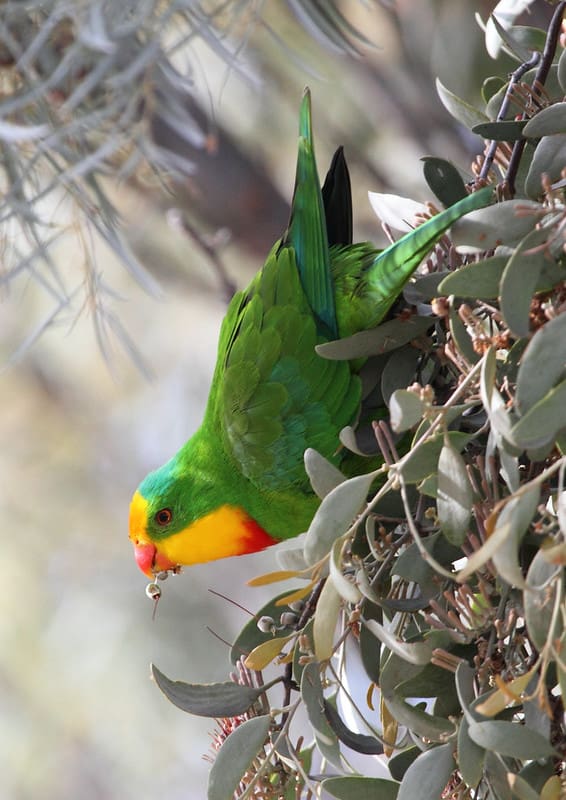
A mostly granivorous diet includes blossoms of Acacia and Eucalypt, fruit of shrubs, seeds of crops, grasses, weeds and herbs, including Erodium, Stipa, Danthonia, Hordeum murinum, Medicago denticulata, Acacia armata; heads of Sonchus oleraceus, Sisymbrium and Capsella. Also takes mistletoe berries and sugary lerps.
Ecology and Behaviour:
Occurs in small flocks, but groups of up to 100 birds have been seen. This parrot feeds in trees, in the understorey and also on the ground. Are fairly approachable in the wild. May be seen with Yellow Rosellas and Cockatiels.
Clutch and Egg Size:
4 to 6 rounded eggs, 28.5 x 23.5 mm (1.1 x 0.9 in).
Breeding Season:
September-December; nest in limb hollow or tree cavity.
Related Links: