

New research highlights globally important stronghold for Endangered Timneh Parrots in Sierra Leone
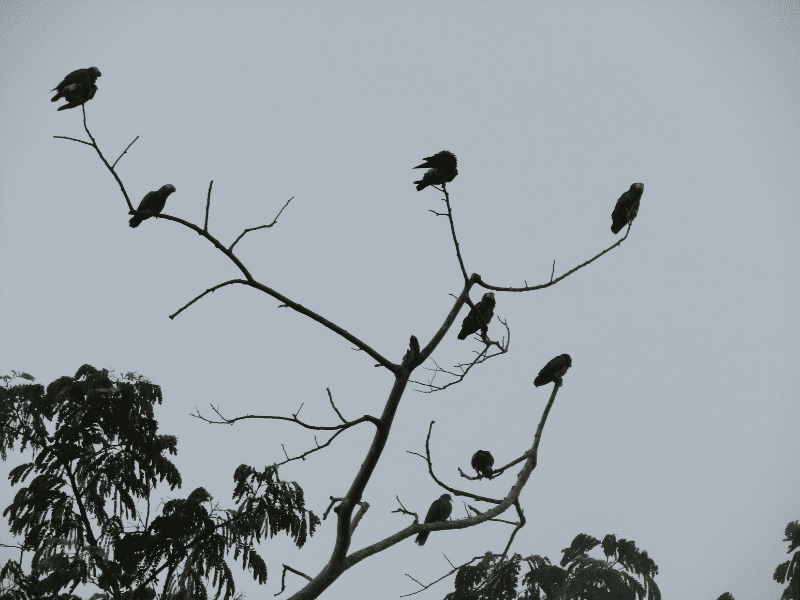
A new study, has confirmed that coastal Sierra Leone supports one of the most significant remaining populations of the Endangered Timneh Parrot (Psittacus timneh) and suggests that mangroves may provide critical habitat for the species.
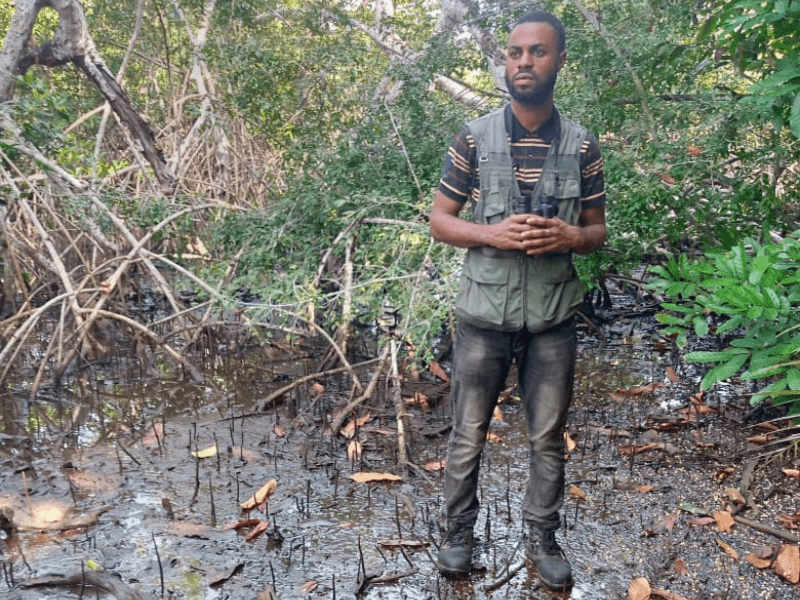
Led by Sierra Leonean researcher Abu Bakarr Konneh during his MSc at the A.P. Leventis Ornithological Research Institute, the study is the first to take a detailed look at terrestrial birds in this region. And what the team found was remarkable.
Surveying nearly 1,000 square kilometres across the Yawri Bay and Sherbro River Estuary—two areas proposed as internationally important wetlands (Ramsar sites) —the researchers recorded 141 bird species. Among them, Timneh Parrots stood out, with some of the highest encounter rates ever documented across their range.
Mangroves matter
Timmeh parrots were most frequently seen in areas close to mangroves. These tangled, tidal forests provide nesting cavities, and places to roost overnight which may be naturally protected from threats such as trapping and logging. The surveys were carried out during the breeding season for Timneh parrots which may explain the high densities seen in mangrove areas. Interviews with local residents suggest numbers of parrots increase in these areas at this time of year.
It’s unclear if the parrots prefer to nest in mangrove habitats or these areas provide a refuge from threats elsewhere. Interestingly, parrots were found more often in southern areas of the study site, where human activity is lower.
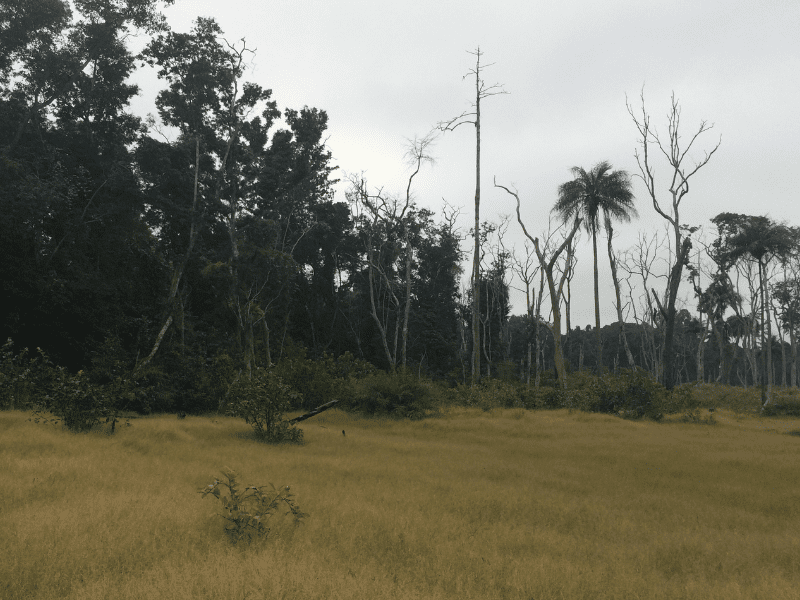
Timneh parrots were seen foraging outside of mangroves including in farmed areas, grassy savannahs and patches of forest highlighting the importance of protecting a matrix of habitats.
Building on earlier discoveries
The research was prompted by an earlier rapid assessment of Timneh parrots at sites throughout coastal Sierra Leone, carried out by the World Parrot Trust in collaboration with the University of Sierra Leone’s Fourah Bay College. That assessment, led by Momoh Sesay, Prof Arnold Okoni-Williams and MSc student Alhaji Kamara, supported with a grant from Mabel Dorn Reeder Conservation Grant from Zoo Atlanta, identified a remarkable communal roost site used by several hundred Timneh parrots—at the time the largest known such site. This discovery highlighted the urgent need for more detailed surveys.
A globally important site
The results have important implications for Timneh parrot conservation. The authors conclude that the Sherbro River Estuary landscape likely qualifies as a Key Biodiversity Area (KBA) under global criteria, due to its support of a significant population of this globally Endangered species. Formal recognition could help drive stronger protection and conservation investment in the region.
However, the study also highlights ongoing threats. Habitat loss, particularly the removal of large nesting trees, and the capture of parrots for the pet trade remain serious concerns. Addressing these threats will require close collaboration with local communities and authorities to deliver sustainable solutions that work for both people and parrots.
Partnering for parrot protection
Building on these findings, the World Parrot Trust last year launched a partnership with West Africa Blue, an organisation dedicated to the protection of mangroves through the sale of carbon credits. With funding from BirdLife International, WPT and West Africa Blue are training community monitors aiming to empower local people to track populations, protect key sites, and contribute to the long-term conservation of the species.