LEARN

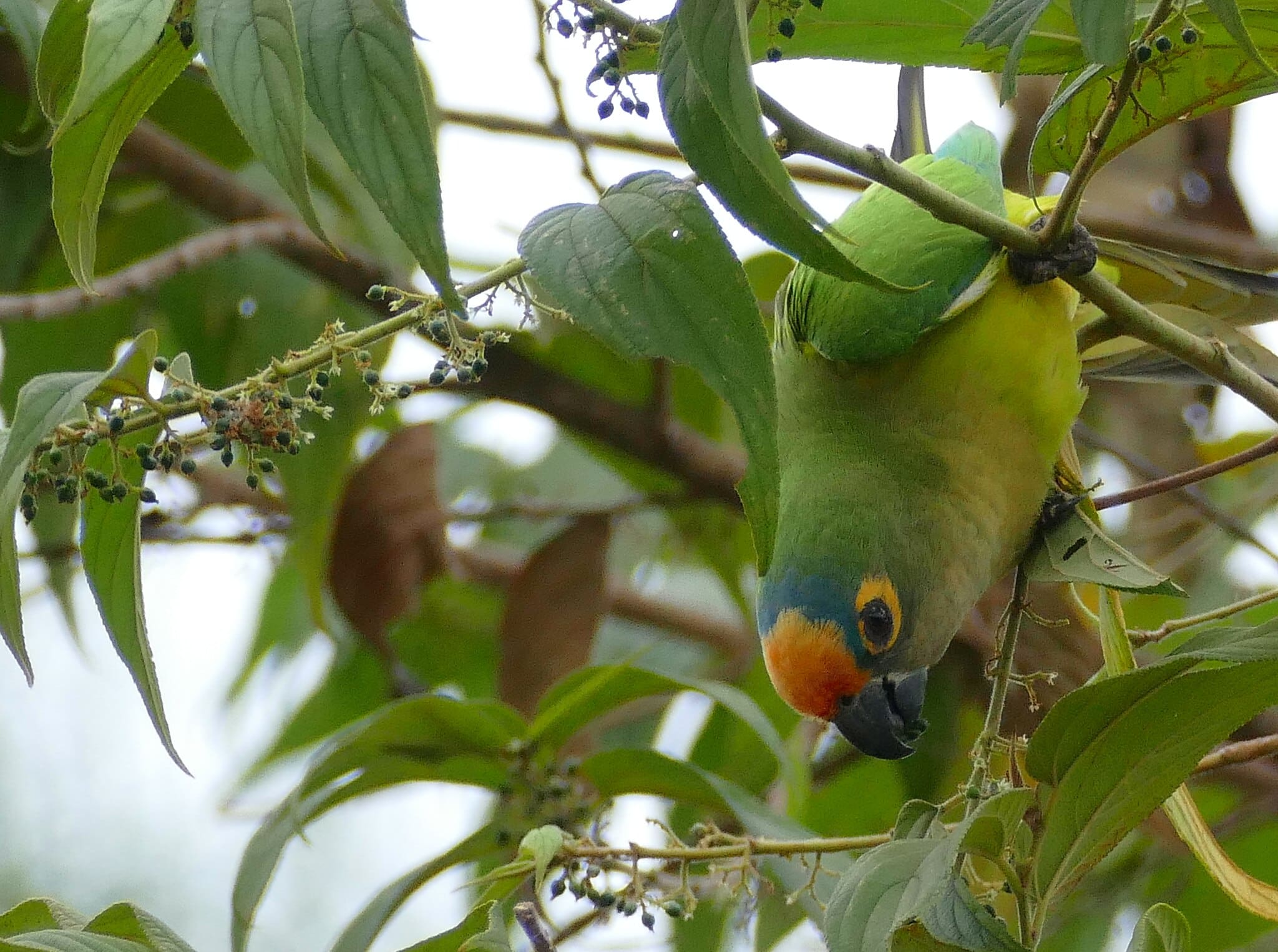
Peach-fronted Conure

( Eupsittula aurea )

Also known as:
Peach-fronted Parakeet, Golden-crowned Conure

Also known as:
Peach-fronted Parakeet, Golden-crowned Conure

Type :
Geography:

DID YOU KNOW?

The Peach-fronted Conure’s population is possibly increasing in some areas, due to agricultural expansion.

<p><em>Eupsittula</em></p>
Genus:

Eupsittula

<p><em>aurea</em></p>
Species:

aurea

Size:

26 cm (10 in)

Weight:

80-105 g (2.8-3.7 oz)

Subspecies including nominate:

one

Colour Adult:

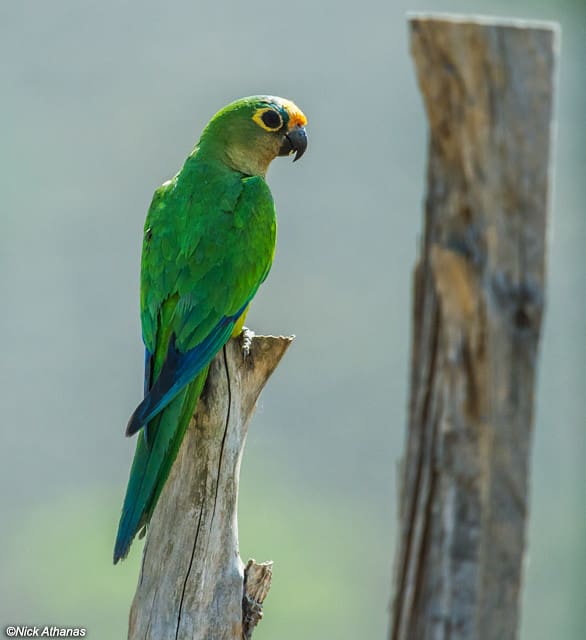
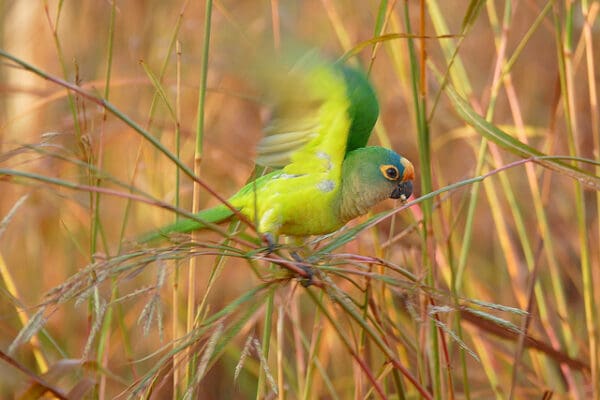
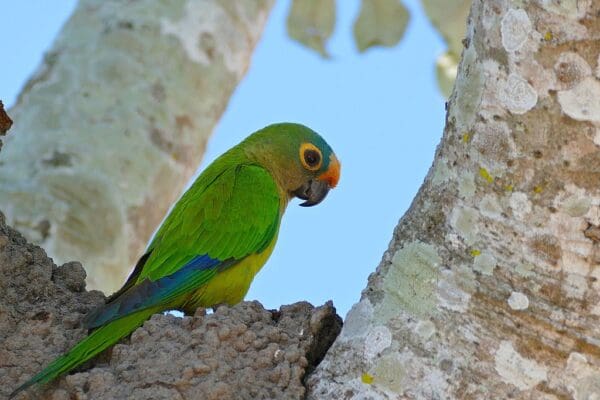
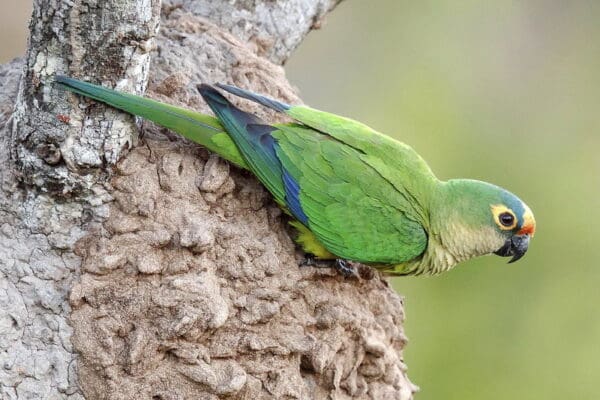
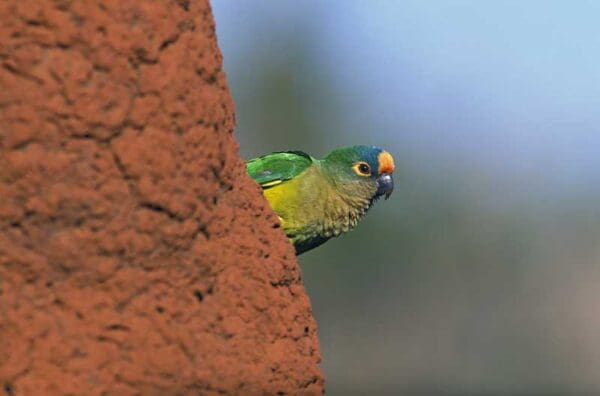
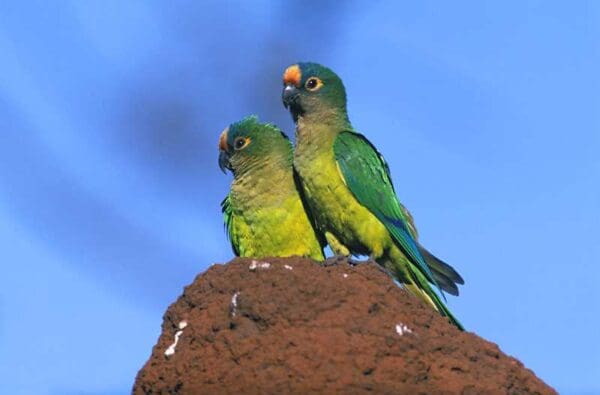
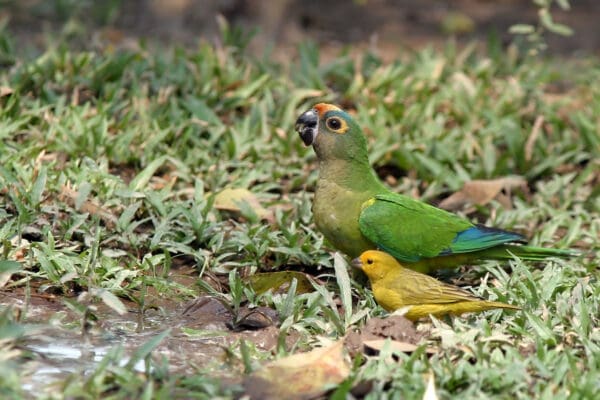
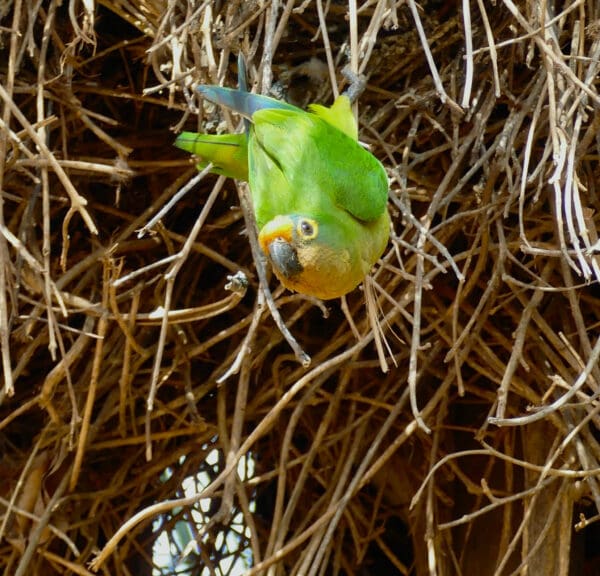
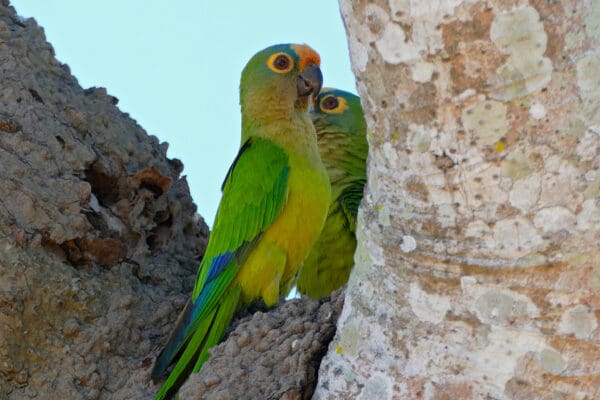
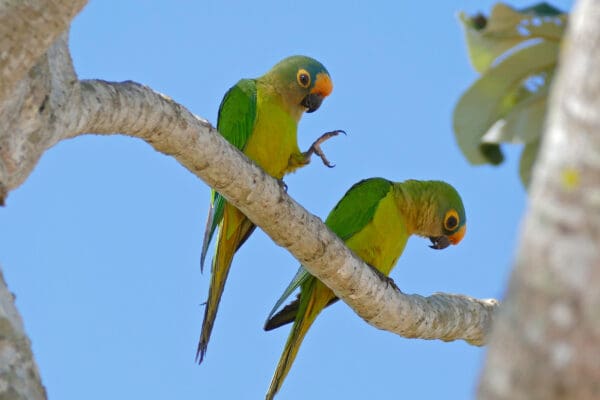
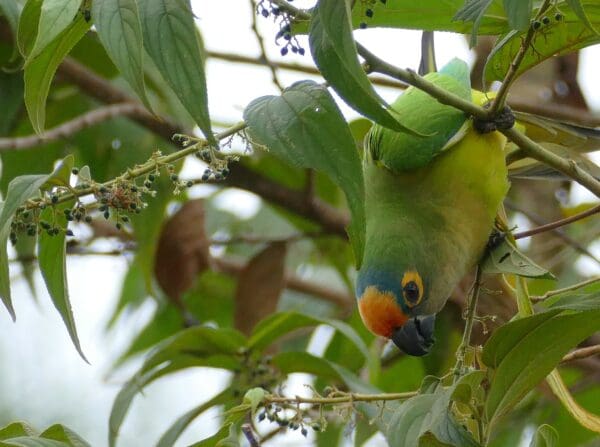
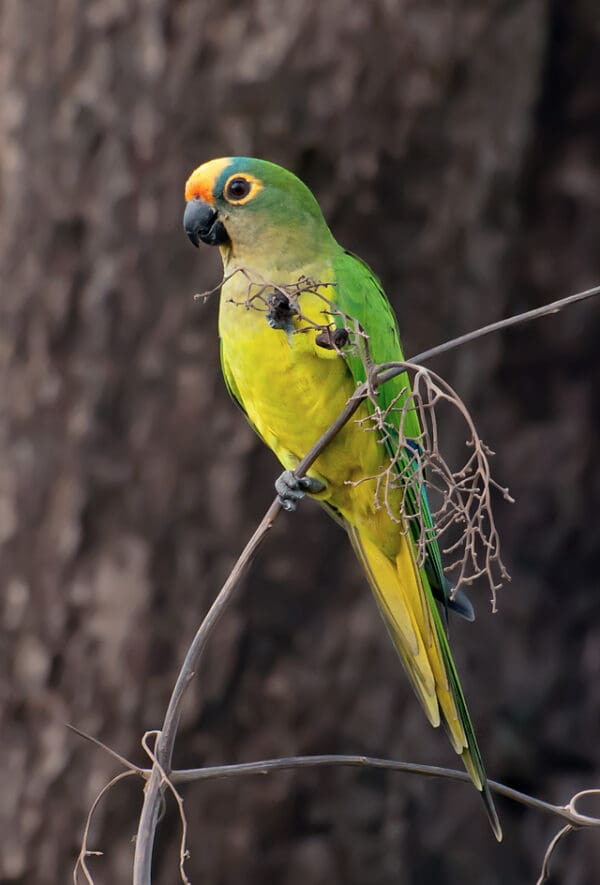
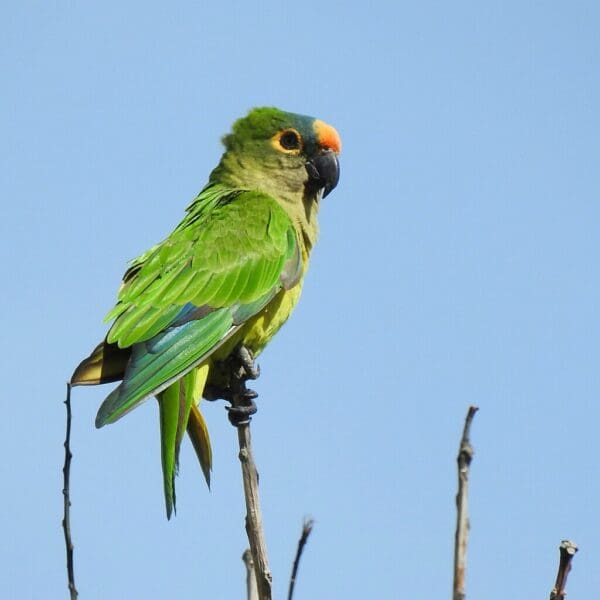
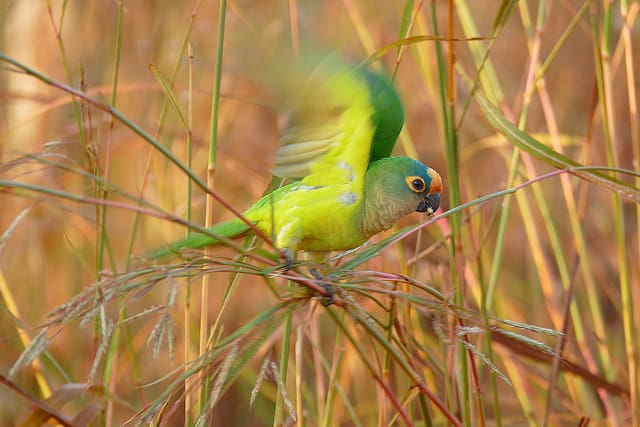
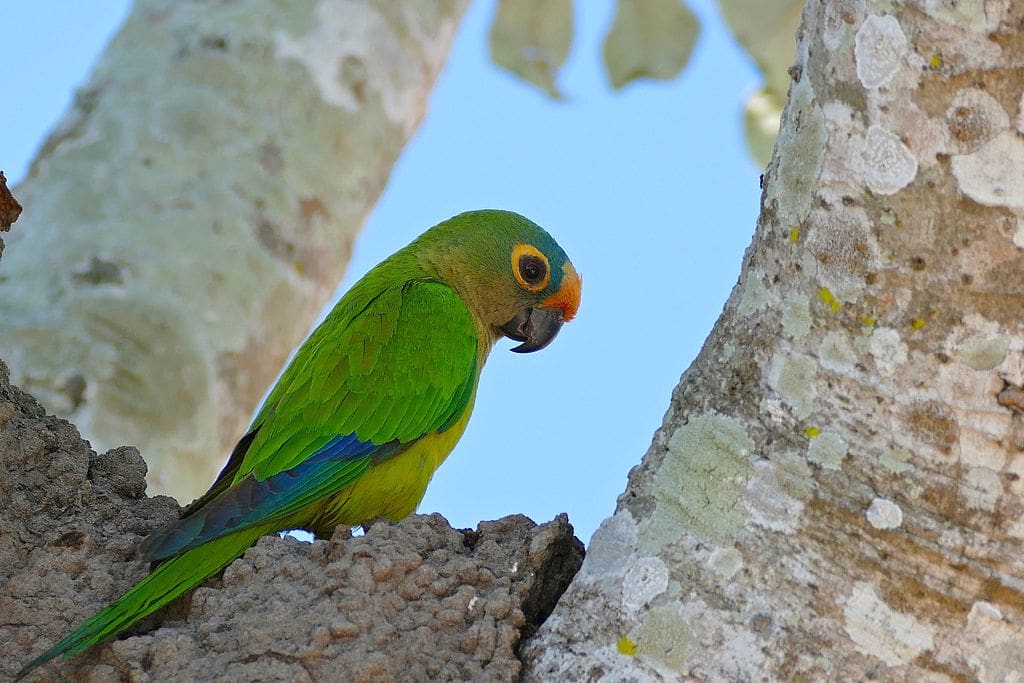
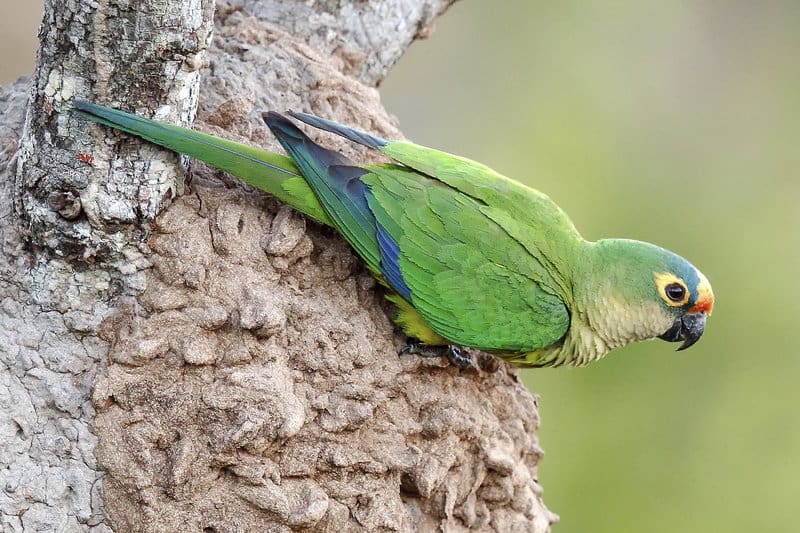
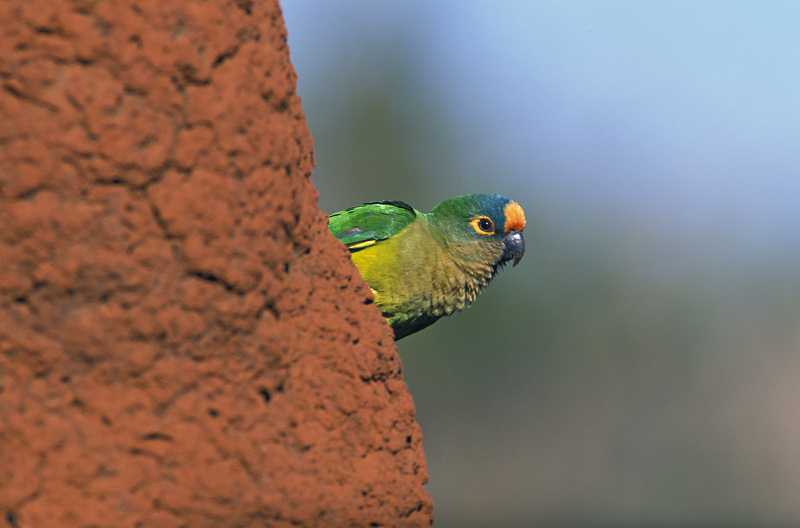
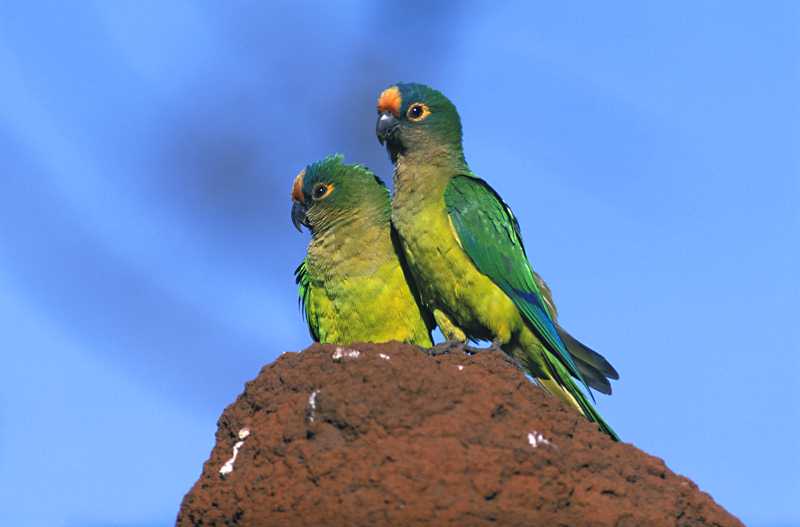
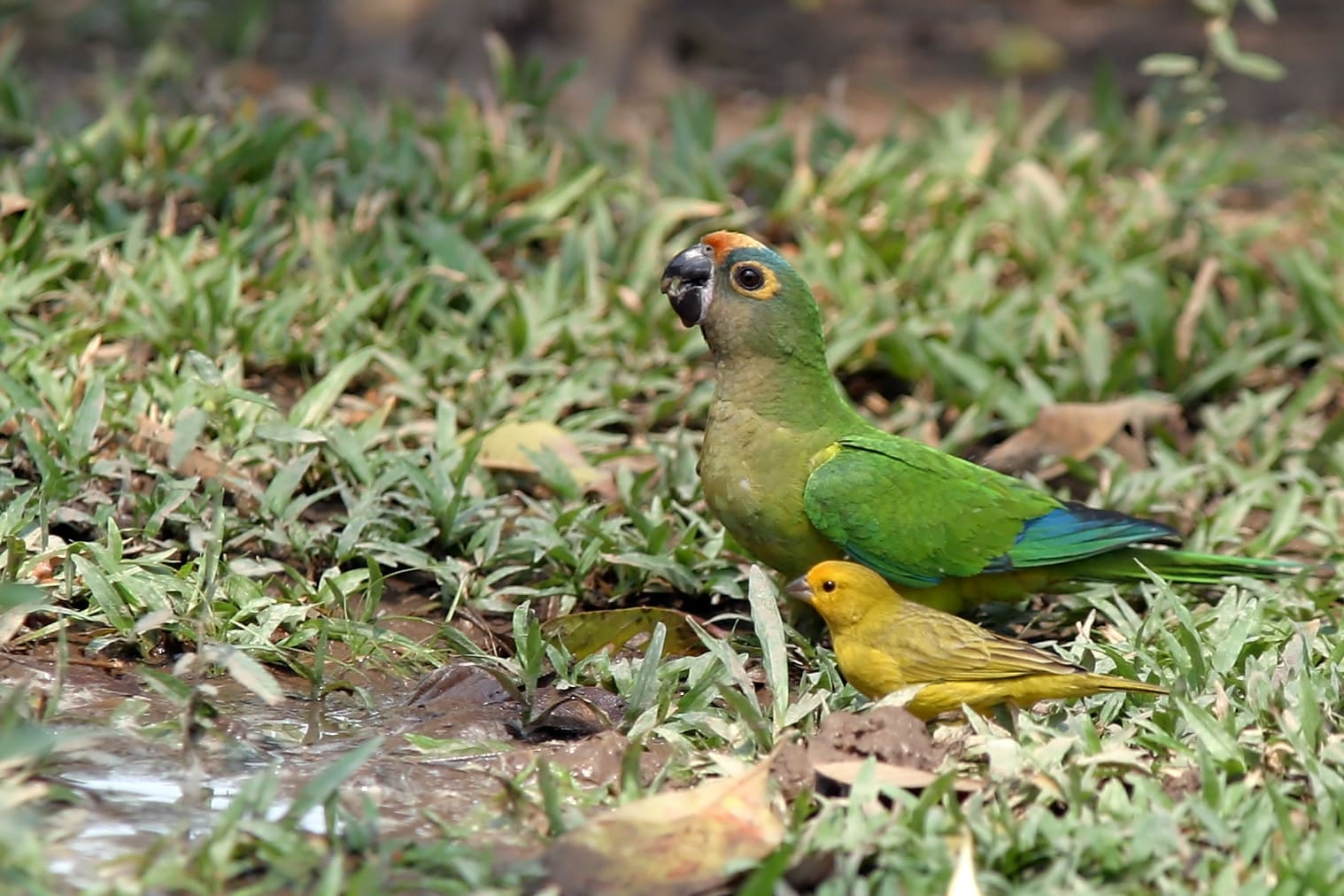
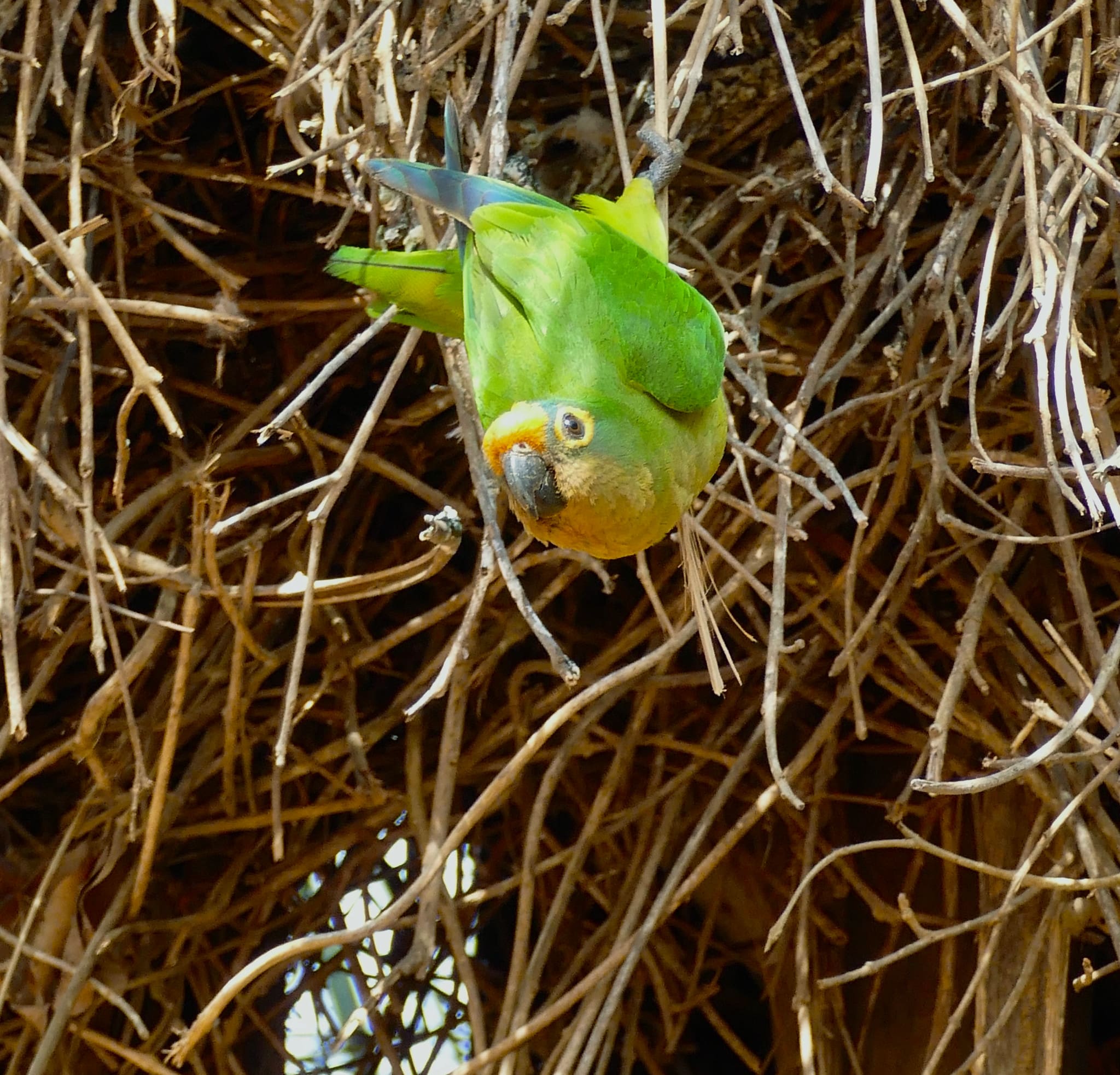
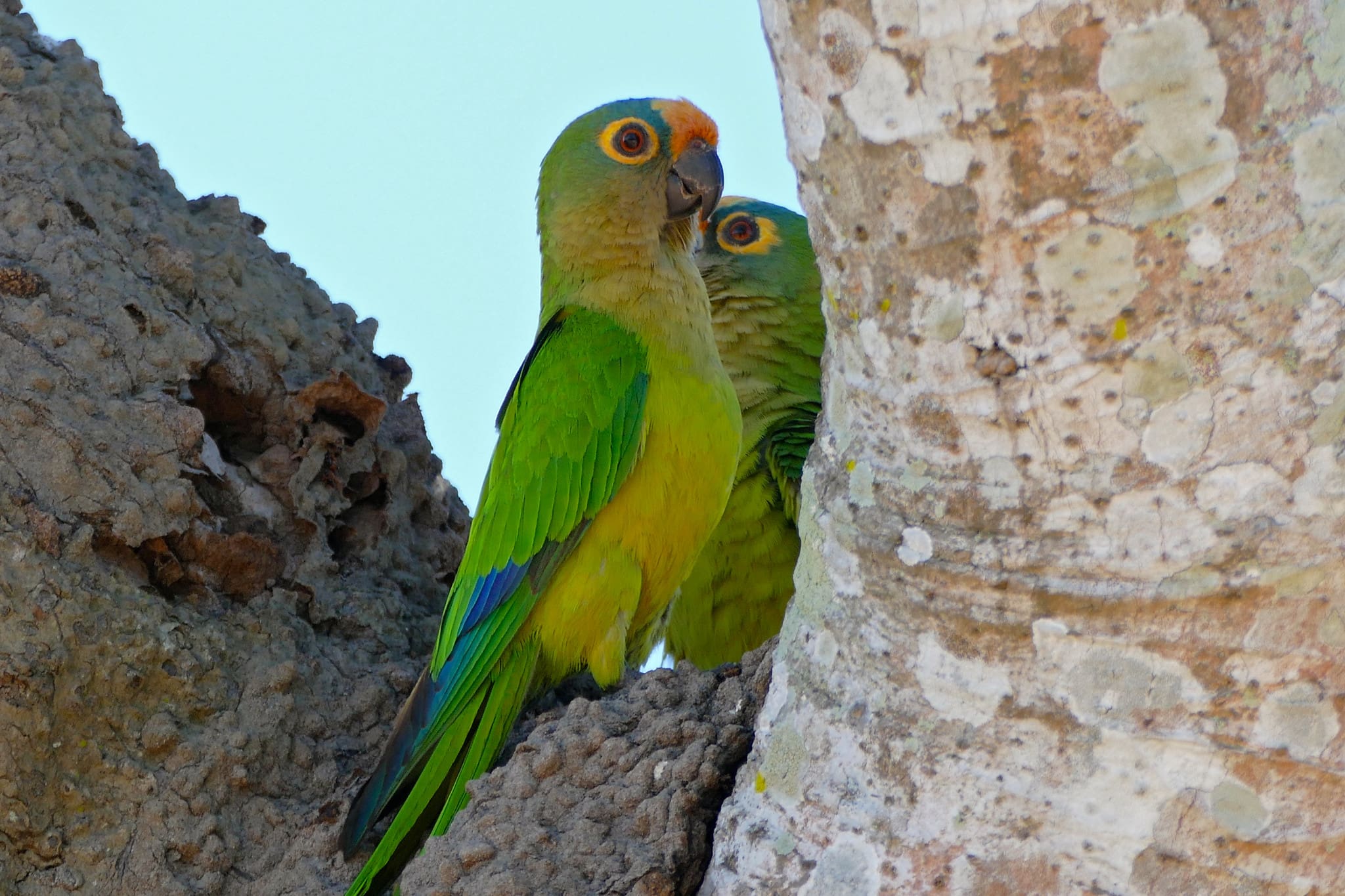
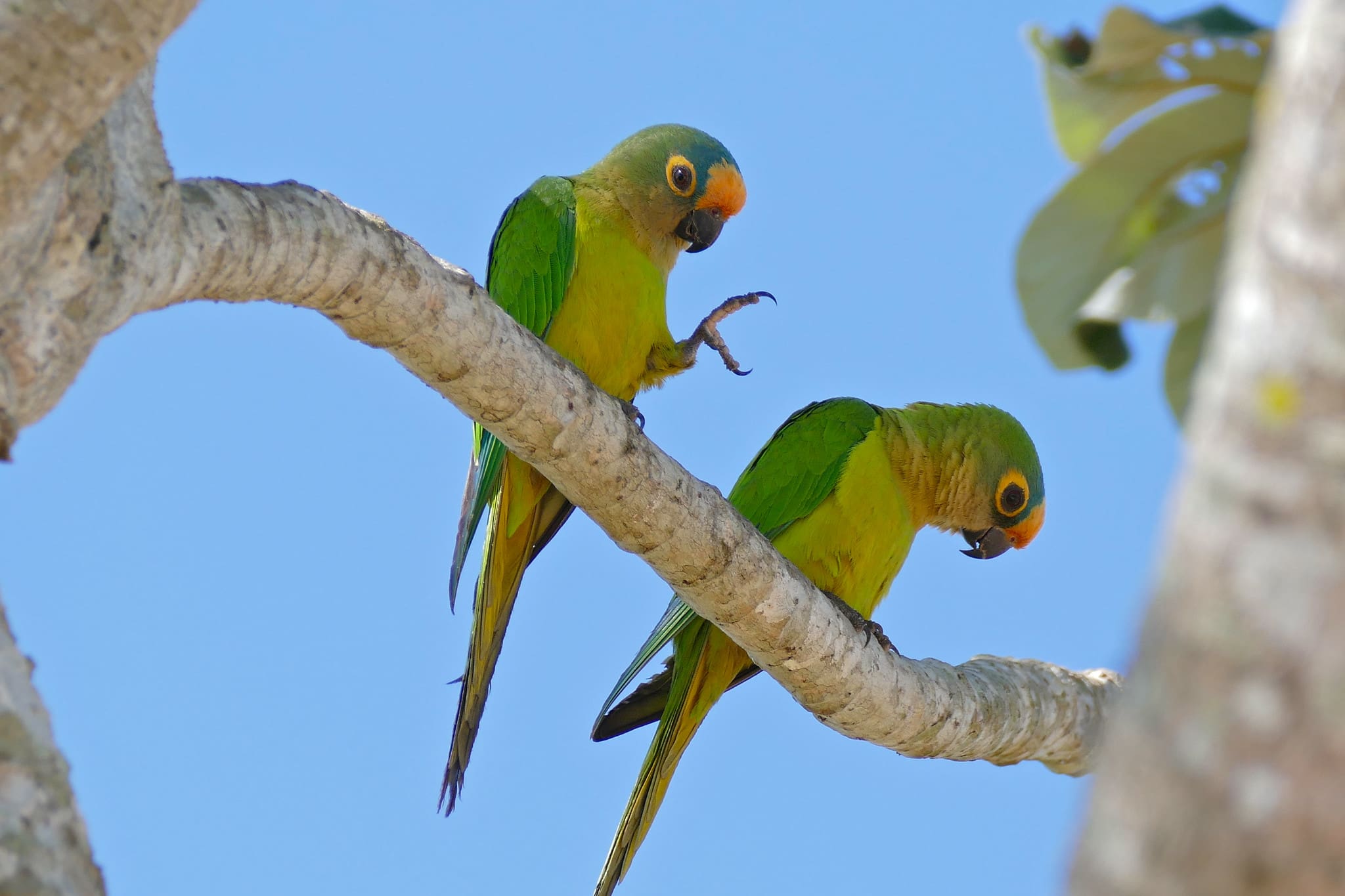
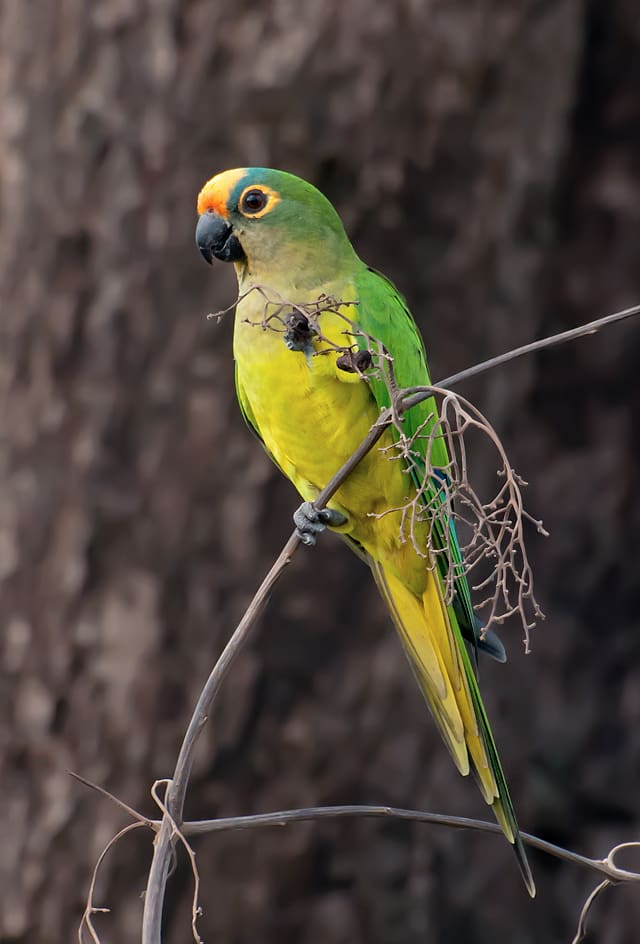
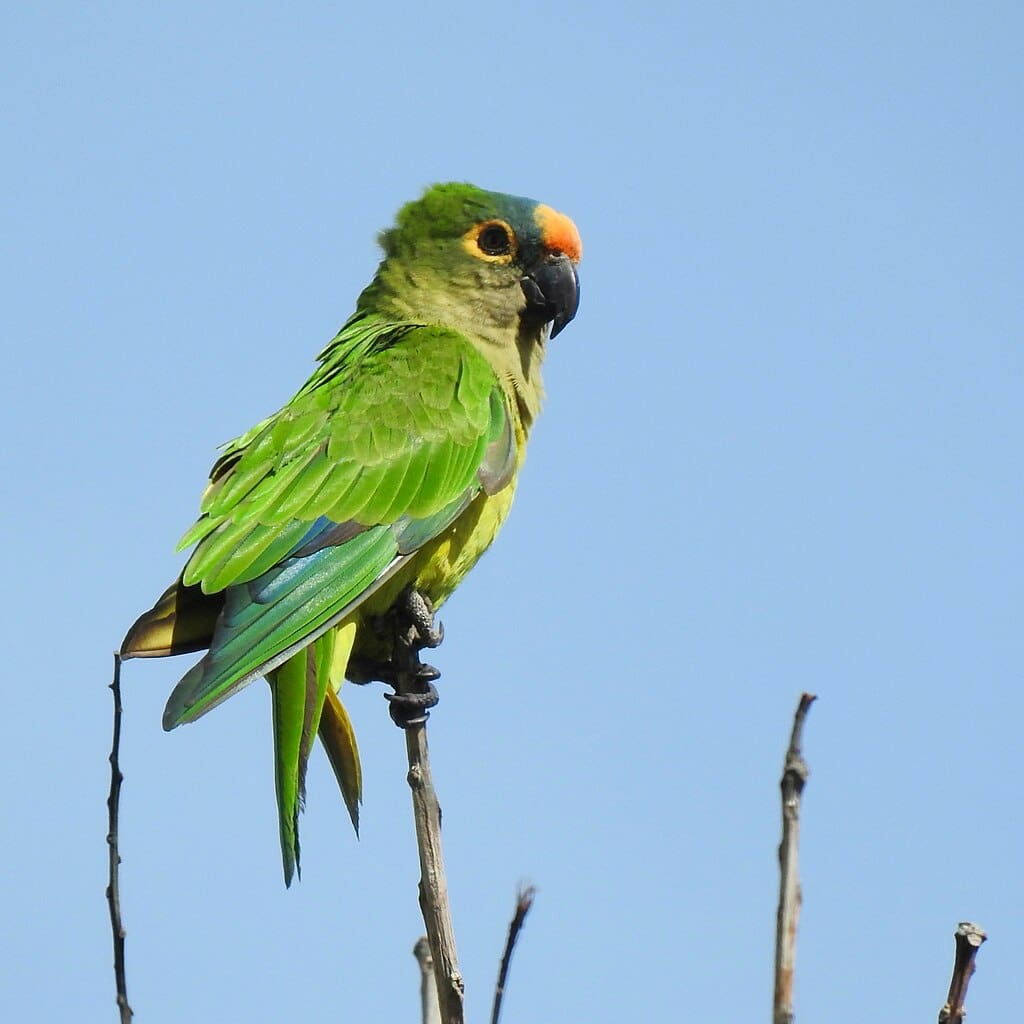
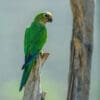
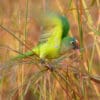
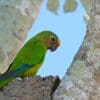
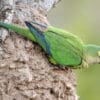
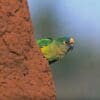
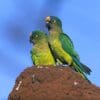
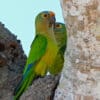
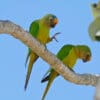
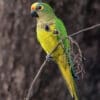
Both adults yellow/orange forehead and forecrown; back of crown and occiput to lores dull blue; light olive throat, cheeks and breast.  Beak grey/black. Eye-ring orange, eye orange/yellow.

Colour Juvenile:

As in adults but with narrower frontal patch. Bare eye ring pale grey in colour, eye grey.

Call:

Shrill screeching notes while in flight.

Xeno-canto Wildlife Sounds-Peach-fronted Conure

More Information:

Avibase

Content Sources:

CITES
BirdLife International
Cornell Lab of Ornithology/Birds of the World
A Guide to Parrots of the World, Juniper and Parr, 1998
Parrots of the World, Forshaw and Cooper, 1989.
Parrots of the World, Forshaw, 2006.
Parrots in Aviculture, Low, 1992.
Psittacine Aviculture, Schubot, Clubb and Clubb, 1992.

Captive Status:

One of the most popular in recent years, but limited breeding.

Longevity:

15-20 yrs

Housing:

Aviary or suspended enclosure, minimum length 2 m (6.5 ft).

Diet:

Fruit such as: apple, pear, orange, cactus fruits, pomegranate; forming about 30 percent of the diet; vegetables such as: carrot, celery, green peas and beans; corn on the cob, green leaves; spray millet, small seed mix (canary, millet, oats, buckwheat, safflower and limited sunflower); soaked and sprouted sunflower; cooked beans or pulses, and complete kibble.

Enrichment:

Bathing, foot toys, ladders, swings, bird-safe wood chewables such as fir, willow, pine or elder branches, bird-safe vegetable tanned leather chewables, heat sterilized pine cones.

Nest Box Size:

Vertical box, 12″ x 12″ x 18″ (30.5 cm x 30.5 cm x 45.7 cm).

Clutch Size:

2 to 6

Fledging Age:

7-8 weeks

Hatch Weight:

Peak Weight:

Weaning Weight:

World Population:

Unknown, stable.

IUCN Red List Status:
Least Concern

CITES Listing:
Appendix II

Threat Summary:

Heavily trapped (61,311 individuals recorded in international trade since 1981). May be increasing in numbers with the clearance of humid forest for agriculture across Brazil but suffers high nestling mortality rates as a result of trapping. Once common in Argentina it is now rare and for unknown reasons is still officially on the list of pest species.

Range:

Found from extreme southern Suriname through the north, central and interior of southern Brazil to extreme southeastern Peru, central and eastern Bolivia, Paraguay and northern Argentina.

Habitat:

Occurs in open woodland areas, including deciduous forest, gallery woodland, Mauritia palm swamp and savanna, as well as cultivated areas. In the Amazon River area, it occurs in low scrubby vegetation on sandy soil; in interior eastern Brazil, it occupies caatinga and cerrado with grassland. Seen below 600 m (1968 ft).

Wild Diet:

Eats seeds of Ilex, Banisteriosis, Campomanesia adamantinum, Eucalyptus, Symplocos and Aegiphylla, flowers of Qualea, Caryocar brasiliensis and Tabebuia, pulp of Anarcadium, and leaves of Vochysia thyrsoidea and Ocotea. Also, occasionally, termites and beetle, fly and moth larvae. Sometimes takes crops.

Ecology and Behaviour:

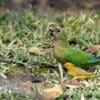
Found in pairs during breeding season otherwise in groups of 10-30 birds; feeds in trees and on ground often in company of other parrot species. Tame and approachable. Roosts communally.

Clutch and Egg Size:

2 to 6 rounded eggs, 27.5 x 22.0 mm (1.1 x 0.8 in).

Breeding Season:

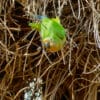
June-December, depending on location. Nest is in either terrestrial or arboreal termite mounds.

Join Our Flock

FlockTalk our monthly newsletter for parrot people everywhere:

+ News from the world of parrots

+ Updates on wild parrot projects

+ Inspiring updates from partners

+ Real stories from the parrot flock

+ Plus, expert tips for caring for your feathered friends at home.


Stay In The Loop, Sign Up Now.

FlockTalk: our monthly newsletter for parrot people everywhere:

Parrot news. Conservation wins. Pet care tips. All in one monthly email.
We do not sell or share your information with anyone